Descubriendo un tesoro ecológico escondido: Las costras biológicas del suelo en la Argentina
DOI:
https://doi.org/10.25260/EA.25.35.2.0.2487Palabras clave:
ambientes áridos, biocostras, taxonomía, restauración, biodiversidad, América del Sur, pastoreo, fuegoResumen
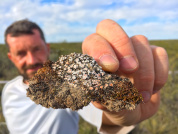
Las costras biológicas del suelo (biocostras) son comunidades diversas de microorganismos y macroorganismos que se desarrollan en la capa más superficial del suelo en los ecosistemas áridos, contribuyendo a su estabilidad, fertilidad, ciclo de nutrientes y dinámica hídrica. Aunque en las últimas dos décadas ha aumentado el número de estudios sobre la ecología y biología de las biocostras en la Argentina, estos trabajos siguen siendo escasos en comparación con otras regiones del mundo. A pesar de que los ecosistemas áridos cubren aproximadamente un 75% del territorio argentino y presentan una destacada diversidad bioclimática y fitogeográfica, las biocostras siguen siendo un actor ecológico poco estudiado. Por ello, consideramos valioso revisar el conocimiento actual sobre las biocostras en el país, para poder identificar vacíos de información y establecer líneas prioritarias futuras de investigación. En este trabajo sintetizamos el conocimiento disponible sobre las biocostras en Argentina, centrándonos en su composición taxonómica, sus interacciones biológicas, sus patrones de distribución, sus respuestas a factores de estrés naturales y antrópicos, su rol en la multifuncionalidad de los ecosistemas y las técnicas de restauración basadas en biocostras. Hemos identificado varios aspectos clave que deberían ser priorizados en futuros estudios, como el avance en la clasificación taxonómica mediante herramientas moleculares para comprender mejor las interacciones biológicas y mejorar el uso de biocostras en la restauración de suelos degradados. También es necesario ampliar el conocimiento sobre las respuestas de las biocostras a factores ambientales a distintas escalas espaciales y temporales, para poder modelar escenarios futuros de cambio global. Aunque los esfuerzos de restauración basados en biocostras muestran resultados prometedores, la mayoría se desarrollan en condiciones controladas, y han de ser validados en campo. Consideramos que la diversidad de los ecosistemas áridos argentinos representa un laboratorio natural ideal para estudiar las biocostras y probar hipótesis sobre su biología y ecología.
Citas
Abraham, E. M., M. D. Rodríguez, M. C. Rubio, B. Guida-Johnson, L. Gómez, et al. 2020. Disentangling the concept of South American Arid Diagonal. Journal of Arid Environments 175:104089. https://doi.org/10.1016/j.jaridenv.2019.104089.
Ansín, O. E., A. Deregibus, and J. W. Lanfranco. 2002. Papel del alga Nostoc commune y efecto del pastoreo por vacunos sobre la colonización de suelos alcalinos en la Pampa Deprimida. Ecología Austral 12:135-142.
Antoninka, A., A. Faist, E. Rodríguez-Caballero, K. E. Young, V. B. Chaudhary, et al. 2020. Biological soil crusts in ecological restoration: emerging research and perspectives. Restoration Ecology 28:3-8. https://doi.org/10.1111/rec.13201.
Antoninka, A., M. A. Bowker, N. N. Barger, J. Belnap, A. Giraldo‐Silva, S. C. Reed, et al. 2020. Addressing barriers to improve biocrust colonization and establishment in dryland restoration. Restoration Ecology 28:S150-S159. https://doi.org/10.1111/rec.13052.
Aranibar, J. N., M. J. Repetur, V. R. García, R. E. Dazat, M. E. C. Videla, et al. 2022. Functional responses of biological soil crusts to simulated small precipitation pulses in the Monte desert, Argentina. Geoderma 410:115660. https://doi.org/10.1016/j.geoderma.2021.115660.
Belnap, J., and O. L. Lange. 2001. Biological soil crusts: structure, function and management. Springer-Verlag, Berlin, Germany. https://doi.org/10.1007/978-3-642-56475-8_33.
Belnap, J. 2003. The world at your feet: desert biological soil crusts. Frontiers in Ecology and the Environment 1:181-189. https://doi.org/10.1890/1540-9295(2003)001[0181:TWAYFD]2.0.CO;2.
Belnap, J., and B. Büdel. 2016. Biological Soil Crusts as Soil Stabilizers. Pp. 305-320 in B. Weber, B. Büdel and J. Belnap (eds.). Biological Soil Crusts: An Organizing Principle in Drylands. Springer International Publishing, Switzerland. https://doi.org/10.1007/978-3-319-30214-0_16.
Belnap, J., B. Weber, and B. Büdel. 2016. Biological Soil Crusts as an Organizing Principle in Drylands. Pp. 3-13 in B. Weber, B. Büdel and J. Belnap (eds.). Biological Soil Crusts: An Organizing Principle in Drylands. Springer International Publishing, Switzerland. https://doi.org/10.1007/978-3-319-30214-0_1.
Berkeley, A., A. D. Thomas, and A. J. Dougill. 2005. Cyanobacterial soil crusts and woody shrub canopies in Kalahari rangelands. African Journal of Ecology 43:137-145. https://doi.org/10.1111/j.1365-2028.2005.00560.x.
Bertiller, M. B., and J. O. Ares. 2011. Does sheep selectivity along grazing paths negatively affect biological crusts and soil seed banks in arid shrublands? A case study in the Patagonian Monte, Argentina. Journal of Environmental Management 92:2091-2096. https://doi.org/10.1016/j.jenvman.2011.03.027.
Bowker, M. A., S. Soliveres, and F. T. Maestre. 2010. Competition increases with abiotic stress and regulates the diversity of biological soil crusts. Journal of Ecology 98:551-560. https://doi.org/10.1111/j.1365-2745.2010.01647.x.
Bowker, M. A., J. Belnap, B. Büdel, C. Sannier, N. Pietrasiak, et al. 2016. Controls on Distribution Patterns of Biological Soil Crusts at Micro- to Global Scales. Pp. 173-197 in B. Weber, B. Büdel and J. Belnap (eds.). Biological Soil Crusts: An Organizing Principle in Drylands. Springer International Publishing, Switzerland. https://doi.org/10.1007/978-3-319-30214-0_10.
Bowker, M. A., S. C. Reed, F. T. Maestre, and D. J. Eldridge. 2018. Biocrusts: The living skin of the earth. Plant and Soil 429:1-7. https://doi.org/10.1007/s11104-018-3735-1.
Bowker, M. A., A. J. Antoninka, and P. F. Chuckran. 2020. Improving field success of biocrust rehabilitation materials: hardening the organisms or softening the environment? Restoration Ecology 28:177-186. https://doi.org/10.1111/rec.12965.
Bowker, M. A., K. D. Doherty, A. J. Antoninka, P. W. Ramsey, M. E. DuPre, et al. 2022. Biocrusts influence vascular plant community development, promoting native plant dominance. Frontiers in Ecology and Evolution 10:840324. https://doi.org/10.3389/fevo.2022.840324.
Brianne, P., H. Rebecca, and L. David. 2020. The fate of biological soil crusts after fire: A meta-analysis. Global Ecology and Conservation 24:e01380. https://doi.org/10.1016/j.gecco.2020.e01380.
Burrell, A. L., J. P. Evans, and M. G. De Kauwe. 2020. Anthropogenic climate change has driven over 5 million km2 of drylands towards desertification. Nature Communications 11:3853. https://doi.org/10.1038/s41467-020-17710-7.
Bustos, M. J., I. A. Garibotti, N. Cech, M. C. Navarro, M. González Polo, et al. 2022. Microhabitat-specific differences on the composition and function of biological soil crust communities. Plant and Soil 479:663-677. https://doi.org/10.1007/s11104-022-05556-5.
Calabrese, G. M., and A. E. Rovere. 2013. El rol de los musgos en la germinación de especies leñosas: Implicancias de la heterogeneidad de micrositios para la restauración. Revista de la Asociación Argentina de Ecología de Paisajes 4(2):130-136.
Calabrese, G. M., A. E. Rovere, and J. M. Zeberio. 2013. Costras biológicas en sitios de Monte con diferentes niveles de perturbación. Pp. 122-130 in D. R. Pérez, A. E. Rovere and M. E. Rodríguez Araujo (eds.). Rehabilitación en la Diagonal Árida de la Argentina. Vázquez Mazzini, Buenos Aires, Argentina.
Castillo-Monroy, A. P., M. A. Bowker, F. T. Maestre, S. Rodríguez-Echeverría, I. Martínez, et al. 2011. Relationships between biological soil crusts, bacterial diversity and abundance, and ecosystem functioning: Insights from a semi-arid Mediterranean environment: Biological soil crusts, bacterial diversity and abundance, and ecosystem functioning. Journal of Vegetation Science 22:165-174. https://doi.org/10.1111/j.1654-1103.2010.01236.x.
Castillo-Monroy, A. P., Á. Benítez, F. Reyes-Bueno, D. A. Donoso, and A. Cueva. 2016. Biocrust structure responds to soil variables along a tropical shrubland elevation gradient. Journal of Arid Environments 124:31-38. https://doi.org/10.1016/j.jaridenv.2015.06.015.
Chamizo, S., Y. Cantón Castilla, A. Afana, R. Lázaro, F. Domingo Poveda, and A. Solé i Benet. 2009. How do development and disturbance of biological soil crust affect runoff and erosion in drylands? Pp. 203-206 in A. Romero Díaz et al. (eds.). Advances in Studies on Desertification: Contributions to the International Conference on Desertification in memory of Professor John B. Thornes. Universidad de Murcia, Región de Murcia, España.
Cheli, G. H., G. E. Pazos, G. E. Flores, and J. C. Corley. 2016. Efecto de los gradientes de pastoreo ovino sobre la vegetación y el suelo en Península Valdés, Patagonia Argentina. Ecología Austral 26:200-211. https://doi.org/10.25260/EA.16.26.2.0.237.
Chen, N., K. Yu, R. Jia, J. Teng, and C. Zhao. 2020. Biocrust as one of multiple stable states in global drylands. Science Advances 6:eaay3763. https://doi.org/10.1126/sciadv.aay3763.
Concostrina-Zubiri, L., E. Valencia, V. Ochoa, B. Gozalo, B. J. Mendoza, et al. 2022. Biocrust-forming lichens increase soil available phosphorus under simulated climate change. European Journal of Soil Science 73:e13284. https://doi.org/10.1111/ejss.13284.
Condon, L. A., and D. A Pyke. 2020. Components and predictors of biological soil crusts vary at the regional vs. plant community scales. Frontiers in Ecology and Evolution 7:449. https://doi.org/10.3389/fevo.2019.00449.
Condon, L. A., J. B. Bradford, and P. S. Coates. 2024. Biological soil crusts are more prevalent in warmer and drier environments within the Great Basin ecoregion: implications for managing annual grass invasion. Restoration Ecology 32:e14150. https://doi.org/10.1111/rec.14150.
Corvalán Videla, M., M. de los A. Taboada, and J. Aranibar. 2018. Diversidad de cianobacterias en costras biológicas de suelo de la ecorregión del Monte Central (Mendoza, Argentina). Lilloa 55:30-46. htts://doi.org/10.30550/j.lil/2018.55.2/4.
Corvalán Videla, M. E. 2019. Diversidad florística y funcional de las costras biológicas de suelo en el Desierto del Monte Central, y su efecto en la funcionalidad del ecosistema. Tesis Doctoral, Universidad Nacional de Cuyo, Mendoza, Argentina. Pp. 209.
Corvalán Videla, M. E., J. N. Aranibar, and S. Greco. 2021. Biological soil crusts from the Monte desert affect soil moisture and nutrients, and improve Leptochloa crinita grass development. Acta Oecologica 110:103712. https://doi.org/10.1016/j.actao.2021.103712.
Cottet, A. C. 2023. Briofitas asociadas a micorrizas arbusculares en la Patagonia, Argentina. Tesis Doctoral, Universidad Nacional del Comahue, Río Negro, Argentina. Pp. 258.
Cottet, A. C., and M. I. Messuti. 2023. Nuevos registros de distribución para la flora de musgos (Bryophyta) de la Patagonia, Argentina. Boletín de la Sociedad Argentina de Botánica 58(2):215-227. https://doi.org/10.31055/1851.2372.v58.n2.39712.
Couradeau, E., U. Karaoz, H. C. Lim, U. Nunes da Rocha, T. Northen, et al. 2016. Bacteria increase arid-land soil surface temperature through the production of sunscreens. Nature Communications 7:10373. https://doi.org/10.1038/ncomms10373.
Daga, I. C., R. Murialdo, G. Gudiño, and H. Pesci. 2024. Comunidad de cianobacterias edáficas de suelos post-incendios en Sierras Chicas de la provincia de Córdoba, Argentina. Bonplandia 33(1):71-88. https://doi.org/10.30972/bon.3317217.
dal Ferro, L. S., A. Schenider, D. G. Missiaggia, L. J. Silva, A. S. Maciel-Silva, et al. 2024. Organizing a global list of cyanobacteria and algae from soil biocrusts evidenced great geographic and taxonomic gaps. FEMS Microbiology Ecology 100:fiae086. https://doi.org/10.1093/femsec/fiae086.
del Giorgio, O., B. E. Robinson, and Y. le Polain de Waroux. 2022. Impacts of agricultural commodity frontier expansion on smallholder livelihoods: an assessment through the lens of access to land and resources in the Argentine Chaco. Journal of Rural Studies 93:67-80. https://doi.org/10.1016/j.jrurstud.2022.05.014.
Delgado-Baquerizo, M., F. T. Maestre, A. Gallardo, M. A. Bowker, M. D. Wallenstein, et al. 2013. Decoupling of soil nutrient cycles as a function of aridity in global drylands. Nature 502:672-676. https://doi.org/10.1038/nature12670.
Denegri, A., M. C. Fernández Belmonte, and P. Campitelli. 2021. Cianobacterias como restauradoras de suelos incendiados: un caso de estudio en zonas semiáridas del centro-oeste de Argentina. Multequina 30(2):99-114.
Díaz, C. C., M. C. Fernández Belmonte, C. Vettorello, and H. P. Apezteguía. 2022. Identificación de cianobacterias en suelos de la región noroeste de la provincia de Córdoba, Argentina. AgriScientia 39(2):57-64. https://doi.org/10.31047/1668.298x.v39.n2.34491.
Dou, W., B. Xiao, D. Revillini, and M. Delgado-Baquerizo. 2024. Biocrusts enhance soil organic carbon stability and regulate the fate of new-input carbon in semiarid desert ecosystems. Science of The Total Environment 918:170794. https://doi.org/10.1016/j.scitotenv.2024.170794.
During, H. J., and F. Lloret. 2001. The Species-Pool Hypothesis from a Bryological Perspective. Folia Geobotanica 36:63-70. https://doi.org/10.1007/BF02803139.
Elbert, W., B. Weber, S. Burrows, J. Steinkamp, B. Büdel, et al. 2012. Contribution of cryptogamic covers to the global cycles of carbon and nitrogen. Nature Geoscience 5:459-462. https://doi.org/10.1038/ngeo1486.
Eldridge, D. J., and M. E. Tozer. 1997. Environmental factors relating to the distribution of terricolous bryophytes and lichens in semi-arid eastern Australia. The Bryologist 100:28-39. https://doi.org/10.1639/0007-2745(1997)100[28:EFRTTD]2.0.CO;2.
Eldridge, D. J., M. A. Bowker, F. T. Maestre, P. Alonso, R. L. Mau, et al. 2010. Interactive effects of three ecosystem engineers on infiltration in a semi-arid Mediterranean grassland. Ecosystems 13:499-510. https://doi.org/10.1007/s10021-010-9335-4.
Eldridge, D. J., and M. Delgado-Baquerizo. 2019. The influence of climatic legacies on the distribution of dryland biocrust communities. Global Change Biology 25:327-336. https://doi.org/10.1111/gcb.14506.
Eldridge, D. J., S. Reed, S. K. Travers, M. A. Bowker, F. T. Maestre, et al. 2020. The pervasive and multifaceted influence of biocrusts on water in the world’s drylands. Global Change Biology 26:6003-6014. https://doi.org/10.1111/gcb.15232.
Eldridge, D. J., M. Mallen-Cooper, and J. Ding. 2021. Biocrust functional traits reinforce runon-runoff patchiness in drylands. Geoderma 400:115152. https://doi.org/10.1016/j.geoderma.2021.115152.
Eldridge, D. J., E. Guirado, P. B. Reich, R. Ochoa-Hueso, M. Berdugo, et al. 2023. The global contribution of soil mosses to ecosystem services. Nature Geosciences 16:430-438. https://doi.org/10.1038/s41561-023-01170-x.
Faist, A. M., A. J. Antoninka, J. Belnap, M. A. Bowker, M. C. Duniway, F. Garcia‐Pichel, et. al. 2020. Inoculation and habitat amelioration efforts in biological soil crust recovery vary by desert and soil texture. Restoration Ecology 28:S96-S105. https://doi.org/10.1111/rec.13087.
Ferrenberg, S., S. C. Reed, and J. Belnap. 2015. Climate change and physical disturbance cause similar community shifts in biological soil crusts. Proceedings of the National Academy of Sciences 112:12116-12121. https://doi.org/10.1073/pnas.1509150112.
Filippini, E. R., R. E. Díaz Dominguez, R. A. García, M. Gallinger, and E. C. Mlewski. 2024. What do we know about biocrust lichens in Argentina? A comprehensive review and new records. Darwiniana (nueva serie) 12(2):220-236. https://doi.org/10.14522/darwiniana.2024.122.1229.
Friedl, T. 1987. Thallus Development and Phycobionts of the Parasitic Lichen Diploschistes Muscorum. The Lichenologist 19:183-191. https://doi.org/10.1017/S002428298700015X.
Funk, F. A., G. Peter, A. Loydi, A. I. Kröpfl, and R. A. Distel. 2012. Recuperación estructural y funcional de los espacios entre arbustos al cabo de 10 años de exclusión del pastoreo en una estepa semiárida del noreste de la Patagonia. Ecología Austral 22:195-202. https://doi.org/10.25260/EA.12.22.3.0.1226.
Funk, F. A., A. Loydi, and G. Peter. 2014. Effects of biological soil crusts and drought on emergence and survival of a Patagonian perennial grass in the Monte of Argentina. Journal of Arid Land 6:735-741. https://doi.org/10.1007/s40333-014-0022-8.
García, V. R., J. Aranibar, and N. Pietrasiak. 2015. Multiscale effects on biological soil crusts cover and spatial distribution in the Monte Desert. Acta Oecologica 69:35-45. https://doi.org/10.1016/j.actao.2015.08.005.
García, V. R., J. Aranibar, and P. E. Villagra. 2021. Propagación de distintos tipos funcionales de la costra biológica del suelo del desierto del Monte, Argentina. Ecología Austral 31:001-016. https://doi.org/10.25260/EA.21.31.1.0.1158.
García, V. R., J. N. Aranibar, and P. E. Villagra. 2023. Efecto de la luz, la humedad y la salinidad sobre el crecimiento de los organismos que componen la costra biológica del suelo. Ecología Austral 33:962-977. https://doi.org/10.25260/EA.23.33.3.0.1968.
García-Pichel, F., and M. F. Wojciechowski. 2009. The evolution of a capacity to build supra-cellular ropes enabled filamentous cyanobacteria to colonize highly erodible substrates. PLOS ONE 4:e7801. https://doi.org/10.1371/journal.pone.0007801.
García-Pichel, F. 2023. The microbiology of biological soil crusts. Annual Review of Microbiology 77:149-171. https://doi.org/10.1146/annurev-micro-032521-015202.
García-Velázquez, L., A. Gallardo, V. Ochoa, B. Gozalo, R. Lázaro, and F. T. Maestre. 2022. Biocrusts increase the resistance to warming-induced increases in topsoil P pools. Journal of Ecology 110:2074-2087. https://doi.org/10.1111/1365-2745.13930.
Garibotti, I. A., M. González Polo, and S. Tabeni. 2018. Linking biological soil crust attributes to the multifunctionality of vegetated patches and interspaces in a semiarid shrubland. Functional Ecology 32:1065-1078. https://doi.org/10.1111/1365-2435.13044.
Garibotti I. A., and M. González Polo. 2021. Divergence among biological soil crust communities developing under different environmental conditions. Journal of Vegetation Science 32:e12987. https://doi.org/10.1111/jvs.12987.
Garibotti, I. A., M. González Polo, and P. Satti. 2023. Compost promotes biocrust and plant growth in greenhouse cocultures for dryland restoration. Restoration Ecology 32:e14020. https://doi.org/10.1111/rec.14020.
Giraldo-Silva, A., and C. A. Masiello. 2024. Environmental conditions play a key role in controlling the composition and diversity of Colombian biocrust microbiomes. Frontiers in Microbiology 15:1236554. https://doi.org/10.3389/fmicb.2024.1236554.
Gómez, D. A., J. N. Aranibar, S. Tabeni, P. E. Villagra, I. A. Garibotti, et al. 2012. Biological soil crust recovery after long-term grazing exclusion in the Monte Desert (Argentina). Changes in coverage, spatial distribution, and soil nitrogen. Acta Oecologica 38:33-40. https://doi.org/10.1016/j.actao.2011.09.001.
González-Polo, M., and A. T. Austin. 2009. Spatial heterogeneity provides organic matter refuges for soil microbial activity in the Patagonian steppe, Argentina. Soil Biology and Biochemistry 41:1348-1351. https://doi.org/10.1016/j.soilbio.2009.03.008.
Halperín, D. R. 1969. Algunas cianofíceas de biodermas continentales y marinas nuevas para la Argentina. Darwiniana 15:363-373.
Halperín, D. R., M. C. Z. de Mule, and G. Z. de Caire. 1976. Biodermas algales como fuente de nitrógenos en suelos sub-húmedos y semi-áridos (Provincias de Chaco y Formosa, Argentina). Darwiniana 20:341-370.
Havrilla, C. A., V. B. Chaudhary, S. Ferrenberg, A. J. Antoninka, J. Belnap, et al. 2019. Towards a predictive framework for biocrust mediation of plant performance: A meta-analysis. Journal of Ecology 107:2789-2807. https://doi.org/10.1111/1365-2745.13269.
Hurtado, S., M. Calianno, S. Adduca, and M. H. Easdale. 2023. Drylands becoming drier: evidence from North Patagonia, Argentina. Regional Environmental Change 23:165. https://doi.org/10.1007/s10113-023-02160-w.
Jiménez, J. A., M. J. Cano, and J. Guerra. 2010. A new species of Didymodon (Pottiaceae) from the Northwestern Argentina. The Bryologist 113:770-774. https://doi.org/10.1639/0007-2745-113.4.770.
Jiménez, S., G. M. Suárez, and R. A. Cabral. 2020. New records of mosses from the Dry Chaco Forest of Santiago del Estero, Argentina. Boletín de la Sociedad Argentina de Botánica 55:547-555. https://doi.org/10.31055/1851.2372.v55.n4.30127.
Kidron, G. J., B. Xiao, and I. Benenson. 2020. Data variability or paradigm shift? Slow versus fast recovery of biological soil crusts-a review. Science of The Total Environment 721:137683. https://doi.org/10.1016/j.scitotenv.2020.137683.
Kozar, D., B. Weber, Y. Zhang, and X. Dong. 2024. Spatial signatures of biological soil crusts and community level self-organization in drylands. Ecosystems 27:443-461. https://doi.org/10.1007/s10021-023-00898-2.
Kröpfl, A. I., R. A. Distel, G. A. Cecchi, and N. M. Villasuso. 2022. Functional role of moss biocrust in disturbed semiarid shrublands of north-eastern Patagonia, Argentina. Applied Ecology and Environmental Research 20:905-917. https://doi.org/10.15666/aeer/2001_905917.
Kröpfl, A. 2023. Why Are moss biocrusts necessary for system conservation in a semiarid region of southern argentina? Pp. 1-19 in J. Putzke (eds.). Bryophytes - The State of Knowledge in a Changing World. IntechOpen, London, UK. https://doi.org/10.5772/intechopen.102134.
Kurth, J. K., M. Albrecht, K. Glaser, U. Karsten, G, Vestergaard, et al. 2023. Biological soil crusts on agricultural soils of mesic regions promote microbial cross-kingdom co-occurrences and nutrient retention. Frontiers in Microbiology 14:1169958. https://doi.org/10.3389/fmicb.2023.1169958.
Li, X., R. Hui, H. Tan, Y. Zhao, R. Liu, et al. 2021. Biocrust Research in China: Recent Progress and Application in Land Degradation Control. Frontiers in Plant Science 12:751521. https://doi.org/10.3389/fpls.2021.751521.
Lorite, J., D. Agea, H. García-Robles, E. M. Cañadas, S. Rams, et al. 2020. Plant recovery techniques do not ensure biological soil-crust recovery after gypsum quarrying: a call for active restoration. Restoration Ecology 28: S86-S95. https://doi.org/10.1111/rec.13059.
Machado de Lima, N. M., V. M. C. Fernandes, D. Roush, S. Velasco Ayuso, J. Rigonato, et al. 2019. The compositionally distinct cyanobacterial biocrusts from Brazilian Savanna and their environmental drivers of community diversity. Frontiers in Microbiology 10:2798. https://doi.org/10.3389/fmicb.2019.02798.
Machado de Lima, N. M., M. Muñoz-Rojas, X. Vázquez Campos, and L. H. Z. Branco. 2021. Biocrust cyanobacterial composition, diversity, and environmental drivers in two contrasting climatic regions in Brazil. Geoderma 386:114914. https://doi.org/10.1016/j.geoderma.2020.114914.
Maestre, F. T., C. Escolar, I. Martínez, and A. Escudero. 2008. Are soil lichen communities structured by biotic interactions? A null model analysis. Journal of Vegetation Science 19:261-266. https://doi.org/10.3170/2007-8-18366.
Maestre, F. T., I. Martínez, C. Escolar, and A. Escudero. 2009. On the relationship between abiotic stress and co-occurrence patterns: an assessment at the community level using soil lichen communities and multiple stress gradients. Oikos 118:1015-1022. https://doi.org/10.1111/j.1600-0706.2009.17362.x.
Maestre, F. T., M. A. Bowker, Y. Cantón, A. P. Castillo-Monroy, J. Cortina, et al. 2011. Ecology and functional roles of biological soil crusts in semi-arid ecosystems of Spain. Journal of Arid Environments 75:1282-1291. https://doi.org/10.1016/j.jaridenv.2010.12.008.
Maestre, F. T., Y. Le Bagousse-Pinguet, M. Delgado-Baquerizo, D. J. Eldridge, H. Saiz, M. Berdugo, et al. 2022. Grazing and ecosystem service delivery in global drylands. Science 378:915-920. https://doi.org/10.1126/science.abq4062.
Maggioli, L., E. Rodríguez-Caballero, Y. Cantón, B. Rodríguez-Lozano B, and S. Chamizo. 2022. Design optimization of biocrust-plant spatial configuration for dry ecosystem restoration using water redistribution and erosion models. Frontiers in Ecology and Evolution 10:765148. https://doi.org/10.3389/fevo.2022.765148.
Maier, S., L. Muggia, C. R. Kuske, and M. Grube. 2016. Bacteria and Non-lichenized Fungi Within Biological Soil Crusts. Pp. 81-100 in B. Weber, B. Büdel and J. Belnap (eds.). Biological Soil Crusts: An Organizing Principle in Drylands. Springer International Publishing, Switzerland. https://doi.org/10.1007/978-3-319-30214-0_5.
Malešević, T. P., J. Meriluoto, I. Mihalj, T. Važić, R. Marković, et al. 2024. Restoration of damaged drylands through acceleration of biocrust development. Catena 244:108265. https://doi.org/10.1016/j.catena.2024.108265.
Mallen-Cooper, M., D. J. Eldridge, and M. Delgado-Baquerizo. 2018. Livestock grazing and aridity reduce the functional diversity of biocrusts. Plant and Soil 429:175-185. https://doi.org/10.1007/s11104-017-3388-5.
Mallen-Cooper, M., J. Ding, and D. J. Eldridge. 2022. Contrasting effects of vegetation cover and site condition on biocrust communities in subhumid drylands. Journal of Vegetation Science 33:e13161. https://doi.org/10.1111/jvs.13161.
Muñoz-Rojas, M., N. M. Machado de Lima, S. Chamizo, and M. A. Bowker. 2021. Restoring post-fire ecosystems with biocrusts: Living, photosynthetic soil surfaces. Current Opinion in Environmental Science and Health 23:100273. https://doi.org/10.1016/j.coesh.2021.100273.
Murialdo, R. C., M. C. F. Belmonte, I. C. Daga, C. González, and H. E. Murialdo. 2019. Contribución al estudio de cianobacterias edáficas en un suelo con manejo agrícola de Córdoba - Argentina. Ciencia del Suelo 37.
Navas Romero, A. L. 2019. Funciones ecosistémicas y atributos ecológicos de las costras biológicas en el centro-oeste de la Argentina. Tesis Doctoral, Universidad Nacional de Cuyo, Mendoza, Argentina. Pp. 299.
Navas Romero, A. L., M. A. Herrera Moratta, E. Martínez Carretero, M. C. Fernández Belmonte, and M. A. Duplancic. 2019. Caracterización microtopográfica e influencia de las costras biológicas en la rugosidad del suelo en el centro-oeste de la Argentina. Boletín de la Sociedad Argentina de Botánica 54(4):1-10. https://doi. org/10.31055/1851.2372.v54. n4.24163.
Navas Romero, A. L., M. A. Herrera Moratta, B. Vento, R. A. Rodríguez, and E. E. Martínez Carretero. 2020. Variations in the coverage of biological soil crusts along an aridity gradient in the central west Argentina. Acta Oecologica 109:103671. https://doi.org/10.1016/j.actao.2020.103671.
Navas Romero, A. L., M. Herrera Moratta, E. E. Martínez Carretero, and M. C. Fernández Belmonte. 2021a. Influence of biological soil crust on the infiltration and moisture retention in different soil textures. Multequina 30:17-30.
Navas Romero, A. L., E. Martínez Carretero, and M. Herrera Moratta. 2021b. Restauración de costras biológicas del suelo: pasado, presente y futuro. Multequina 30(2):25-47.
Navas Romero, A. L., M. A. Herrera Moratta, E. Martínez Carretero, B. Vento, and M. C. Fernández Belmonte. 2023. Panorama sobre las variaciones estacionales y diarias de la temperatura del suelo bajo el efecto de las costras biológicas en el centro-oeste de Argentina. Acta Botánica Mexicana 130. https://doi.org/10.21829/abm130.2023.2212.
Nelson, C., and F. García-Pichel. 2021. Beneficial cyanosphere heterotrophs accelerate establishment of cyanobacterial biocrust. Applied and Environmental Microbiology 87:e01236-21. https://doi.org/10.1128/AEM.01236-21.
Ochoa-Hueso, R., R. R. Hernandez, J. J. Pueyo, and E. Manrique. 2011. Spatial distribution and physiology of biological soil crusts from semi-arid central Spain are related to soil chemistry and shrub cover. Soil Biology and Biochemistry 43:1894-1901. https://doi.org/10.1016/j.soilbio.2011.05.010.
Oliveira, M. F., and A. S. Maciel-Silva. 2022. Biological soil crusts and how they might colonize other worlds: insights from these Brazilian ecosystem engineers, Journal of Experimental Botany 73:4362-4379. https://doi.org/10.1093/jxb/erac162.
Olivera, N. L., L. Prieto, M. B. Bertiller, and M. A. Ferrero. 2016. Sheep grazing and soil bacterial diversity in shrublands of the Patagonian Monte, Argentina. Journal of Arid Environments 125:16-20. https://doi.org/10.1016/j.jaridenv.2015.09.012.
Paruelo, J. M., J. P. Guerschman, G. Pineiro, E. G. Jobbágy, S. R. Verón, G. Baldi, and S. Baeza. 2006. Cambios en el uso de la tierra en Argentina y Uruguay: marcos conceptuales para su análisis. Agrociencia Uruguay 10(2):47-61. https://doi.org/10.31285/AGRO.10.929.
Perazzo, A., and J. Rodríguez. 2019. Impacto del fuego sobre la vegetación no vascular del suelo: un caso de estudio en los bosques de Polylepis australis (Rosaceae) del centro de Argentina. Lilloa 56:67-80. https://doi.org/10.30550/j.lil/2019.56.2/6.
Peter, G., C. V. Leder, and F. A. Funk. 2016. Effects of biological soil crust and water availability on seedlings of three perennial Patagonian species. Journal of Arid Environments 125:122-126. https://doi.org/10.1016/j.jaridenv.2015.10.015.
Pissolito, C., I. A. Garibotti, S. A. Varela, V. Arana, M. González-Polo, et al. 2019. Water-mediated changes in plant-plant and biological soil crust-plant interactions in a temperate forest ecosystem. Web Ecology 19:27-38. https://doi.org/10.5194/we-19-27-2019.
Prieto, M., G. Aragón, and I. Martínez. 2008a. Nuevos registros en la familia de líquenes Verrucariaceae (Ascomycota) de Argentina. Boletín de la Sociedad Argentina de Botánica 43:205-210.
Prieto, M., G. Aragón, I. Martínez, and O. Breuss. 2008b. A new species of Anthracocarpon (Verrucariaceae) from Argentina. The Bryologist 111:128-132. https://doi.org/10.1639/0007-2745(2008)111[128:ANSOAV]2.0.CO;2.
Qiu, D., M. A. Bowker, B. Xiao, Y. Zhao, X. Zhou, et al. 2023. Mapping biocrust distribution in China’s drylands under changing climate. Science of The Total Environment 905:167211. https://doi.org/10.1016/j.scitotenv.2023.167211.
Reed, S. C., K. K. Coe, J. P. Sparks, D. C. Housman, T. J. Zelikova, et al. 2012. Changes to dryland rainfall result in rapid moss mortality and altered soil fertility. Nature Climate Change 2:752-755. https://doi.org/10.1038/nclimate1596.
Reynolds, L. V., and P. B. Shafroth. 2017. Riparian plant composition along hydrologic gradients in a dryland river basin and implications for a warming climate. Ecohydrology 10:e1864. https://doi.org/10.1002/eco.1864.
Riveras-Muñoz, N., S. Seitz, K. Witzgall, V. Rodríguez, P. Kühn, et al. 2022. March 7. Biocrust-linked changes in soil aggregate stability along a climatic gradient in the Chilean Coastal Range. SOIL, 8(2):717-731. 1https://doi.org/10.5194/soil-8-717-2022.
Rodríguez-Caballero, E., A. J. Castro, S. Chamizo, C. Quintas-Soriano, M. García-Llorente, et al. 2018a. Ecosystem services provided by biocrusts: From ecosystem functions to social values. Journal of Arid Environments 159:45-53. https://doi.org/10.1016/j.jaridenv.2017.09.005.
Rodríguez-Caballero, E., J. Belnap, B. Büdel, P. J. Crutzen, M. O. Andreae, et al. 2018b. Dryland photoautotrophic soil surface communities endangered by global change. Nature Geoscience 11:185-189. https://doi.org/10.1038/s41561-018-0072-1.
Rodríguez-Caballero, E., J. R. Román, S. Chamizo, B. Roncero Ramos, and Y. Cantón. 2019. Biocrust landscape-scale spatial distribution is strongly controlled by terrain attributes: Topographic thresholds for colonization in a semiarid badland system. Earth Surface Processes and Landforms 44:2771-2779. https://doi.org/10.1002/esp.4706.
Rodríguez-Caballero, E., T. Stanelle, S. Egerer, Y. Cheng, and H. Su. 2022. Global cycling and climate effects of aeolian dust controlled by biological soil crusts. Nature Geoscience 15:458-463. https://doi.org/10.1038/s41561-022-00942-1.
Rosentreter, R., M. Bowker, and J. Belnap. 2007. A field guide to biological soil crusts of western U.S. drylands: Common lichens and bryophytes. U.S. Government Printing Office, Denver, Colorado, USA.
Rosentreter, R. 2020. Biocrust lichen and moss species most suitable for restoration projects. Restoration Ecology 28:S67-S74. https://doi.org/10.1111/rec.13082.
Rozenstein, O., E. Zaady, I. Katra, A. Karnieli, and J. Adamowski, et al. 2014. The effect of sand grain size on the development of cyanobacterial biocrusts. Aeolian Research 15:217-226. https://doi.org/10.1016/j.aeolia.2014.08.003.
Schaper, T., and S. Ott. 2003. Photobiont Selectivity and Interspecific Interactions in lichen communities. I. Culture Experiments with the Mycobiont Fulgensia bracteata. Plant Biology 5:441-450. https://doi.org/10.1055/s-2003-42711.
Schiavone, M. M., and G. M. Suárez. 2009. Globulinella halloyi (Pottiaceae), a new species from Argentina. The Bryologist 112:584-588. https://doi.org/10.1639/0007-2745-112.3.584.
Schultz, N. L., I. R. K. Sluiter, G. G. Allen, N. M. Machado-de-Lima, and M. Muñoz-Rojas. 2022. Biocrust amendments to topsoils facilitate biocrust restoration in a post-mining arid environment. Frontiers in Microbiology 13. https://doi.org/10.3389/fmicb.2022.882673.
Scutari, N. C., B. Doris Diez, H. Thorsten Lumbsch, N. C. Scutari, B. Doris Diez, et al. 2002. New records of soil-associated lichens from North-Eastern Patagonia (Chubut, Argentina). Mycotaxon 83:369-383.
Scutari, N. C., M. B. Bertiller, and A. L. Carrera. 2004. Soil-associated lichens in rangelands of north-eastern Patagonia. Lichen groups and species with potential as bioindicators of grazing disturbance. The Lichenologist 36:405-412. https://doi.org/10.1017/S0024282904014008.
Soliveres, S., and D. J. Eldridge. 2020. Dual community assembly processes in dryland biocrust communities. Functional Ecology 34:877-887. https://doi.org/10.1111/1365-2435.13521.
Sosa-Quintero, J., H. Godínez-Alvarez, S. L. Camargo-Ricalde, M. Gutiérrez-Gutiérrez, E. Huber-Sannwald, et al. 2022. Biocrusts in Mexican deserts and semideserts: A review of their species composition, ecology, and ecosystem function. Journal of Arid Environments 199:104712. https://doi.org/10.1016/j.jaridenv.2022.104712.
Schinquel, V., R. Murialdo, and C. Daga. (2018). Cianobacterias edáficas en un relicto de monte nativo de la Provincia de Córdoba. Revista Facultad de Ciencias Exactas, Físicas y Naturales 5(1):59-67.
Sterk, G., and J. J. Stoorvogel. (2020). Desertification-scientific versus political realities. Land 9:156. https://doi.org/10.3390/land9050156.
Storni de Cano, S. 1982. Obtención ‘in vitro’ de biodermas algales y su incidencia sobre el suelo. Tesis Doctoral, Universidad de Buenos Aires. Facultad de Ciencias Exactas y Naturales. Ciudad Autónoma de Buenos Aires, Argentina. Pp. 139.
Tabeni, S., I. A. Garibotti, C. Pissolito, and J. N. Aranibar. 2014. Grazing effects on biological soil crusts and their interaction with shrubs and grasses in an arid rangeland. Journal of Vegetation Science 25:1417-1425. https://doi.org/10.1111/jvs.12204.
Tell, G. 1971. Contribución al conocimiento de las algas del suelo bonaerense. II. Cianofíceas nuevas para la región. Boletín de la Sociedad Argentina de Botánica 13:250-259.
Tell, G. 1976. Algas del suelo de los alrededores de Buenos Aires (República Argentina). Darwiniana 20:491-548.
Torres, L., E. M. Abraham, C. Rubio, C. Barbero‐Sierra, and M. Ruiz-Pérez. 2015. Desertification research in Argentina. Land Degradation and Development 26:433-440. https://doi.org/10.1002/ldr.2392.
UNEP. 1992. World Atlas of Desertification. Edward Arnold, London, UK. Pp. 69.
Velasco Ayuso, S., G. R. Oñatibia, F. T. Maestre, and L. Yahdjian. 2020. Grazing pressure interacts with aridity to determine the development and diversity of biological soil crusts in Patagonian rangelands. Land Degradation and Development 31:488-499. https://doi.org/10.1002/ldr.3465.
Velasco Ayuso, S., G. R. Oñatibia, and L. Yahdjian. 2024. Soil multifunctionality increases after grazing abandonment in semiarid rangelands. Applied Soil Ecology 201:105522. https://doi.org/10.1016/j.apsoil.2024.105522.
Warren, S. D., R. Rosentreter, and N. Pietrasiak. 2021. Biological Soil Crusts of the Great Plains: A Review. Rangeland, Ecology and Management 78:213-219. https://doi.org/10.1016/j.rama.2020.08.010.
Weber, B., B. Büdel, and J. Belnap. 2016. Biological Soil Crusts: An Organizing Principle in Drylands. Springer International Publishing, Berlin, Germany. https://doi.org/10.1007/978-3-319-30214-0.
Weber, B., J. Belnap, B. Büdel, A. J. Antoninka, N. N. Barger, et al. 2022. What is a biocrust? A refined, contemporary definition for a broadening research community. Biological Reviews 97:1768-1785. https://doi.org/10.1111/brv.12862.
Xiao, B., Q. H. Wang, Y. G. Zhao, and M. A. Shao. 2011. Artificial culture of biological soil crusts and its effects on overland flow and infiltration under simulated rainfall. Applied Soil Ecology 48(1):11-17. https://doi.org/10.1016/j.apsoil.2011.02.006.
Xiao, B., and M. A. Bowker. 2020. Moss-biocrusts strongly decrease soil surface albedo, altering land-surface energy balance in a dryland ecosystem. Science of The Total Environment 741:140425. https://doi.org/10.1016/j.scitotenv.2020.140425.
Xiao, B., M. A. Bowker, Y. Zhao, S. Chamizo, and O. Malam Issa. 2022. Biocrusts: Engineers and architects of surface soil properties, functions and processes in dryland ecosystems. Geoderma 424. https://doi.org/10.1016/j.geoderma.2022.116015.
Young, K. E., H. S. Grover, and M. A. Bowker. 2016. Altering biocrusts for an altered climate. The New Phytologist 210:18-22. https://doi.org/10.1111/nph.13910.
Zaady, E., D. J. Eldridge, and M. A. Bowker. 2016. Effects of local-scale disturbance on biocrusts. Pp. 429-449 in B. Weber, B. Büdel and J. Belnap (eds.). Biological Soil Crusts: An Organizing Principle in Drylands. Springer International Publishing, Switzerland. https://doi.org/10.1007/978-3-319-30214-0_21.
Zabala, C., J. Aranibar, and D. Rodríguez. 2023. Las comunidades criptógamas como potenciales indicadores de recuperación post-fuego en el piedemonte. Ecología Austral 33:108-123. https://doi.org/10.25260/EA.23.33.1.0.1820.
Zeberio, J. M., and G. Peter. 2021. Costra biológica del suelo y su efecto en la germinación y establecimiento de dos especies perennes forrajeras del NE patagónico: consideraciones para la restauración ecológica. Multequina 30:87-97.
Zhang, J., D. J. Eldridge, and M. Delgado-Baquerizo. 2016. Biotic communities cannot mitigate the negative effects of grazing on multiple ecosystem functions and services in an arid shrubland. Plant and Soil 401:381-395. https://doi.org/10.1007/s11104-015-2754-4.
Zhang, G., M. Wang, B. Yang, and K. Liu. 2024. Current and future patterns of global wildfire based on deep neural networks. Earth’s Future 12:e2023EF004088. https://doi.org/10.1029/2023EF004088.
Zhao, Y., N. Wang, Z. Zhang, Y. Pan, and R. Jia. 2021. Accelerating the development of artificial biocrusts using covers for restoration of degraded land in dryland ecosystems. Land Degradation and Development 32:285-295. https://doi.org/10.1002/ldr.3714.
Descargas
Archivos adicionales
Publicado
Cómo citar
Número
Sección
Licencia
Derechos de autor 2025 Sergio Velasco Ayuso, Edith Filippini, Ana Navas Romero, Estela Mlewski, Pablo Calzada Giuntini, Renato García, Irene Garibotti

Esta obra está bajo una licencia internacional Creative Commons Atribución 4.0.
Las/os autoras/es conservan sus derechos de autoras/es: 1) cediendo a la revista el derecho a su primera publicación, y 2) registrando el artículo publicado con una Licencia de Atribución de Creative Commons (CC-BY 4.0), lo que permite a autoras/es y terceros verlo y utilizarlo siempre que mencionen claramente su origen (cita o referencia incluyendo autoría y primera publicación en esta revista). Las/os autores/as pueden hacer otros acuerdos de distribución no exclusiva siempre que indiquen con claridad su origen, así como compartir y divulgar ampliamente la versión publicada de su trabajo.