Efecto de las cenizas generadas en quemas de pastizales de la llanura de inundación del río Paraná sobre microcrustáceos acuáticos
DOI:
https://doi.org/10.25260/EA.25.35.1.0.2488Palabras clave:
zooplancton, fuego, ecosistema acuático, experimentoResumen
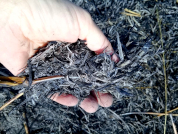
La quema de pastizales es una práctica generalizada en muchos paisajes, pero tiene numerosos efectos complejos sobre los ecosistemas naturales. En regiones como la llanura de inundación del río Paraná Medio, la frecuencia y la intensidad de los incendios han aumentado debido, sobre todo, a la producción ganadera y otros usos del suelo relacionados. Hoy en día hay poca información disponible sobre los efectos potenciales de las cenizas en la biota acuática. En este estudio evaluamos el impacto de las cenizas generadas por la quema de dos pastizales distintos (pastizal A, dominado por Panicum sp., y pastizal B, dominado por Cinnagrostis sp.) en la llanura de inundación del río Paraná Medio, sobre el cladócero Ceriodaphnia reticulata. Los resultados mostraron efectos negativos de las cenizas de ambos pastizales sobre la supervivencia. Por otro lado, mientras que la reproducción disminuyó en los tratamientos con cenizas del pastizal A, aumentó significativamente en los tratamientos con cenizas del pastizal B. Asimismo, las tasas de supervivencia se vieron principalmente afectadas por el total de partículas de cenizas, mientras que la reproducción fue influenciada tanto por el total de partículas como por la fracción fina. Se requiere más investigación para determinar qué características del fuego influyen en la toxicidad de las cenizas sobre la biota. Estos aspectos son fundamentales para mejorar y refinar las prácticas de manejo integrado del fuego.
Citas
Abraham, J., K. Dowling, and S. Florentine. 2017. Risk of post-fire metal mobilization into surface water resources: A review. Science of The Total Environment (599-600):1740-1755. https://doi.org/10.1016/J.SCITOTENV.2017.05.096.
Ahmed, F., and H. Ishiga. 2006. Trace metal concentrations in street dusts of Dhaka city, Bangladesh. Atmospheric Environment (40):3835-3844. https://doi.org/10.1016/j.atmosenv.2006.03.004.
Artells, E., J. Issartel, M. Auffan, D. Borschneck, A. Thill, M. Tella, L. Brousset, Rose J., J. Bottero, and A. Thiéry. 2013. Exposure to Cerium Dioxide Nanoparticles Differently. PloS ONE 8(8):E71260. https://doi.org/10.1371/journal.pone.0071260.
Balseiro, E., M. S. Souza, I. Serra Olabuenaga, L. Wolinski, M. Bastidas Navarro, C. Laspoumaderes, and B. Modenutti. 2014. Effect of the Puyehue-Cordon Caulle volcanic complex eruption on crustacean zooplankton of Andean lakes. Ecología Austral 24(1):75-82. https://doi.org/10.25260/EA.14.24.1.0.39.
Bilbao, B., J. Mistry, A. Millán, and A. Berardi. 2019. Sharing multiple perspectives on burning: towards a participatory and intercultural fire management policy in Venezuela. Brazil, and Guyana. Fire 2(3):39. https://doi.org/10.3390/fire2030039.
Bilbao, B. A., A. F. Millán Devera, M. Matany Luque, J. Mistry, R. Gómez-Martínez, C. Méndez-Vallejo, J. B. Efrain León, G. Gutiérrez, E. León, and B. Anciey. 2022. An intercultural vision for integrated fire management in Venezuela. Tropenbos International. Tropical Forest Issues 61:39-46. https://doi.org/10.55515/CNUU7417.
Brito, D., C. Passos, D. Muniz, and E. Oliveira-Filho. 2017. Aquatic ecotoxicity of ashes from Brazilian savanna wildfires. Environmental Science and Pollution Research 24(24):19671-19682. https://doi.org/10.1007/s11356-017-9578-0.
Brown, L., K. Johnston, S. Palmer, K. Aspray, and J. Holden. 2013. River ecosystem response to prescribed vegetation burning on blanket peatland. PLoS ONE 8(11). https://doi.org/10.1371/journal.pone.0081023.
Campos, I., N. Abrantes, T. Vidal, A. C. Bastos, F. Goncalves, and J. J. Keizer. 2012. Assessment of the toxicity of ash-loaded runoff from a recently burnt eucalypt plantation. European Journal of Forest Research 131(6):1889-1903. https://doi.org/10.1007/s10342-012-0640-7.
Carpenter, S., P. Leavitt, J. Elser, and M. Elser. 1988. Chlorophyll budgets: response to food web manipulation. Biogeochemistry 6(2):79-90. https://doi.org/10.1007/BF00003032.
Carpenter, S., J. Cole, J. Hodgson, J. Kitchell, M. Pace, D. Bade, K. Cottinngham, T. Essington, J. Houser, and D. Schindler. 2001. Trophic cascades, nutrients, and lake productivity: Whole-lake experiments. Ecological Monographs 71(2):163-186. https://doi.org/10.1890/0012-9615(2001)071[0163:TCNALP]2.0.CO;2.
Charette, T., and E. E. Prepas. 2003. Wildfire impacts on phytoplankton communities of three small lakes on the Boreal Plain. Alberta, Canada: A paleolimnological study", Canadian Journal of Fisheries and Aquatic Sciences 60(5):584-593. https://doi.org/10.1139/F03-049.
Cole, M., P. Lindeque, E. Fileman, C. Halsband, R. Goodhead, J. Moger, and T. S. Galloway. 2013. Microplastic Ingestion by Zooplankton. Environ Sci Technol 47:6646-6655. https://doi.org/10.1021/es400663f.
Dahm, C., R. Candelaria-Ley, C. Reale, J. Reale, and D. Van Horn. 2015. Extreme water quality degradation following a catastrophic forest fire. Freshwater Biology 60(12):2584-2599. https://doi.org/10.1111/fwb.12548.
Draghi, C. 2020. Fires in the Paraná Delta. Under fire. NEX CIENCIA. Information service on science, technology and scientific policy in Argentina. URL: acortar.link/S3LPcm.
Earl, S. R., and D. W. Blinn. 2003. Effects of wildfire ash on water chemistry and biota in south-western U.S.A. streams. Freshwater Biology 48(6):1015-1030. https://doi.org/10.1046/j.1365-2427.2003.01066.x.
Faithfull, C., M. Huss, T. Vrede, and A. Bergström. 2011. Bottom-up carbon subsidies and top-down predation pressure interact to affect aquatic food web structure. Oikos 120(2):311-320. https://doi.org/10.1111/j.1600-0706.2010.18683.x.
Forbes, V. E., and P. Calow. 1996. Costs of living with contaminants: implications for assessing low-level exposures. Belle Newsletter 4(3):221-227.
Gophen, M., and W. Geller. 1984. Filter mesh size and food particle uptake by Daphnia. Oecologia 64:408-412. https://doi.org/10.1007/BF00379140.
Gutierrez, M. F., A. Ale, V. Andrade, C. Bacchetta, A. Rossi, and J. Cazenave. 2021. Metallic, metal oxide and metalloid nanoparticles toxic effects on freshwater microcrustaceans: an update and basis for the use of new test species. Water Environmental Research 93(11):2505-2526. https://doi.org/10.1002/wer.1637.
Gutierrez, M., V. Andrade, D. Flores-Mendez, D. Frau, M. Licursi, and L. Negro. 2024. The relative importance of salinization in lowland stream zooplankton: Implications of the ecosystem nutrient status. Science of the Total Environment 912. https://doi.org/10.1016/j.scitotenv.2023.169240.
Gyllström, M., L. A. Hansson, E. Jeppesen, F. G. Criado, E. Gross, K. Irvine, and B. Moss. 2005. The role of climate in shaping zooplankton communities of shallow lakes. Limnology and Oceanography 50(6):2008-2021. https://doi.org/10.4319/lo.2005.50.6.2008.
Harper, A. R., C. Santin, S. H. Doerr, C. A. Froyd, D. Albini, X. L. Otero, L. Viñas, and B. Pérez-Fernández. 2019. Chemical composition of wildfire ash produced in contrasting ecosystems and its toxicity to Daphnia magna. International Journal of Wildland Fire 28:726-737. https://doi.org/10.1071/WF18200.
Helms, J. R., A. Stubbins, J. D. Ritchie, E. C. Minor, D. J. Kieber, and K. Mopper. 2008. Absorption spectral slopes and slope ratios as indicators of molecular weight, source, and photobleaching of chromophoric dissolved organic matter. Limnol Oceanogr 53:955-969. https://doi.org/10.4319/lo.2008.53.3.0955.
Ignatavièius, G., G. Sakalauskienë, and V. Oškinis. 2006. Influence of land fires on increase of heavy metal concentrations in river waters of Lithuania. Journal of Environmental Engineering and Landscape Management 14(1):46-51. https://doi.org/10.1080/16486897.2006.9636878.
Jeppesen, E., B. Moss, H. Bennion, L. Carvalho, L. DeMeester, H. Feuchtmayr, and J. T. Verhoeven. 2010. Interaction of climate change and eutrophication. Climate Change Impacts on Freshwater Ecosystems 119-151. https://doi.org/10.1002/9781444327397.
Jeppesen, E., S. Brucet, L. Naselli-Flores, E. Papastergiado, K. Stefanidis, T. Noges, P. Noges, et al. 2015. Ecological impacts of global warming and water abstraction on lakes and reservoirs due to changes in water level and related changes in salinity. Hydrobiologia 750:201-227. https://doi.org/10.1007/s10750-014-2169-x.
Kandus, P., N. Morandeira, and F. Schivo. 2010. Bienes y servicios ecosistémicos de los humedales del Delta del Paraná. Wetlands International: Fundación Humedales. URL: acortar.link/urz2Hf.
Kandus, P., and N. M. P. Morandeira. 2020. The Delta in flames: Fires in the Lower Paraná islands. UNSAM News. URL: acortar.link/Ned39x.
Kim, K., S. Klaine, J. Cho, and S. Kim. 2010. Oxidative stress responses of Daphnia magna exposed to TiO2 nanoparticles according to size fraction. Science of the Total Environment 408(10):2268-2272. https://doi.org/10.1016/j.scitotenv.2010.01.041.
Kirk, J. T. O. 1994. Light and Photosynthesis in Aquatic Ecosystems, 2nd ed. Cambridge University Press, Cambridge. https://doi.org/10.1017/CBO9780511623370.
Kirsch, G., A. Gómez Anjos, R. Ruaro, N. Abrantes, and B. R. S. Figueiredo. 2024. Ashes in Freshwater Ecosystems: A Systematic Review of their Impacts on Fish. Water Air Soil Pollutant 235:521. https://doi.org/10.1007/s11270-024-07308-w.
Kissman, C. E. H., C. E. Williamson, K. C. Rose, and J. E. Saros. 2016. Nutrients associated with terrestrial dissolved organic matter drive changes in zooplankton: phytoplankton biomass ratios in an alpine lake. Freshwater Biology 62:40-51. https://doi.org/10.1111/fwb.12847.
Kungolos, A., P. Samaras, V. Tsiridis, M. Petala, and G. Sakellaropoulos. 2006. Biodisponibilidad y toxicidad de metales pesados en presencia de materia orgánica natural. Journal of Environmental Science and Health Parte A 41(8):1509-1517. https://doi.org/10.1080/10934520600754706.
Liu, H., X. Wang, Y. Wu, J. Hou, S. Zhang, N. Zhou, and X. Wang. 2019. Toxicity responses of different organs of zebrafish (Danio rerio) to silver nanoparticles with different particle sizes and surface coatings. Environmental Pollution 246:414-422. https://doi.org/10.1016/j.envpol.2018.12.034.
Machado, C. M. D., A. A. Cardoso, and A. G. Allen. 2008. Atmospheric emission of reactive nitrogen during biofuel ethanol production. Environmental Science and Technology 42(2):381-385. https://doi.org/10.1021/es070384u.
McQueen, D. J., M. Johannes, J. Post, T. Stewart, and D. Lean. 1989. Bottom-up and top-down impacts on freshwater pelagic community structure. Ecological Monographs 59(3):289-309. https://doi.org/10.2307/1942603.
Millán Devera, A. F., B. G. Ferrero, and B. A. Bilbao. 2022. Traditional knowledge of fire use by islanders in the Paraná Delta, Argentina. Tropenbos International. Tropical Forest Issues 61:60-65. https://doi.org/10.55515/AEKO2020.
Ministry of Environment and Sustainable Development of Argentina. 2023. Borderless Wetlands. Paraná Delta: management efforts come and go, fires persist, and ecosystems and communities remain affected. October 2023. URL: acortar.link/DQZBfM.
Montico, S., N. C. Di Leo and J. A. Berardi. 2023. Drought, water level drop and effects of fires on soils in the Paraná Delta, Argentina. Cuadernos del Curiham. Special edition (2023): Paraná River Decline: Causes and Impacts. ISSN 2683-8168. https://doi.org/10.35305/curiham.vi.199.
Myers, R. L. 2006. Global Fire Management Iniciative. URL: acortar.link/AnaKOS.
Peralta-Videa, J. R, M. L. López, M. Narayan, G. Saupe, and J. Gardea-Torresdey. 2009. The biochemistry of environmental heavy metal uptake by plants: Implications for the food chain. The International Journal of Biochemistry and Cell Biology 41:1665-1677. https://doi.org/10.1016/j.biocel.2009.03.005.
Pereira, P., X. Úbeda, and E. Baltrenaite. 2010. Mapping total nitrogen in ash after a wildland fire: a microplot analysis. Ekologija 56(3-4):144-152. https://doi.org/10.2478/v10055-010-0020-x.
Pilliod, D. S., R. B. Bury, E. J. Hyde, C. A. Pearl, and P. S. Corn. 2003. Fire and amphibians in North America. Forest Ecology and Management 178(1-2):163-181. https://doi.org/10.1016/S0378-1127(03)00060-4.
Porter, K., and R. McDonough. 1984. The energetic cost of response to blue-green algal filaments by cladocerans. Limnol Oceanogr 29(2):365-369. https://doi.org/10.4319/lo.1984.29.2.0365.
Renzi, M., and A. Blaskovic. 2019. Ecotoxicity of nano-metal oxides: A case study on Daphnia magna. Springer Nature 2019. Ecotoxicology 28:878-889. https://doi.org/10.1007/s10646-019-02085-3.
Sezgin, N., H. Ozcan, G. Demir, S. Nemlioglu, and C. Bayat. 2004. Determination of heavy metal concentrations in street dusts in Istanbul E-5 highway. Environment International 29:979-985. https://doi.org/10.1016/S0160-4120(03)00075-8.
Sica, Y. V., R. D. Quintana, V. Radeloff, and G. I. Gavier-Pizarro. 2016. Wetland loss due to land use change in the Lower Paraná River Delta, Argentina. ResearchGate. https://doi.org/10.1016/j.scitotenv.2016.04.200.
Spencer, C. N., K. O. Gabel, and F. R. Hauer. 2003. Wildfire effects on stream food webs and nutrient dynamics in Glacier National Park, USA. Forest Ecology and Management 178(1-2):141-153. https://doi.org/10.1016/S0378-1127(03)00058-6.
Versteeg, D. J., M. Stalmans, S. D. Dyer, and C. Janssen. 1997. Ceriodaphnia and Daphnia: A comparison of their sensitivity to xenobiotics and utility as a test species. Chemosphere 34(4):869-892. https://doi.org/10.1016/S0045-6535(97)00014-3.
Vymazal, J., and T. Březinová. 2015. Metales pesados en plantas de humedales artificiales y naturales: concentración, acumulación y estacionalidad. Water Sci Technol 71(2):268-276. https://doi.org/10.2166/wst.2014.507.
Wei, B., and L. Yang. 2010. A review of heavy metal contaminations in urban soils, urban road dusts and agricultural soils from China. Microchemical Journal 94:99-107. https://doi.org/10.1016/j.microc.2009.09.014.
Yu, B., K. Lyu, J. Li, Z. Yang, and Y. Sun. 2022. Combined toxic effects of nitrite and ammonia on life history traits of Daphnia pulex. Front Environ Sci 10:1019483. https://doi.org/10.3389/fenvs.2022.1019483.
Zhu, X. S, Y. Chan, and Y. S. Chen. 2010. Toxicity and bioaccumulation of titanium dioxide nanoparticles in Daphnia magna. Chemosphere 78(3):209-215. https://doi.org/10.1016/j.chemosphere.2009.11.013.
Descargas
Archivos adicionales
Publicado
Cómo citar
Número
Sección
Licencia
Derechos de autor 2025 Ayelén Miranda, Gisela Mayora, María F. Gutiérrez

Esta obra está bajo una licencia internacional Creative Commons Atribución 4.0.
Las/os autoras/es conservan sus derechos de autoras/es: 1) cediendo a la revista el derecho a su primera publicación, y 2) registrando el artículo publicado con una Licencia de Atribución de Creative Commons (CC-BY 4.0), lo que permite a autoras/es y terceros verlo y utilizarlo siempre que mencionen claramente su origen (cita o referencia incluyendo autoría y primera publicación en esta revista). Las/os autores/as pueden hacer otros acuerdos de distribución no exclusiva siempre que indiquen con claridad su origen, así como compartir y divulgar ampliamente la versión publicada de su trabajo.