Empowering women in science: A good practice guide
DOI:
https://doi.org/10.25260/EA.25.35.2.1.2476Keywords:
emancipation, gender, systemic barriers, recommendations, caregivers, equity, self-confidence, self-promotion, self-visibility, leadershipAbstract
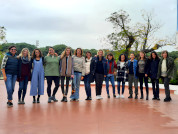
Empowerment can be thought of as a gain of power and autonomy by an unfavored group, which creates a better situation. Women in Science (WIS) face multiple barriers that ultimately affect their performance. There is an urgent need to reverse the inequalities and disadvantages that WIS face. With this aim, in May 2023, 17 WIS gathered in person for four days in a workshop entitled Empowering Women in Science. As an outcome of the workshop, we cooperatively started to draw up a list of empowerment recommendations. We continued working together for more than a year to improve this list, which we now present as the Good Practice Guide for Empowering Women in Science (GPG). The GPG contains recommendations across the individual, collective and system levels that we believe help address inequalities for WIS. The aim of this debate is twofold: a) to present the GPG and b) to use the GPG to self-evaluate the number of actions we, the authors, undertook before and after participating in the workshop. Results show that one year after ending the workshop, we doubled the number of actions performed across all categories assessed: I) identify, confront and make visible systemic barriers; II) self-promotion; III) promote other women, and IV) foster diversity, equity and inclusion. This suggests that empowerment can be fostered through formal training programs and discussion spaces. We hope that the GPG will inspire WIS across disciplines and backgrounds to: A) act towards empowerment (at the individual, collective and system level); B) embrace the notion that each of us can be part of the change that we want to see happening towards higher equity for WIS, and C) recognize that any action is better than inaction. Finally, the GPG provides a framework that will continue to be improved and expanded with the feedback of readers and users.
References
A4BL. 2022. A guide for writing anti-racist tenure and promotion letters. Elife (11):e79892. https://doi.org/10.7554/eLife.79892.
Bernal, X. E., B. Rojas, M. A. Pinto-E, Á. M. Mendoza-Henao, A. Herrera-Montes, M. Herrera-Montes, et al. 2019. Empowering Latina scientists. Science 363(6429):825-826. https://doi.org/10.1126/science.aaw6004.
Bonilla, K., J. Cabrera, C. Calles-Minero, I. Torres-Atencio, K. Aquino, D. Renderos, and M. Alonzo. 2021. Participation in communities of women scientists in Central America: implications from the science diplomacy perspective. Frontiers In Research Metrics and Analytics 6:661508. https://doi.org/10.3389/frma.2021.661508.
Bravata, D. M., S. A. Watts, A. L. Keefer, D. K. Madhusudhan, K. T. Taylor, D. M. Clark, R. S. Nelson, K. O. Cokley, and H. K. Hagg. 2020. Prevalence, predictors, and treatment of impostor syndrome: a systematic review. Journal of General Internal Medicine 35:1252-1275. https://doi.org/10.1007/s11606-019-05364-1.
Chautard, A., and D. C. Hann. 2019. Best practice guide: developing inclusive conferences. School of Geography and the Environment report, University of Oxford.
CLEAR. 2021. Lab Book: A living manual of our values, guidelines, and protocols, V.03. St. John’s, NL: Civic Laboratory for Environmental Action Research, Memorial University. First Edition. Newfoundland University. Newfoundland, Canada. https://doi.org/10.5281/zenodo.5450517.
Croson, R., and U. Gneezy. 2009. Gender differences in preferences. Journal of Economic Literature 47(2):448-474. https://doi.org/10.1257/jel.47.2.448.
Cuny, J., and W. Aspray. 2002. Recruitment and retention of women graduate students in computer science and engineering: results of a workshop organized by the computing research association. ACM SIGCSE Bulletin 34(2):168-174. https://doi.org/10.1145/543812.543852.
Deanna, R., B. Garramon Merkle, K. Pan Chun, D. Navarro-Rosenblatt, I. Baxter, N. Oleas, A. Bortolus, P. Geesink, L. Diele-Viegas, et al. 2022. Community voices: the importance of diverse networks in academic mentoring. Nature Communications 13(1):1681. https://doi.org/10.1038/s41467-022-28667-0.
Garr-Schultz, A., G. A. Muragishi, T. A. Mortejo, and S. Cheryan. 2023. Masculine defaults in academic Science, Technology, Engineering, and Mathematics (STEM) fields. Psychological Science in the Public Interest 24(1):1-9. https://doi.org/10.1177/15291006231170829.
Guevara-Ramírez, P., V. A. Ruiz-Pozo, S. Cadena-Ullauri, G. Salazar-Navas, A. A. Bedón, J. F. V-Vázquez, and A. K. Zambrano. 2022. Ten simple rules for empowering women in STEM. PLOS Computational Biology 18(12):e1010731. https://doi.org/10.1371/journal. pcbi.1010731.
Gulland, A. 2022. Men dominate QandA sessions, even online. Nature 612:22-29. https://doi.org/10.1038/d41586-022-04241-y.
Haraway, D. 1988. Situated knowledges: The Science question in feminism and the privilege of partial perspective. Feminist Studies 14(3):575-599. https://doi.org/10.2307/3178066.
Howard, C., N. C. Overall, D. Osborne, and C. G. Sibley. 2024. Women’s Experiences of Sexual Harassment and Reductions in Well-Being and System Justification. Sex Roles 90:981-993. https://doi.org/10.1007/s11199-024-01490-1.
Jaggar, A. M. 2008. Just Methods: an interdisciplinary feminist reader. Paradigm Publishers. Boulder, Colorado. Pp. 516.
Lara-Prieto, V., P. Vázquez-Villegas, L. A. Mejía-Manzano, P. Caratozzolo, R. M. García-García, J. Membrillo-Hernández, and M. I. Ruiz-Cantisani. 2023. Women inspiring women in STEM professional careers: Journeys from Latin America. LACCEI 1(8). https://doi.org/10.18687/LACCEI2023.1.1.1146.
Lau, V. W., V. L. Scott, M. A. Warren, and M. C. Bligh. 2023. Moving from problems to solutions: A review of gender equality interventions at work using an ecological systems approach. Journal of Organizational Behavior 44(2):399-419. https://doi.org/10.1002/job.2654.
Lopez, D. E., A. D. Zepeda, J. Juvera Ávalos, and E. C. Gutiérrez Franco. 2024. Reimaginando STEAM desde la diversidad. ISBN: 978-607-513-705-6. Universidad Autónoma de Querétaro, México.
Nature 2023. Celebrate women in science today and every day. Editorial. Nature 615:187. https://doi.org/10.1038/d41586-023-00670-5.
Nocetti, L., C. Palioff, and V. Della Torre. 2018. Conciencia de género. Políticas, números y algo más sobre INTA. ISSN 2618-219X.
O’Brien, K. R., M. Holmgren, T. Fitzsimmons, M. E. Crane, P. Maxwell, and B. Head. 2019. What is gender equality in science? Trends in Ecology and Evolution 34(5): 395-399. https://doi.org/10.1016/j.tree.2019.02.009.
Oester, S., J. A. Cigliano, E. J. Hind-Ozan, and E. C. M. Parsons. 2017. Why conferences matter - an illustration from the International Marine Conservation Congress. Frontiers in Marine Science 4:257. https://doi.org/10.3389/fmars.2017.00257.
Parents in Science Movement. 2021. Activities report, 2016-2021.
Parker, E. 2018. Make childcare easier. Nature 564:S89. https://doi.org/10.1038/d41586-018-07783-2.
Pérez, L., P. de Tezanos Pinto, P. Echeverría-Galindo, F. Charqueño-Celis, A. C. Shinneman, A. Myrbo, M. S. Tonello, M. Bücker, M. Brenner, H. Bennion, and J. Massaferro. 2024. Diversity, equity, and inclusion in paleolimnology: insights from the 2022 IAL-IPA symposium. Journal of Paleolimnology 1-12. https://doi.org/10.1007/s10933-024-00320-4.
Revenga, A. L., and A. M. Muñoz Boudet. 2017. Women’s work. Scientific American 317(3):72-77.
Rocha, S., F. Staniscuaski, M. F. Nudelman, R. Lana, R. M. Martins, O. Fernandes Jr., A. V. Machado, et al. 2025. The impact of parenthood on mental health within the academic community: highlighting vulnerabilities and identifying high-risk groups. Humanities and Social Sciences Communications 12(1):1-10. https://doi.org/10.1057/s41599-025-05178-z.
Saborit-Rodríguez, A., M. Morales-Pérez, D. de la C. Macola-Ross, and L. Vera-Aguilera. 2022. El sexismo en la historia de las ciencias: Efecto Matilda. Revista Médica Electrónica 44(4):758-768.
Sebastián-González, E., E. Graciá, A. Morán-Ordóñez, I. Pérez-Ibarra, A. Sanz-Aguilar, and M. Sobral. 2023. Ten simple rules for a mom-friendly Academia. PLOS Computational Biology 19(8). https://doi.org/10.1371/journal.pcbi.1011284.
Stachl, C. 2021. A catalyst for change. 10:e71583. https://doi.org/10.7554/eLife.71583.
Torres, I., N. Collins, D. Ugwu, and A. Hertz. 2023. Global call to action for mothers in science. Action plan for funding agencies 2023. Mothers in Science.
Woolston, C. 2020. It's like we're going back 30 years: how the coronavirus is gutting diversity in science. Nature. https://doi.org/10.1038/d41586-020-02288-3.
Downloads
Published
How to Cite
Issue
Section
License
Copyright (c) 2025 Paula de Tezanos Pintos, Josefina Bodnar, Valeria P. Carreira, Valeria Casa, Eliana P. Coturel, Rocío Deanna, Aldana M. Elisei, Julieta Foglia, Josefina L. De Paepe, Paula Fernández, Alicia López Méndez, Bettina Mahler, Marcela Muratori, Claudia E. Natenzon, Marcela V. Nicola, Natalia A. Ossana, Ana J. Sagasti

This work is licensed under a Creative Commons Attribution 4.0 International License.
Authors retain their rights as follows: 1) by granting the journal the right to its first publication, and 2) by registering the published article with a Creative Commons Attribution License (CC-BY 4.0), which allows authors and third parties to view and use it as long as they clearly mention its origin (citation or reference, including authorship and first publication in this journal). Authors can make other non-exclusive distribution agreements as long as they clearly indicate their origin and are encouraged to widely share and disseminate the published version of their work.