Moving forward on a slippery floor: Extra challenges faced by women ecologists related to fieldwork, traveling and the working environment
DOI:
https://doi.org/10.25260/EA.25.35.2.1.2496Keywords:
gender, care tasks, unpaid work, inequality, harassment, violence, ecology, science, CONICET, ArgentinaAbstract
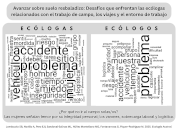
Female ecologists are limited by obstacles that include the disproportionate burden of domestic and caregiving tasks, as well as harassment and discrimination. These factors contribute to their underrepresentation in prominent academic positions and lower visibility in publications. Through a survey of 665 Argentine ecologists, we explored two hypotheses: 1) caregiving responsibilities limit women’s ability to travel, and 2) women experience harassment more frequently than men. The results showed that women with caregiving responsibilities travel less for fieldwork and scientific meetings. Eighty percent of women avoid traveling alone to the field, compared to 66% of male respondents. In addition to logistical limitations, increased workloads and wildlife-related safety issues mentioned by both genders, women reported concerns related to their personal integrity and vulnerability. Women report experiencing more instances of harassment than their male colleagues. We conclude that gender inequities and vulnerability to safety issues differentially affect the careers of female researchers. Institutional policies are proposed to address these inequalities —including grants for caregiving assistance and measures against harassment—, emphasizing the need to create a more just and equitable work environment that fosters emancipatory leadership to promote the professional advancement of women in science. We included an English version of this work in the Supplementary Material 1.
References
Atenstaedt, R. 2012. Word cloud analysis of the BJGP. British Journal of General Practice 148. https://doi.org/10.3399/bjgp12X630142.
Chuliver Pereyra, M., J. Grosso, G. Fontanarrosa, J. Fratani, D. Ferraro, et al. 2021. Gender inequities in herpetology: the case of the Argentine community. Cuadernos de Herpetología 35(2):195-205. https://doi.org/195-205. 10.31017/CdH.2021.
Clancy, K. B. H., R. G. Nelson, J. N. Rutherford, and K. Hinde. 2014. Survey of Academic Field Experiences (SAFE): Trainees report harassment and assault. PLoS ONE 9(7). https://doi.org/10.1371/journal.pone.0102172.
Condon, S., M. Lieber, and F. Maillochon. 2007. Feeling Unsafe in Public Places: Understanding Women’s Fears. Revue Francaise de Sociologie 48:101-128. https://doi.org/10.3917/rfs.485.0101.
Demery, A. J. C., and M. A. Pipkin. 2021. Safe fieldwork strategies for at-risk individuals, their supervisors and institutions. In Nature Ecology and Evolution 5(1):5-9. Nature Research. https://doi.org/10.1038/s41559-020-01328-5.
Domínguez, G. E., M. González-Yáñez, and F. Chiappini. 2021. Resistencias y reproducciones de mujeres académicas: Estrategias de supervivencia en la academia patriarcal/neoliberal. Quaderns de Psicologia 23(2):e1603. https://doi.org/10.5565/rev/qpsicologia.1603.
Fitzgerald, L. F., and L. M. Cortina. 2017. Sexual harassment in work organizations: A view from the 21st century. Pp. 215-234 en APA handbook of the psychology of women: Perspectives on women’s private and public lives. Vol. 2. American Psychological Association. https://doi.org/10.1037/0000060-012.
Fontanarrosa, G., L. Zarbá, V. Aschero, D. A. Dos Santos, M. G. Nuñez Montellano, M. C. Plaza Behr, et al. 2024. Over twenty years of publications in Ecology: Over-contribution of women reveals a new dimension of gender bias. PLoS ONE 19(9):e0307813. https://doi.org/10.1371/journal.pone.0307813.
Gutek, B. A., and M. P. Koss. 1993. Changed women and changed organizations: Consequences of and coping with sexual harassment. Journal of Vocational Behavior 42(1):28-48. https://doi.org/doi:10.1006/jvbe.1993.1003.
Harding, S. G. 1993. Ciencia y Feminismo. 5th Edition. Cornell University.
Huang, J., A. J. Gates, R. Sinatra, and A. L. Barabási. 2020. Historical comparison of gender inequality in scientific careers across countries and disciplines. Proceedings of the National Academy of Sciences of the United States of America 117(9):4609-4616. https://doi.org/10.1073/pnas.1914221117.
James, A., R. Chisnall, and M. J. Plank. 2019. Gender and societies: A grassroots approach to women in science. Royal Society Open Science 6:190633. https://doi.org/10.1098/rsos.190633.
James, R., J. R. B. Fisher, C. Carlos-Grotjahn, M. S. Boylan, B. Dembereldash, et al. 2023. Gender bias and inequity holds women back in their conservation careers. Frontiers in Environmental Science 10. https://doi.org/10.3389/fenvs.2022.1056751.
Johnson, P. A., S. E. Widnall, and F. F. Benya. 2018. Sexual Harassment of Women: Climate, Culture and Consequences in Academic Sciences, Engineering and Medicine. En P. A. Johnson, S. E. Widnall and F. F. Benya (eds.). National Academies Press. https://doi.org/10.17226/24994.
Justo, A. M., C. B. V. 2014. Estudos qualitativos e o uso de softwares para análises lexicais. Pp. 37-54 en C. Novikoff (ed.). Caderno de artigos: X SIAT. Duque de Caxias: Universidade do Grande Rio Professor José de Souza Herdy: UNIGRANRIO.
Karami, A., M. Ghasemi, S. Sen, M. Moraes, and V. Shah. 2019. Exploring Diseases and Syndromes in Neurology Case Reports from 1955 to 2017 with Text Mining. https://doi.org/10.1016/j.compbiomed.2019.04.008.
Karami, A., C. N. White, K. Ford, S. Swan, and M. Yildiz Spinel. 2020. Unwanted advances in higher education: Uncovering sexual harassment experiences in academia with text mining. Information Processing and Management 57(2). https://doi.org/10.1016/j.ipm.2019.102167.
Lomáscolo, S. B., M. L. Sandoval-Salinas, A. Novillo, G. Fontanarrosa, M. G. Núñez Montellano, et al. 2024. Perspectives - Academic career in ecology: Effect of gender, caregiving labor, and the working environment. In Forest Ecology and Management. Vol. 560. Elsevier B.V. https://doi.org/10.1016/j.foreco.2024.121801.
Maas, B., R. J. Pakeman, L. Godet, L. Smith, V. Devictor, et al. 2021. Women and Global South strikingly underrepresented among top-publishing ecologists. En Conservation Letters (Vol. 14, Issue 4). John Wiley and Sons Inc. https://doi.org/10.1111/conl.12797.
McGuire, K. L., R. B. Primack, and E. C. Losos. 2012. Dramatic improvements and persistent challenges for women ecologists. BioScience 62(2):189-196. https://doi.org/10.1525/bio.2012.62.2.12.
Miller, C., and J. Roksa. 2020. Balancing Research and Service in Academia: Gender, Race, and Laboratory Tasks. Gender and Society 34(1):131-152. https://doi.org/10.1177/0891243219867917.
R Core Team. 2023. R: A Language and Environment for Statistical Computing. R Foundation for Statistical Computing.
Ramírez-Castaneda, V., E. P. Westeen, J. Frederick, S. Amini, D. R. Wait, et al. 2022. A set of principles and practical suggestions for equitable fieldwork in biology-uted under Creative Commons Attribution-NonCommercial-NoDerivatives License 4.0 (CC BY-NC-ND). Proceedings of the National Academy of Science 34:e2122667119. https://doi.org/10.1073/pnas.2122667119.
Rogers, C. 2017. I’m complicit and I’m ambivalent and that’s crazy: Care-less spaces for women in the academy. Women’s Studies International Forum 61:115-122. https://doi.org/10.1016/j.wsif.2016.07.002.
Skelton, C. 2005. The “individualized” (woman) in the academy: Ulrich Beck, gender and power. Pp. 319-332 en Gender and Education. Vol. 17, Issue 3. https://doi.org/10.1080/09540250500145049.
Spirito, F., J. L. De Paepe, and M. F. Reyes. 2022. Resignificando nuestros lugares de trabajo: Invitación a co-crear espacios de solidaridad y prácticas emancipadoras en ecología. Ecología Austral 32(2):424-433. https://doi.org/10.25260/EA.22.32.2.0.1856.
Wesely, J. K., and E. Gaarder. 2004. The gendered “nature” of the urban outdoors: Women negotiating fear of violence. Pp. 645-663 en Gender and Society. Vol. 18, Issue 5. SAGE Publications Inc. https://doi.org/10.1177/0891243204268127.
Wilkins, K., S. L. Carroll, K. P. Davis, R. Hauptfeld, M. S. Jones, et al. 2023. Sexual harassment disproportionately affects ecology and evolution graduate students with multiple marginalized identities in the United States. BioScience 73(5):376-387. https://doi.org/10.1093/biosci/biad032.
Wolfinger, N. H., M. A. Mason, and M. Goulden. 2009. Stay in the game: gender, family formation and alternative trajectories in the academic life course. Soc Forces 87:1591-1621. https://doi.org/10.1353/sof.0.0182.
Yates, F. 1934. Contingency table involving small numbers and the χ2 test. Journal of the Royal Statistical Society 1(2):217-235. https://doi.org/10.2307/2983604.
Zandonà, E. 2022. Female ecologists are falling from the academic ladder: A call for action. Perspectives in Ecology and Conservation 20(3):294-299. https://doi.org/10.1016/j.pecon.2022.04.001.
Downloads
Additional Files
Published
How to Cite
Issue
Section
License
Copyright (c) 2025 Silvia B. Lomáscolo, Agustina Novillo, Edgardo J. I. Pero, María L. Sandoval-Salinas, Ma. Gabriela Núñez Montellano, Gabriela Fontanarrosa, María Piquer-Rodríguez

This work is licensed under a Creative Commons Attribution 4.0 International License.
Authors retain their rights as follows: 1) by granting the journal the right to its first publication, and 2) by registering the published article with a Creative Commons Attribution License (CC-BY 4.0), which allows authors and third parties to view and use it as long as they clearly mention its origin (citation or reference, including authorship and first publication in this journal). Authors can make other non-exclusive distribution agreements as long as they clearly indicate their origin and are encouraged to widely share and disseminate the published version of their work.