Genetic structure and diversity of the amphitropical disjunct grass Leptochloa crinita (formerly Trichloris crinita) and implications for restoration
DOI:
https://doi.org/10.25260/EA.25.35.2.0.2509Keywords:
biogeographic history, common garden, DNA sequences, microsatellites, North America, populationsAbstract
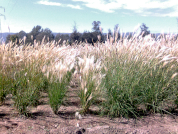
Amphitropical species have disjunct distributions south and north of the equator. That is the case of Leptochloa crinita, a perennial grass found in dry and warm regions of South and North America, and recommended for rangeland restoration. We analyzed to what degree the distribution of the species in both subcontinents shaped its genetic differentiation and population variability. We collected seeds from 15 populations from South America and 7 from North America, and grew them in a common garden to evaluate adaptive variation. Three microsatellite markers and DNA sequences from one nuclear (ITS1-5.8S-ITS2) and one chloroplast region (rpl32-trnL) were used to analyze recent and historical gene flow, respectively. We used climatic niche models to infer past suitable habitats. We found significant genetic variability among populations within each subcontinent, but low genetic differences between populations from South vs. North America; these were detected only with microsatellites and not with DNA sequences. Results show that the species has diverged from a common gene pool in the recent past (~500-3300 generations ago [estimate: ~3000-20000 years]). Populations from South America had plants with more and taller inflorescences, more tillers and heavier seeds than the North American ones, which could represent adaptations to the less stressful environments that the species inhabits in South America. Climatic niche models indicate few potential habitats for the species in North America during the Last Glacial Maximum and Middle Holocene, in contrast to South America, where potential habitats seemed to be comparable or more extensive than at present. This and previous studies provide a view of the genetic resources of the species. Results suggest that —if necessary, and taking proper precautions— the admixture of L. crinita populations or the germplasm translocation between subcontinents are alternatives to consider in restoration practices.
References
Amarilla, L. D., J. O. Chiapella, V. Sosa, N. C. Moreno, and A. M. Anton. 2015. A tale of North and South America: Time and mode of dispersal of the amphitropical genus Munroa (Poaceae, Chloridoideae). Botanical Journal of the Linnean Society 179:110-125. https://doi.org/10.1111/boj.12304.
Anderson, D. L., J. A. Del Aguila, A. Marchi, J. C. Vera, and E. L. Orionte. 1980. Manejo del pastizal natural y producción ganadera. Parte 1. Páginas 1-61. Editorial INTA. Buenos Aires, Argentina.
Avise, J. C. 2004. Molecular markers, natural history and evolution 2nd ed. Sunderland: Sinauer.
Bobo-Pinilla, J., S. B. B de León, J. S. Colomar, G. Fenu, G. Bacchetta, J. P. de Giles, and M. M. Martínez-Ortega. 2016. Phylogeography of Arenaria balearica L.(Caryophyllaceae): evolutionary history of a disjunct endemic from the Western Mediterranean continental islands. PeerJ 4:e2618. https://doi.org/10.7717/peerj.2618.
Booth, T. H. 2018. Why understanding the pioneering and continuing contributions of BIOCLIM to species distribution modelling is important. Austral Ecology 43:852-860. https://doi.org/10.1111/aec.12628.
Brown, D. E., and E. Makings. 2014. A guide to North American grasslands. Desert Plants 29:1399-160.
Bucharova, A., W. Durka, N. Hölzel, J. Kollmann, S. Michalski, and O. Bossdorf. 2017. Are local plants the best for ecosystem restoration? It depends on how you analyze the data. Ecology and Evolution 7:10683-10689. https://doi.org/10.1002/ece3.3585.
Bucharova, A., O. Bossdorf, N. Hölzel, J. Kollmann, R. Prasse, and W. Durka. 2019. Mix and match: regional admixture provenancing strikes a balance among different seed-sourcing strategies for ecological restoration. Conservation Genetics 20:7-17. https://doi.org/10.1007/s10592-018-1067-6.
Carloni, E. J., R. E. Quiroga, K. Grunberg, and A. C. Premoli. 2021. Nivel de ADN-Ploidía en poblaciones sudamericanas y norteamericanas de la gramínea nativa disyunta Trichloris crinita (Chloridoideae, Poaceae). Revista FAVE Ciencias Agrarias 20:220-227. https://doi.org/10.14409/fa.v20i1.10260.
Cavagnaro, P. F., J. B. Cavagnaro, J. L. Lemes, R. W. Masuelli, and C. B. Passera. 2006. Genetic diversity among varieties of the native forage grass Trichloris crinita based on AFLP markers, morphological characters, and quantitative agronomic traits. Genome 49:906-918. https://doi.org/10.1139/g06-060.
Cavalli-Sforza, L. L., and A. W. Edwards. 1967. Phylogenetic analysis. Models and estimation procedures. American Journal of Human Genetics 19:233-257.
Cornuet, J. M., P. Pudlo, J. Veyssier, A. Dehne-García, M. Gautier, et al. 2014. DIYABC v2. 0: a software to make approximate Bayesian computation inferences about population history using single nucleotide polymorphism, DNA sequence and microsatellite data. Bioinformatics 30:1187-1189. https://doi.org/10.1093/bioinformatics/btt763.
Da Silva, S. B., and A. Da Silva. 2018. Pstat: An R package to assess population differentiation in phenotypic traits. The R Jorunal 1:447-454. https://doi.org/10.32614/RJ-2018-010.
Dalmasso, A. D. 1994. Fenología de cinco gramíneas de interés forrajero: Pappophorum caespitosum, Trichloris crinita, Setaria leucopila, Digitaria californica, Diplachne dubia. Multequina 3:9-34.
Di Rienzo, J. A., F. Casanoves, M. G. Balzarini, L. González, M. Tablada, and C. W. Robledo. 2020. InfoStat versión 2018. Centro de Transferencia InfoStat, FCA, Universidad Nacional de Córdoba, Argentina. URL: infostat.com.ar.
Donoghue, M. J. 2011. Bipolar biogeography. Proceedings of the National Academy of Sciences 108:6341-6342. https://doi.org/10.1073/pnas.1103801108.
Doyle, J. J. 1990. Isolation of plant DNA from fresh tissue. Focus 12:13-15.
Earl, D. A., and B. M. VonHoldt. 2012. STRUCTURE HARVESTER: a website and program for visualizing STRUCTURE output and implementing the Evanno method. Conservation Genetics Resources 4:359-361. https://doi.org/10.1007/s12686-011-9548-7.
Ehlers, J., and P. L. Gibbard. 2007. The extent and chronology of Cenozoic global glaciation. Quaternary International 164:6-20. https://doi.org/10.1016/j.quaint.2006.10.008.
Evanno, G., S. Regnaut, and J. Goudet. 2005. Detecting the number of clusters of individuals using the software STRUCTURE: a simulation study. Molecular Ecology 14:2611-2620. https://doi.org/10.1111/j.1365-294X.2005.02553.x.
Excoffier, L., and H. E. L. Lischer. 2010. Arlequin suite ver 3.5: A new series of programs to perform population genetics analyses under Linux and Windows. Molecular Ecology Resources 10:564-567. https://doi.org/10.1111/j.1755-0998.2010.02847.x.
Frost, L. A., S. M. Tyson, P. Lu‐Irving, N. O’Leary, and R. G. Olmstead. 2017. Origins of North American arid‐land Verbenaceae: More than one way to skin a cat. American Journal of Botany 104:1708-1716. https://doi.org/10.3732/ajb.1700292.
Gamba, D., and N. Muchhala. 2020. Global patterns of population genetic differentiation in seed plants. Molecular Ecology 29:3413-3428. https://doi.org/10.1111/mec.15575.
García, E., C. Soto, and F. Miranda. 1960. Larrea y clima. Anales del Instituto de Biología de la Universidad Nacional Autónoma de México 31:133-171.
Greco, S. A., and J. B. Cavagnaro. 2003. Effects of drought in biomass production and allocation in three varieties of Trichloris crinita P. (Poaceae) a forage grass from the arid Monte region of Argentina. Plant Ecology 164:125-135. https://doi.org/10.1023/A:1021217614767.
González, C. L., and G. V. Látigo. 1981. Rootplowing, front-end stacking, and seeding effects on herbaceous plant species composition. Journal of Range Management 34:460-465. https://doi.org/10.2307/3898098.
Goodman, S. J. 1997. RST Calc: a collection of computer programs for calculating estimates of genetic differentiation from microsatellite data and determining their significance. Molecular Ecology 6:881-885. https://doi.org/10.1046/j.1365-294X.1997.00260.x.
Gutiérrez, H. F., G. A. Richard, M C. Cerino, and J. F. Pensiero. 2016. Sistema reproductIvo de Trichloris (poaceae, chloridoideae, chlorideae). Boletín de la Sociedad Argentina de Botánica 51:111-122. https://doi.org/10.31055/1851.2372.v51.n1.14421.
Hancock, N. M., F. Encinas‐Viso, and L. M. Broadhurst. 2023. A documented paradigm shift in seed sourcing: attitudinal changes to using local native seed for ecological restoration. Restoration Ecology 31:e13845. https://doi.org/10.1111/rec.13845.
Harris, S. A., and R. Ingram. 1991. Chloroplast DNA and biosystematics: the effects of intraspecific diversity and plastid transmission. Taxon 40:393-412. https://doi.org/10.2307/1223218.
Hewitt, G. M. 2011. Quaternary phylogeography: the roots of hybrid zones. Genetica 139:617-638. https://doi.org/10.1007/s10709-011-9547-3.
Hijmans, R. J., L. Guarino, M. Cruz, and E. Rojas. 2001. Computer tools for spatial analysis of plant genetic resources data: 1. DIVA-GIS. Plant Genetic Resources Newsletter 127:15-19.
Höfner, J., T. Klein‐Raufhake, C. Lampei, O. Mudrak, A. Bucharova, and W. Durka. 2021. Populations restored using regional seed are genetically diverse and similar to natural populations in the region. Journal of Applied Ecology 59:2234-2244. https://doi.org/10.1111/1365-2664.14067.
Hubisz, M. J., D. Falush, M. Stephens, and J. K. Pritchard. 2009. Inferring weak population structure with the assistance of sample group information. Molecular Ecology Resources 9:1322-1332. https://doi.org/10.1111/j.1755-0998.2009.02591.x.
Jackson, S. T., and J. T. Overpeck. 2000. Responses of plant populations and communities to environmental changes of the late Quaternary. Paleobiology 26:194-220. https://doi.org/10.1017/S0094837300026932.
Johnson, R., L. Stritch, P. Olwell, S. Lambert, M. E. Horning, and R. Cronn. 2010. What are the best seed sources for ecosystem restoration on BLM and USFS lands? Native Plants Journal 11:117-131. https://doi.org/10.2979/NPJ.2010.11.2.117.
Jones, T. A. 2013. When local isn't best. Evolutionary Applications 6:1109-1118. https://doi.org/10.1111/eva.12090.
Kelly, M. 2019. Adaptation to climate change through genetic accommodation and assimilation of plastic phenotypes. Philosophical Transactions of the Royal Society B 374:20180176. https://doi.org/10.1098/rstb.2018.0176.
Kettenring, K. M., K. L. Mercer, C. Reinhardt Adams, and J. Hines. 2014. Application of genetic diversity–ecosystem function research to ecological restoration. Journal of Applied Ecology 51:339-348. https://doi.org/10.1111/1365-2664.12202.
Kopelman, N. M., J. Mayzel, M. Jakobsson, N. A. Rosenberg, and I. Mayrose. 2015. Clumpak: a program for identifying clustering modes and packaging population structure inferences across K. Molecular Ecology Resources 15:1179-1191. https://doi.org/10.1111/1755-0998.12387.
Kozub, P. C., K. Barboza, F. Galdeano, C. L. Quarin, J. B. Cavagnaro, and P. F. Cavagnaro. 2017. Reproductive biology of the native forage grass Trichloris crinita (Poaceae, Chloridoideae). Plant Biology 19:444-453. https://doi.org/10.1111/plb.12549.
Kozub, P. C., K. Barboza, J. B. Cavagnaro, and P. F. Cavagnaro. 2018. Development and characterization of SSR markers for Trichloris crinita using sequence data from related grass species. Revista de la Facultad de Ciencias Agrarias, Universidad Nacional de Cuyo 50:1-16.
Kozub, P. C., M. L. Peñas, P. E. Novo, and P. F. Cavagnaro. 2019. Molecular cytogenetic characterization of the native forage grass Trichloris crinita. Crop Science 59:1-13. https://doi.org/10.2135/cropsci2018.12.0731.
Li, Y. C., A. B. Korol, T. Fahima, A. Beiles, and E. Nevo. 2002. Microsatellites: genomic distribution, putative functions, and mutational mechanisms: a review. Molecular Ecology 11:2453-2465. https://doi.org/10.1046/j.1365-294X.2002.01643.x.
López-González, N., J. Bobo-Pinilla, N. Padilla-García, J. Loureiro, S. Castro, B. M. Rojas-Andrés, and M. M. Martínez-Ortega. 2021. Genetic similarities versus morphological resemblance: unraveling a polyploid complex in a Mediterranean biodiversity hotspot. Molecular Phylogenetics and Evolution 155:107006. https://doi.org/10.1016/j.ympev.2020.107006.
Loveless, M. D., and J. L. Hamrick. 1984. Ecological determinants of genetic structure in plant populations. Annual Review of Ecology and Systematics 15:65-95. https://doi.org/10.1146/annurev.es.15.110184.000433.
Marinoni, L., J. M. Zabala, M. Parra-Quijano, R. J. Fernández, and J. F. Pensiero. 2018. Genetic and environmental variation of seed weight in Trichloris species (Chloridoideae, Poaceae) and its association with seedling stress tolerance. Plant Ecology and Diversity 11:173-184. https://doi.org/10.1080/17550874.2018.1449262.
Marinoni, L., J. M. Zabala, R. E. Quiroga, G. A. Richard, and J. F. Pensiero. 2022. Seed weight and trade-offs: an experiment in false rhodes grasses under different aridity conditions. Plants 11:2887. https://doi.org/10.3390/plants11212887.
McKay, J. K., and R. G. Latta. 2002. Adaptive population divergence: markers, QTL and traits. Trends in Ecology and Evolution 17:285-291. https://doi.org/10.1016/S0169-5347(02)02478-3.
McKay, J. K., C. E. Christian, S. Harrison, and K. J. Rice. 2005. How local is local? — A review of practical and conceptual issues in the genetics of restoration. Restoration Ecology 13:432-440. https://doi.org/10.1111/j.1526-100X.2005.00058.x.
Merilä, J., and P. Crnokrak. 2001. Comparison of genetic differentiation at marker loci and quantitative traits. Journal of Evolutionary Biology 14:892-903. https://doi.org/10.1046/j.1420-9101.2001.00348.x.
Mijangos, J. L., C. Pacioni, P. B. Spencer, and M. D. Craig. 2015. Contribution of genetics to ecological restoration. Molecular Ecology 24:22-37. https://doi.org/10.1111/mec.12995.
Millar, C. I., and W. J. Libby. 1991. Strategies for conserving clinal, ecotypic, and disjunct population diversity in widespread species. Pp. 149-170 in D. A. Falk and K. E. Holsinger (eds.). Genetics and Conservation of Rare Plants, Oxford University Press, New York, USA. https://doi.org/10.1093/oso/9780195064292.003.0010.
Nicora, E. G., and Z. E. Rúgolo de Agrasar. 1987. Los géneros de gramíneas de América austral. 611 páginas. Editorial Hemisferio Sur, Buenos Aires, Argentina.
Nielsen, E. E., M. M. Hansen, and D. Meldrup. 2006. Evidence of microsatellite hitch‐hiking selection in Atlantic cod (Gadus morhua L.): implications for inferring population structure in nonmodel organisms. Molecular Ecology 15:3219-3229. https://doi.org/10.1111/j.1365-294X.2006.03025.x.
Otto-Bliesner, B. L., E. C. Brady, G. Clauzet, R. Tomas, S. Levis, and Z. Kothavala. 2006. Last glacial maximum and Holocene climate in CCSM3. Journal of Climate 19:2526-2544. https://doi.org/10.1175/JCLI3748.1.
Passera, C. B., O. Borsetto, R. J. Candia, and C. R. Stasi. 1992. Shrub control and seeding influences on grazing capacity in Argentina. Journal of Range Management 45:480-482. https://doi.org/10.2307/4002906.
Pawelek, K. A., F. S. Smith, A. D. Falk, M. K. Clayton, K. W. Haby, and D. W. Rankin. 2015. Comparing three common seeding techniques for pipeline vegetation restoration: a case study in South Texas. Rangelands 37:99-105. https://doi.org/10.1016/j.rala.2015.03.007.
Peakall, R., and P. E. Smouse. 2012. GENALEX 6.5: genetic analysis in Excel. Population genetic software for teaching and research-an update. Bioinformatics 28:2537-2539. https://doi.org/10.1111/j.1471-8286.2005.01155.x.
Perfectti, F., F. X. Picó, and J. M. Gómez. 2009. La huella genética de la selección natural. Revista Ecosistemas 18:10-16.
Peterson, P. M., and J. T. Columbus. 1997. Allelic variation in the amphitropical disjunct Scleropogon brevifolius (Poaceae: Eragrostideae). Biollania 6:473-490.
Peterson, P. M., and O. Morrone. 1997. Allelic variation in the amphitropical disjunct Lycurus setosus (Poaceae: Muhlenbergiinae). Madroño 44:334-346.
Peterson, P. M., J. T. Columbus, and S. J. Pennington. 2007. Classification and biogeography of New World grasses: Chloridoideae. Aliso 23:580-594. https://doi.org/10.5642/aliso.20072301.43.
Peterson, P. M., K. Romaschenko, N. Snow, and G. Johnson. 2012. A molecular phylogeny and classification of Leptochloa (Poaceae: Chloridoideae: Chlorideae) sensu lato and related genera. Annals of Botany 109:1317-1329. https://doi.org/10.1093/aob/mcs077.
Peterson, P. M., K. Romaschenko, Y. Herrera Arrieta, and M. S. Vorontsova. 2022. Phylogeny, classification and biogeography of Afrothrichloris, Apochiton, Coelachyrum, Dinebra, Eleusine, Leptochloa, Schoenefeldia and a new genus, Schoenefeldiella (Poaceae: Chloridoideae: Cynodonteae: Eleusininae). Journal of Systematics and Evolution 60:630-639. https://doi.org/10.1111/jse.12803.
Pezzani, F., C. Montaña, and R. Guevara. 2006. Associations between arbuscular mycorrhizal fungi and grasses in the successional context of a two-phase mosaic in the Chihuahuan Desert. Mycorrhiza 16:285-295. https://doi.org/10.1007/s00572-006-0044-y.
Phillips, S. J. 2005. A brief tutorial on Maxent. ATT Research 190:231-259.
Premoli, A. C., and P. Mathiasen. 2011. Respuestas ecofisiológicas adaptativas y plásticas en ambientes secos de montaña: Nothofagus pumilio, el árbol que acaparó los Andes australes. Ecología Austral 21:251-269.
Pritchard, J. K., M. Stephens, and P. Donnelly. 2000. Inference of population structure using multilocus genotype data. Genetics 155:945-959. https://doi.org/10.1093/genetics/155.2.945.
Quiroga, E., L. Blanco, and E. Orionte. 2009. Evaluación de estrategias de rehabilitación de pastizales áridos. Ecología Austral 19:107-117.
Quiroga, R. E., R. A. Golluscio, L. J. Blanco, and R. J. Fernández. 2010. Aridity and grazing as convergent selective forces: an experiment with an Arid Chaco bunchgrass. Ecological Applications 20:1876-1889. https://doi.org/10.2111/08-044.1.
Quiroga, R. E., R. J. Fernández, R. A. Golluscio, and L. J. Blanco. 2013. Differential water-use strategies and drought resistance in Trichloris crinita plants from contrasting aridity origins. Plant Ecology 214:1027-1035. https://doi.org/10.1007/s11258-013-0228-4.
Quiroga, R. E., A. C. Premoli, and R. J. Fernández. 2018. Climatic niche shift in the amphitropical disjunct grass Trichloris crinita. PLoS One 13:e0199811. https://doi.org/10.1371/journal.pone.0199811.
Quiroga, R. E., A. C. Premoli, and R. J. Fernández. 2021. Niche dynamics in amphitropical desert disjunct plants: Seeking for ecological and species‐specific influences. Global Ecology and Biogeography 30:370-383. https://doi.org/10.1111/geb.13215.
Quiroga, R. E. 2022. Variabilidad intraespecífica regional y continental en Trichloris crinita (Poaceae): aspectos de su nicho ecológico y diferenciación genética relevantes para la restauración de pastizales. Tesis doctoral. Escuela para Graduados, Facultad de Agronomía, Universidad de Buenos Aires, Argentina. Pp. 189.
Raven, P. H. 1963. Amphitropical relationships in the floras of North and South America. The Quarterly Review of Biology 38:151-177. https://doi.org/10.1086/403797.
Sádlo, J., M. Chytrý, J. Pergl, and P. Pyšek. 2018. Plant dispersal strategies: a new classification based on the multiple dispersal modes of individual species. Preslia 90:1-22. https://doi.org/10.23855/preslia.2018.001.
Sánchez‐del Pino, I., A. Alfaro, R. H. Andueza‐Noh, A. Mora‐Olivo, M. Chávez‐Pesqueira, et al. 2020. High phylogeographic and genetic diversity of Tidestromia lanuginosa supports full‐glacial refugia for arid‐adapted plants in southern and central Coahuila, Mexico. American Journal of Botany 107:1296-1308. https://doi.org/10.1002/ajb2.1536.
Schneider von Deimling, T., A. Ganopolski, H. Held, and S. Rahmstorf. 2006. How cold was the last glacial maximum? Geophysical Research Letters 33:1-5. https://doi.org/10.1029/2006GL026484.
Sgrò, C. M., A. J. Lowe, and A. A. Hoffmann. 2011. Building evolutionary resilience for conserving biodiversity under climate change. Evolutionary Applications 4:326-337. https://doi.org/10.1111/j.1752-4571.2010.00157.x.
Shaw, J., E. B. Lickey, E. E. Schilling, and R. L. Small. 2007. Comparison of whole chloroplast genome sequences to choose noncoding regions for phylogenetic studies in angiosperms: the tortoise and the hare III. American Journal of Botany 94:275-288. https://doi.org/10.3732/ajb.94.3.275.
Schenk, J. J., and K. Saunders. 2017. Inferring long‐distance dispersal modes in American amphitropically disjunct species through adaptive dispersal structures. American Journal of Botany 104:1756-1764. https://doi.org/10.3732/ajb.1700178.
Simpson, M. G., L. A. Johnson, T. Villaverde, and C. M. Guilliams. 2017. American amphitropical disjuncts: Perspectives from vascular plant analyses and prospects for future research. American Journal of Botany 104:1600-1650. https://doi.org/10.3732/ajb.1700308.
Spitze, K. 1993. Population structure in Daphnia obtusa: quantitative genetic and allozymic variation. Genetics 135:367-374. https://doi.org/10.1093/genetics/135.2.367.
Sutton, P. C., S. J. Anderson, R. Costanza, and I. Kubiszewski. 2016. The ecological economics of land degradation: Impacts on ecosystem service values. Ecological Economics 129:182-192. https://doi.org/10.1016/j.ecolecon.2016.06.016.
Swofford, D. L., and R. B. Selander. 1981. BIOSYS-1: a FORTRAN program for the comprehensive analysis of electrophoretic data in population genetics and systematics. Journal of Heredity 72:281-283. https://doi.org/10.1093/oxfordjournals.jhered.a109497.
Tajima, F. 1989. Statistical method for testing the neutral mutation hypothesis by DNA polymorphism. Genetics 123:585-95. https://doi.org/10.1093/genetics/123.3.585.
Tamura, K. 1992. Estimation of the number of nucleotide substitutions when there are strong transition-transversion and G + C-content biases. Molecular Biology and Evolution 9:678-687. https://doi.org/10.1093/oxfordjournals.molbev.a040752.
Tamura, K., G. Stecher, and S. Kumar. 2021. MEGA11: molecular evolutionary genetics analysis version 11. Molecular Biology and Evolution 38:3022-3027. https://doi.org/10.1093/molbev/msab120.
Thorne, R. F. 1972. Major disjunctions in the geographic ranges of seed plants. The Quarterly Review of Biology 47:365-411. https://doi.org/10.1086/407399.
USDA-NRCS. 2020. Release Brochure for Kinney Germplasm false Rhodes grass [Trichloris crinita (Lag.) Parodi]. USDA-Natural Resources Conservation Service, E. ‘Kika’ de la Garza Plant Materials Center, Kingsville, Texas 78363. URL: tinyurl.com/4usvpam8.
Villaverde, T., M. Escudero, M. Luceño, and S. Martín‐Bravo. 2015. Long‐distance dispersal during the middle–late Pleistocene explains the bipolar disjunction of Carex maritima (Cyperaceae). Journal of Biogeography 42:1820-1831. https://doi.org/10.1111/jbi.12559.
Villaverde, T., P. González‐Moreno, F. Rodríguez‐Sánchez, and M. Escudero. 2017. Niche shifts after long‐distance dispersal events in bipolar sedges (Carex, Cyperaceae). American Journal of Botany 104:1765-1774. https://doi.org/10.3732/ajb.1700171.
Weeks, A. R., C. M. Sgrò, A. G. Young, R. Frankham, N. J. Mitchell, et al. 2011. Assessing the benefits and risks of translocations in changing environments: a genetic perspective. Evolutionary Applications 4:709-725. https://doi.org/10.1111/j.1752-4571.2011.00192.x.
Waples, R. S., and O. Gaggiotti. 2006. What is a population? An empirical evaluation of some genetic methods for identifying the number of gene pools and their degree of connectivity. Molecular Ecology 15:1419-1439. https://doi.org/10.1111/j.1365-294X.2006.02890.x.
Wen, J., and S. M. Ickert‐Bond. 2009. Evolution of the Madrean-Tethyan disjunctions and the North and South American amphitropical disjunctions in plants. Journal of Systematics and Evolution 47:331-348. https://doi.org/10.1111/j.1759-6831.2009.00054.x.
Williams, A. V., G. Nevill, and S. L. Krauss. 2014. Next generation restoration genetics: applications and opportunities. Trends in Plant Science 19:529-537. https://doi.org/10.1016/j.tplants.2014.03.011.
Wright, S., J. Keeling, and L. Gillman. 2006. The road from Santa Rosalia: a faster tempo of evolution in tropical climates. Proceedings of the National Academy of Sciences 103:7718-7722. https://doi.org/10.1073/pnas.0510383103.
Yang, Y. Y., X. J. Qu, R. Zhang, G. W. Stull, and T. S. Yi. 2021. Plastid phylogenomic analyses of Fagales reveal signatures of conflict and ancient chloroplast capture. Molecular Phylogenetics and Evolution 163:107232. https://doi.org/10.1016/j.ympev.2021.107232.
Zabala, J. M., P. Widenhorn, and J. F. Pensiero. 2011. Germination patterns of species of the genus Trichloris in arid and semiarid environments. Seed Science and Technology 39:338-353. https://doi.org/10.15258/sst.2011.39.2.07.
Downloads
Additional Files
Published
How to Cite
Issue
Section
License
Copyright (c) 2025 R. Emiliano Quiroga, Paula Mathiasen, M. Paula Quiroga, Roberto J. Fernández, Dayana G. Díaz, Andrea C. Premoli

This work is licensed under a Creative Commons Attribution 4.0 International License.
Authors retain their rights as follows: 1) by granting the journal the right to its first publication, and 2) by registering the published article with a Creative Commons Attribution License (CC-BY 4.0), which allows authors and third parties to view and use it as long as they clearly mention its origin (citation or reference, including authorship and first publication in this journal). Authors can make other non-exclusive distribution agreements as long as they clearly indicate their origin and are encouraged to widely share and disseminate the published version of their work.