Landscape planning based on biotope mapping: When the complex is not so complicated
DOI:
https://doi.org/10.25260/EA.25.35.3.0.2552Keywords:
Urban expansion, Resilience, GIS, Patagonia, biotope area factor, BAF, geographical information systemAbstract
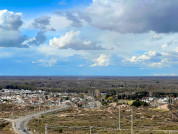
1. This work is framed within the study of biotopes as key tools in landscape planning processes and the design of resilient and multifunctional urban ecological infrastructures (UEI), in an area under frank urban expansion on agricultural lands related to hydrocarbon development in northern Patagonia.
2. The main objective was to develop a methodology that allows the identification of biotopes in heterogeneous landscapes, focusing on the cities of Cipolletti and General Fernández Oro (GFO). The methodology implemented included the delimitation of biotopes by processing geomorphological, vegetation, land use and hydrological information using GIS tools. It also included the estimation of the topographic wetness index (TWI), the integrated normalized difference vegetation index (NDVII) and the biotope area factor (FAB).
3. The results of this work show that, although this is a widely used strategy internationally, it is possible to apply it in Latin America, especially in arid environments. The calculated indices allowed us to evaluate the suitability of different areas for urban or mixed uses, based on their ecological resilience to droughts and floods.
4. Implications. The proposed methodological approach offers a technical and strategic tool for urban planners, integrating ecological, social and spatial criteria. In addition, it promotes simpler and more informed decisions in the face of complex urbanization and climate change processes.
References
Becker, G., and R. Mohren. 1990. The biotope area factor as an ecological parameter. Landschaft Planen and Bauen: Berlin, Germany.
Briones, O., A. Búrquez, A. Martínez-Yrízar, N. Pavón, and Y. Perroni. 2018. Biomasa y productividad en las zonas áridas mexicanas. Madera y Bosques 24:1-19. https://doi.org/10.21829/myb.2018.2401898.
Casella, V., M. Franzini, and R. De Lotto. 2016. Geomatics for smart cities: obtaining the urban planning BAF index from existing digital maps. International Archives of the Photogrammetry, Remote Sensing and Spatial Information Sciences 12-19:689-694. https://doi.org/10.5194/isprs-archives-XLI-B2-689-2016.
Chen, C. Y., and F. C. Yu. 2011. Morphometric analysis of debris flows and their source areas using GIS. Geomorphology 129:387-397. https://doi.org/10.1016/j.geomorph.2011.03.002.
Childers, D. L., P. Bois, H. E. Hartnett, T. McPhearson, G. S. McPhearson, et al. 2019. Urban ecological infrastructure: un inclusive concept for the non-built urban environment. Elementa: Science of the Anthropocene 7:46. https://doi.org/10.1525/elementa.385.
Childers, D. L., M. L. Cadenasso, J. M. Grove, V. Marshall, B. McGrath, et al. 2015. An ecology for cities: a transformational nexus of design and ecology to advance climate change resilience and urban sustainability. Sustainability 7:3774-3791. https://doi.org/10.3390/su7043774.
Datri, L. A., M. Kraser, L. Campos, M. Robertazzi, H. Lopez, et al. 2022. Aplicación de los sistemas de información geográfica en la pericia ambiental: el caso del área natural protegida urbana Bardas Norte, Neuquén (Patagonia Argentina). GeoFocus. International Review of Geographical Information Science and Technology 30:5-23. https://doi.org/10.21138/GF.743.
Datri, L. A., M. Robertazzi, M. Kraser, E. Miranda, F. Gauna, et al. 2023. ¿El oasis de regadío del Alto Valle es un paisaje de humedales? Funciones ecológicas y heterogeneidad ambiental de metacomunidades bioculturales. Revista de la Asociación Argentina de Ecología de Paisajes 11:1-10. URL: tinyurl.com/y2c66y62.
De Lotto, R., M. Sessi, and E. M. Venco. 2022. Semi-automatic method to evaluate ecological value of urban settlements with the biotope area factor index: sources and logical framework. Sustainability 14(4):1993. https://doi.org/10.3390/su14041993.
Huang, L., J. Wu, and L. Yan. 2015. Defining and measuring urban sustainability: a review of indicators. Landscape Ecology 30:1175-1193. https://doi.org/10.1007/s10980-015-0208-2.
Jalkanen, J., K. Vierikko, and A. Moilanen. 2020. Spatial prioritization for urban biodiversity quality using biotope maps and expert opinion. Urban Forestry and Urban Greening 49:126586. https://doi.org/10.1016/j.ufug.2020.126586.
Kaushal, S. S., and K. T. Belt. 2012. The urban watershed continuum: evolving spatial and temporal dimensions. Urban Ecosystems 15:409-435. https://doi.org/10.1007/s11252-012-0226-7.
Keeley, M. 2011. The green area ratio: an urban site sustainability metric. Journal of Environmental Planning and Management 54:937-958. https://doi.org/10.1080/09640568.2010.547681.
Klopp, J., and D. L. Petretta. 2017. The urban sustainable development goal: indicators, complexity and the politics of measuring cities. Cities 63:92-97. https://doi.org/10.1016/j.cities.2016.12.019.
Kowarik, I. 2023. Urban biodiversity, ecosystems and the city. Insights from 50 years of the Berlin School of urban ecology. Landscape and Urban Planning 240:104877. https://doi.org/10.1016/j.landurbplan.2023.104877.
Lakes, T., and H. O. Kim. 2012. The urban environmental indicator biotope area ratio-an enhanced approach to assess and manage the urban ecosystem services using high resolution remote-sensing. Ecological Indicators 13:93-103. https://doi.org/10.1016/j.ecolind.2011.05.016.
Łaszkiewicz, E., P. Czembrowski, and J. Kronenberg. 2020. Creating a map of the social functions of urban green spaces in a city with poor availability of spatial data: a sociotope for lodz. Land 9:183. https://doi.org/10.3390/land9060183.
Li, F., X. Liu, X. Zhang, D. Zhao, H. Liu, et al. 2017. Urban ecological infrastructure: an integrated network for ecosystem services and sustainable urban systems. Journal of Cleaner Production 163:S12-S18. https://doi.org/10.1016/j.jclepro.2016.02.079.
Löfvenhaft, K., C. Björn, and M. Ihse. 2002. Biotope patterns in urban areas: a conceptual model integrating biodiversity issues in spatial planning. Landscape and Urban Planning 58:223-240. https://doi.org/10.1016/S0169-2046(01)00223-7.
Lu, X., and X. Wang. 2018. A methodological study of biotope mapping in urban areas: case of Xuanwu District, Nanjing City, China, (May). Journal of Digital Landscape Architecture 3:208-216. https://doi.org/10.14627/537642022.
Ministerio del Interior, Obras Públicas y Vivienda. 2017. Plan de ejecución metropolitano para la Región de la Confluencia. Buenos Aires, Argentina. URL: tinyurl.com/7t3v5ccz.
Nedkov, R. 2017. Orthogonal transformation of segmented images from the satellite sentinel-2. Comptes Rendus de l’Académie Bulgare des Sciences 70:687-692. URL: tinyurl.com/y7nxuxee.
Peroni, F., S. Brugnaro, M. Sozzi, E. Crescini, S. Pappalardo, et al. 2017. BAF index e mappatura del consumo di suolo a Padova: quantificazione e simulazione di scenari alternativi. Pp. 853-860 in ASITA (ed.). Atti della XXI Conferenza Nazionale ASITA. Salerno, Italia. URL: tinyurl.com/4pxz4c9f.
Peroni, F., G. Pristeri, D. Codato, S. E. Pappalardo, and M. De Marchi. 2019. Biotope area factor: an ecological urban index to geovisualize soil sealing in Padua, Italy. Sustainability 12:150. https://doi.org/10.3390/su12010150.
Pettorelli, N., J. O. Vik, A. Mysterud, J. M. Gaillard, C. J. Tucker, et al. 2005. Using the satellite-derived NDVI to assess ecological responses to environmental change. Trends in Ecology and Evolution 20:503-510. https://doi.org/10.1016/j.tree.2005.05.011.
Pristeri, G., F. Peroni, S. E. Pappalardo, D. Codato, A. G. Castaldo, et al. 2020. Mapping and assessing soil sealing in Padua municipality through biotope area factor index. Sustainability 12:5167. https://doi.org/10.3390/su12125167.
QGIS.org. 2023. QGIS Geographic Information System (Version 3.28). QGIS Association. URL: qgis.org.
Rodriguez, L., and A. Vazquez Brust. 2022. Atlas de Espacios Verdes en Argentina: seis estudios de casos de espacios verdes de las principales ciudades argentinas. Documento de Trabajo. Fundación Bunge y Born, Buenos Aires, Argentina. URL: tinyurl.com/2n922cap.
Rusche, K., M. Reimer, and R. Stichmann. 2019. Mapping and assessing green infrastructure connectivity in European city regions. Sustainability 11:1819. https://doi.org/10.3390/su11061819.
SenStadt. Senate Department for the Environment (2006) Transport and Climate Protection BAF-Biotope Area Factor. URL: tinyurl.com/49j3w37n.
Stewart, J. 2015. Calculus: early transcendentals. Cengage Learning, Boston, USA. URL: tinyurl.com/y4tfzjtt.
Sukopp, H., and S. Weiler. 1988. Biotope mapping and nature conservation strategies in urban areas of the Federal Republic of Germany. Landscape and Urban Planning 15:39-58. https://doi.org/10.1016/0169-2046(88)90015-1.
Tobias, S., F. Conen, A. Duss, L. M. Wenzel, C. Buser, et al. 2018. Soil sealing and unsealing: state of the art and examples. Land Degradation and Development 29(6):2015-2024. https://doi.org/10.1002/ldr.2919.
UICN. 2020. Estándar global de la UICN para soluciones basadas en la naturaleza. IUCN, Gland, Suiza. URL: iucn.org.
UN Habitat. 2020. World cities report 2020 the value of sustainable urbanization. UN Habitat, Nairobi, Kenya. URL: tinyurl.com/3hth2e9p.
Werner, P. 1999. Why biotope mapping in populated areas? Biotope mapping in the urban environment. DEINSEA 5:9-26. URL: tinyurl.com/nhtrmavs.
Xiu, N., M. Ignatieva, C. K. van den Bosch, Y. Chai, F. Wang, et al. 2017. A socio-ecological perspective of urban green networks: the Stockholm case. Urban Ecosystems 20:729-742. https://doi.org/10.1007/s11252-017-0648-3.
Yang, D., W. X. Luan, and X. Zhang. 2023. Projecting spatial interactions between global population and land use changes in the 21st century. Urban Sustainability 3:53. https://doi.org/10.1038/s42949-023-00131-y.
Yılmaz, B., S. Gülez, and L. G. Kaya. 2010. Mapping of biotopes in urban areas: a case study of the city of Bartın and its environs, Turkey. Scientific Research and Essays 5:352-365. URL: tinyurl.com/56my8xh7.
Downloads
Published
How to Cite
Issue
Section
License
Copyright (c) 2025 Leonardo A. Datri, Mario Robertazzi, Micaela Lopez, Stefanie Buchter, Rafael Maddio

This work is licensed under a Creative Commons Attribution 4.0 International License.
Authors retain their rights as follows: 1) by granting the journal the right to its first publication, and 2) by registering the published article with a Creative Commons Attribution License (CC-BY 4.0), which allows authors and third parties to view and use it as long as they clearly mention its origin (citation or reference, including authorship and first publication in this journal). Authors can make other non-exclusive distribution agreements as long as they clearly indicate their origin and are encouraged to widely share and disseminate the published version of their work.