Bromeliads increase herbivory in an ecological restoration area in Restinga, southeastern Brazil
DOI:
https://doi.org/10.25260/EA.26.36.1.0.2555Keywords:
bromeliad, environmental factors, folivory, herbivores, environmental restorationAbstract
1. We examined the effects of herbivory in a coastal sandbank (Restinga) restoration area by studying how the environment influences insect-plant interactions.
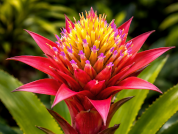
2. Four plant species were evaluated under three conditions: control, fertilization, and proximity to the bromeliad Aechmea blanchetiana (Baker) L.B.Sm. Leaf analysis using ImageJ software was performed to measure herbivory.
3. Bromeliad presence increased the herbivory rate on surrounding plants.
4. Conversely, less favorable conditions —characterized by high light intensity, temperature and low humidity— resulted in lower foliar herbivory in the control and fertilization treatments.
5. These results support the resource availability hypothesis, which posits that plants in resource-rich environments are more susceptible to herbivory, as A. blanchetiana facilitates the establishment of shaded microenvironments with milder temperatures that favor herbivore presence.
6. Implications. In restoration initiatives for fallow areas, it is essential to include species that provide physical facilitation and mediate biological interactions like herbivory, which can influence plant establishment success. This study demonstrates the potential of restoration projects to recover ecosystem services and key ecological interactions, such as those between insects and plants.
References
Abdala-Roberts, L., A. A. Agrawal, and X. Moreira. 2016. Biotic and abiotic factors associated with altitudinal variation in plant traits and herbivory in a dominant oak species. American Journal of Botany 103(12):2070-2078. https://doi.org/10.3732/ajb.1600310.
Antonetti, D. A., E. Malfatti, and L. R. Pinto-Utz. 2021. Influence of environmental and morphological parameters on the microfauna community present in phytotelmata of a bromeliad in a fragment of Atlantic Forest, southern Brazil. Neotropical Biology and Conservation 16(1):59-70. https://doi.org/10.3897/neotropical.16.e62317.
Araújo, W. S. 2013. A importância de fatores temporais para a distribuição de insetos herbívoros em sistemas neotropicais. Revista da Biologia 10(1):1-7. https://doi.org/10.7594/revbio.10.01.01.
Barea, A. R., A. P. L. Lima, S. F. Lima, J. B. Leite Junior, and H. A. V. Meireles. 2020. Protetor físico, bioestimulante e adubação nitrogenada na emergência e crescimento inicial do paricá em campo. Scientia Forestalis 48(127):e3314. https://doi.org/10.18671/scifor.v48n127.25.
Biagiotti, G., S. V. Valeri, M. C. P. Cruz, and R. T. Vasconcelos. 2017. Fertilização potássica na implantação de Corymbia citriodora (Hook.) K.D. Hill and L.A.S. Jonhson. Scientia Forestalis 45(113):129-137. https://doi.org/10.18671/scifor.v45n113.10.
Bongers, F., and J. Popma. 1990. Leaf characteristics of the flora of the tropical rainforest of Los Tuxtlas, Mexico. Botanical Gazette 151(3):354-365. https://doi.org/10.1086/337836.
Brancalion, P. H. S., S. Gandolfi, and R. R. Rodrigues. 2015. Restauração florestal. Oficina de Textos.
Coley, P. D., and Chapin, F. S. 1985. Resource availability and plant antiherbivore defense. Science 230(4728):895-899. https://doi.org/10.1126/science.230.4728.895.
Da Silva, L. D. S. A. B., and J. De Deus Medeiros. 2005. Herbivoria em Psidium cattleyanum Sab. (Myrtaceae). INSULA Revista de Botânica 34:83-94.
Del-Claro, K., and H. M. Torezan-Silingardi. 2012. Ecologia das interações plantas-animais: Uma abordagem ecológico-evolutiva. Technical Books Editora.
Endara, M.-J., and P. D. Coley. 2011. The resource availability hypothesis revisited: A meta-analysis. Functional Ecology 25(2):389-398. https://doi.org/10.1111/j.1365-2435.2010.01803.x.
Endara, M.-J., P. D. Coley, G. Ghabash, J. A. Nicholls, K. G. Dexter, D. A. Donoso, and G. N. Stone. 2017. Coevolutionary arms race versus host defense chase in a tropical herbivore-plant system. Proceedings of the National Academy of Sciences 114(36):E7499-E7505. https://doi.org/10.1073/pnas.1707727114.
Endara, M.-J., D. L. Forrister, and P. D. Coley. 2023. The evolutionary ecology of plant chemical defenses: From molecules to communities. Annual Review of Ecology, Evolution, and Systematics 54(1):107-127. https://doi.org/10.1146/annurev-ecolsys-102221-045254.
Favretto, M. A., J. C. Santos, and E. G. Oliveira. 2011. Entomofauna em duas espécies de bromélias no oeste de Santa Catarina, Brasil. EntomoBrasilis 4(1):10-12. https://doi.org/10.12741/ebrasilis.v4i1.126.
Forrister, D. L., M. -J. Endara, A. J. Soule, G. C. Younkin, A. G. Mills, J. Lokvam, and P. D. Coley. 2023. Diversity and divergence: Evolution of secondary metabolism in the tropical tree genus Inga. New Phytologist 237(2):631-642. https://doi.org/10.1111/nph.18554.
Frank, J. H., and L. P. Lounibos. 2009. Insects and allies associated with bromeliads: A review. Terrestrial Arthropod Reviews 1(2):125-153. https://doi.org/10.1163/187498308X414742.
González-Esquivel, J. G., P. Cuevas-Reyes, and K. Oyama. 2019. Functional attributes of two Croton species at different successional stages of tropical dry forest: Effects on herbivory and fluctuating asymmetry patterns. Tropical Ecology 60(2):238-251. https://doi.org/10.1007/s42965-019-00027-y.
Hahn, P. G., A. A. Agrawal, K. I. Sussman, and J. L. Maron. 2019. Population variation, environmental gradients, and the evolutionary ecology of plant defense against herbivory. The American Naturalist 193(1):20-34. https://doi.org/10.1086/700838.
Hernán, G., M. J. Ortega, M. Gómez, and J. J. Vergara. 2019. Herbivory and resource availability change plant defense and herbivore choice in a seagrass system. Oecologia 189(3):719-732. https://doi.org/10.1007/s00442-019-04364-6.
Holl, K. D., and P. H. S. Brancalion. 2020. Tree planting is not a simple solution. Science 368(6491):580-581. https://doi.org/10.1126/science.aba8232.
Jorge, J. S., E. M. Santos, and M. M. Ribeiro. 2020. Living among thorns: Herpetofaunal community (Anura and Squamata) associated with the rupicolous bromeliad Encholirium spectabile (Pitcairnioideae) in the Brazilian semiarid. Zoologia 37:e46661. https://doi.org/10.3897/zoologia.37.e46661.
Kleinhesselink, A. R., S. M. Magnoli, and J. H. Cushman. 2014. Shrubs as ecosystem engineers in an environmental gradient: Effects on species richness and exotic plant invasion. Oecologia 175(4):1277-1290. https://doi.org/10.1007/s00442-014-2972-0.
Lopez, L. C. S., and R. I. Rios. 2001. Phytotelmata faunal communities in sun-exposed versus shaded terrestrial bromeliads from southeastern Brazil. Selbyana 22(2):219-224. https://doi.org/10.2307/41760099.
López‐Goldar, X., R. Zas, and L. Sampedro. 2020. Resource availability drives microevolutionary patterns of plant defenses. Functional Ecology 34(8):1640-1652. https://doi.org/10.1111/1365-2435.13610.
Lowry, D. B., J. M. Sobel, A. L. Angert, T. -L. Ashman, R. L. Baker, B. K. Blackman, and M. A. Streisfeld. 2019. Mechanisms of a locally adaptive shift in allocation among growth, reproduction, and herbivore resistance in Mimulus guttatus. Evolution 73(6):1168-1181. https://doi.org/10.1111/evo.13699.
Martinelli, G., C. M. Vieira, M. Gonzalez, P. Leitman, A. Piratininga, A. F. Costa, and R. C. Forzza. 2008. Bromeliaceae da Mata Atlântica brasileira: Lista de espécies, distribuição e conservação. Rodriguésia 59(1):209-258. https://doi.org/10.1590/2175-7860200859114.
Martins, J. K. D. 2020. Produção de mudas e revegetação de base de poço em áreas de exploração de petróleo no norte do estado do Espírito Santo [Dissertação de mestrado, Universidade Federal do Espírito Santo]. Repositório Institucional da UFES. http://repositorio.ufes.br/handle/10/15130.
Melo, J. C. F., and M. R. T. Boeger. 2015. Riqueza, estrutura e interações edáficas em um gradiente de restinga do Parque Estadual do Acaraí, Estado de Santa Catarina, Brasil. Hoehnea 42(2):207-232. https://doi.org/10.1590/2236-8906-40/2014.
Mendes, M. M., A. C. R. Pinheiro, F. R. Pires, A. A. Fernandes, L. F. T. D. Menezes, I. D. P. Pereira, V. F. D. Santos, L. D. A. Leite, D. Cassol, and A. R. Falqueto. 2022. Photosynthesis and leaf traits of tree species influenced by green manure associated with soil treatments. Communications in Soil Science and Plant Analysis 53(16):2064-2081. https://doi.org/10.1080/00103624.2022.2070195.
Mendes, M. M., I. F. Ribeiro, V. D. F. Santos, F. R. Pires, A. A. Fernandes, L. F. T. D. Menezes, and A. R. Falqueto. 2025. Green manure can be an auxiliary factor against dynamic photoinhibition in Dalbergia ecastophyllum (L.) young trees in areas impacted by mining. Photosynthetica 63(2):129-139. https://doi.org/10.32615/ps.2025.015.
Menezes, L. F. T. de, F. Z. Saiter, P. Dodonov, O. J. Pereira, E. L. Poelking, F. de D. Fonseca Neto, C. N. de Fraga, D. Piotto, H. M. Dias, et al. 2025a. Afogada no progresso: o dilema da Restinga no Brasil. Boletim do Museu de Biologia Mello Leitão, 2(2), 174-190. https://doi.org/10.70525/2025.41.
Menezes, L. F. T. de, M. da C. Souza, M. M. S. Conde, M. M. Mendes, and D. S. D. de Araujo. 2025. Relação entre estrutura e topografia em uma floresta de duna na Restinga da Marambaia-RJ, Brasil. Paubrasilia 8:e214s. https://doi.org/10.33447/paubrasilia.2025s.e0214s.
Paiva, A. V., F. Poggiani, J. L. M. Gonçalves, and A. V. Ferraz. 2009. Native tree seedling growth when fertilized with different amounts of dry sewage sludge and mineral fertilizer. Scientia Forestalis 37(84): 499-511. URL: tinyurl.com/yj5ajv7t.
Pereira, M. G., O. J. Pereira, and A. M. Santos. 2005. Propriedades químicas de solos sob Neoregelia cruenta (R. Grah) L.B. Smith na restinga da Marambaia, RJ. Floresta e Ambiente 12(1):70-73.
Pereira, O. J., and L. F. T. Menezes. 2023. Restinga no Espírito Santo: Vegetação, flora, distribuição geográfica das espécies. Editora Rupestre.
Ribeiro, I. F. 2023. Aechmea blanchetiana (Baker) LBSm. (Bromeliaceae) como espécie facilitadora em áreas de restinga no Sudeste do Brasil. Tesis doctoral. Center for Biosciences and Biotechnology, State University of Northern Rio de Janeiro Darcy Ribeiro, Campos dos Goytacazes. Rio de Janeiro. Brazil. Pp. 65.
Rocha, C. F. D., L. Cogliatti-Carvalho, D. R. Almeida, and A. F. N. Freitas. 2000. Bromeliads: Biodiversity amplifiers. Journal of the Bromeliad Society 50(2):81-83.
Rodrigues, A. B., A. A. Bhering, J. M. Otero, L. L. Venetás, P. A. S. Marbach, and L. R. Zamith. 2025. Efeitos da temperatura e condição de luz na germinação e da colonização de isolados de Trichoderma sp. na promoção do crescimento de mudas de Inga maritima Benth. Paubrasilia 8:e205s. https://doi.org/10.33447/paubrasilia.2025s.e0205s.
Scarano, F. R. 2002. Structure, function and floristic relationships of plant communities in stressful habitats marginal to the Brazilian Atlantic rainforest. Annals of Botany 90(4):517-524. https://doi.org/10.1093/aob/mcf189.
Scarano, F. R. 2009. Plant communities at the periphery of the Atlantic rain forest: Rare-species bias and its risks for conservation. Biological Conservation 142(6):1201-1208. https://doi.org/10.1016/j.biocon.2009.02.027.
Scheffers, B. R., D. P. Edwards, A. Diesmos, S. E. Williams, and T. A. Evans. 2014. Microhabitats reduce animal’s exposure to climate extremes. Global Change Biology 20(2):495-503. https://doi.org/10.1111/gcb.12439.
Silva, H. R., A. L. G. Carvalho, and G. B. Bittencourt-Silva. 2011. Selecting a hideout: Anuran diversity and bromeliad use in threatened coastal dune habitats in Brazil. Biotropica 43(2):218-227. https://doi.org/10.1111/j.1744-7429.2010.00656.x.
Silva, T. R. da, T. J. Antunes, and L. F. S. Magnago. 2025. Influência do solo sobre a riqueza e composição em gradiente fitofisionômico de Restinga no Sudeste do Brasil. Paubrasilia 8:e206s. https://doi.org/10.33447/paubrasilia.2025s.e0206s.
Souza, K. J., M. M. Mendes, E. M. Aoyama, A. R. Falqueto, and L. F. T. Menezes. 2025. Facilitation by Aechmea blanchetiana (Baker) L.B.Sm. (Bromeliaceae) in the establishment and development of plants in a coastal dune ecosystem. Scientia Forestalis 53:e4037. https://doi.org/10.18671/scifor.v53.09.
Souza, R. C., M. N. Delgado, and M. G. Pereira. 2016. Papel de bromélias terrestres na ciclagem de nutrientes, restinga da Marambaia, Brasil. Floresta e Ambiente 23(2):161-169. https://doi.org/10.1590/2179-8087.106414.
Wittyngham, S. S., J. Carey, and D. S. Johnson. 2023. Resource availability and plant age drive defense against herbivory in salt marshes. Oikos (8):e09672. https://doi.org/10.1111/oik.09672.
Yelenik, S. G., N. Dimanno, and C. M. D’Antonio. 2015. Evaluating nurse plants for restoring native woody species to degraded subtropical woodlands. Ecology and Evolution 5(2):300-313. https://doi.org/10.1002/ece3.1294.
Zhang, P., D. M. Blumenthal, and J. K. Smith, J. K. 2020. Ectothermic omnivores increase herbivory in response to rising temperature. Oikos 129(7):1028-1039. https://doi.org/10.1111/oik.07082.
Downloads
Published
How to Cite
Issue
Section
License
Copyright (c) 2026 Aparicio da Cruz, Izabela Ferreira Ribeiro, Marcel Merlo Mendes, Luis F. Tavares de Menezes

This work is licensed under a Creative Commons Attribution 4.0 International License.
Authors retain their rights as follows: 1) by granting the journal the right to its first publication, and 2) by registering the published article with a Creative Commons Attribution License (CC-BY 4.0), which allows authors and third parties to view and use it as long as they clearly mention its origin (citation or reference, including authorship and first publication in this journal). Authors can make other non-exclusive distribution agreements as long as they clearly indicate their origin and are encouraged to widely share and disseminate the published version of their work.