Birdwatchers’ preferences for species in the Pampas ecoregion
DOI:
https://doi.org/10.25260/EA.26.36.3.0.2716Keywords:
rural tourism, birdwatching, conservation, environment, social valueAbstract
1. Birdwatching is a growing activity that can contribute to productive diversification and biodiversity conservation in rural landscapes. It would be very useful for farmers interested in offering rural tourism services based on birdwatching to know the species preferred by observers and the environments that favor these species.
2. We identified the bird species most highly valued by observers in the Pampas ecoregion of Buenos Aires Province, as well as the criteria underlying these preferences and the sociodemographic characteristics of the participants. Using an online survey, we ranked 74 species according to their observational value and analyzed six valuation criteria. We also included questions regarding the participants’ usual birdwatching destinations.
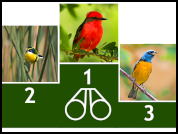
3. We received 226 responses. The three most highly valued species were the vermilion flycatcher (Pyrocephalus rubinus), the red-billed tanager (Tachuris rubrigastra) and the Bonari’s pipraeidea (Pipraeidea bonariensis). The results also show that behavior and plumage were the most valued attributes. We identified three observer profiles (beginners, intermediate, and advanced) with differences in their preferences for species, criteria, and habitats. Grasslands and wetlands were the most valued habitats, in contrast to annual crops. Most observation destinations were located near the observers’ place of residence and outside of important bird areas.
4. Implications. Our findings highlight the importance of promoting multifunctional landscapes that integrate agricultural production with conservation and nature tourism. Far from being unproductive, uncultivated spaces are valuable for meeting the demand for nature-based recreational opportunities. In this way, uncultivated spaces in fields can complement other bird conservation strategies such as nature reserves.
References
Ainsworth, G. B., H. J. Aslin, M. A. Weston, and S.T. Garnett. 2016. Do social values influence levels of conservation effort in threatened species? The case of two Australian chats. Oryx 50(4):636-645. https://doi.org/10.1017/S0030605315000538.
Ainsworth, G. B., J. A. Fitzsimons, M. A. Weston, and S. T. Garnett. 2018. The culture of bird conservation: Australian stakeholder values regarding iconic, flagship and rare birds. Biodiversity and Conservation 27:345-363. https://doi.org/10.1007/s10531-017-1438-1.
Aizen, M., L. Garibaldi, and M. Dondo. 2009. Expansión de la soja y diversidad de la agricultura argentina. Ecología Austral 19(1):45-54.
Albert, S., E. A. Silva-Rodríguez, A. A. Dayer, M. Chapman, B. Zukowski, et al. 2025. El estudio de las aves neotropicales debería abarcar a las ciencias sociales. Ornitología Neotropical 35:87-91. https://doi.org/10.58843/ornneo.v35i2.659.
Andrade, R., K. L. Larson, J. Franklin, S. B. Lerman, H. Bateman, et al. 2022. Species traits explain public perceptions of human-bird interactions. Ecological Applications e2676. https://doi.org/10.1002/eap.2676.
Assandri, G., G. Bogliani, P. Pedrini, and M. Brambilla. 2018. Beautiful agricultural landscapes promote cultural ecosystem services and biodiversity conservation. Agriculture, Ecosystems and Environment 256:200-210. https://doi.org/10.1016/j.agee.2018.01.012.
Auer, A., L. Nahuelhual, and N. Maceira. 2018. Cultural ecosystem services trade-offs arising from agriculturization in Argentina: A case study in Mar Chiquita Basin. Applied Geography 91:45-54. https://doi.org/10.1016/j.apgeog.2017.12.025.
Azpiroz, A. B., J. P. Isacch, R. A. Dias, A. S. Di Giacomo, C. Suertegaray Fontana, et al. 2012. Ecology and conservation of grassland birds in southeastern South America: a review. Journal of Field Ornithology 83(3):217-246. https://doi.org/10.1111/j.1557-9263.2012.00372.x.
Baladrón, A. V., M. G. Pretelli, M. Cavalli, and M. S. Bó. 2018. Activity Budgets, Foraging Behavior, and Diet of White-Tailed Kites (Elanus leucurus) during Breeding and Nonbreeding Seasons in the Argentine Pampas. Journal of Raptor Research 52(4):420-430. https://doi.org/10.3356/JRR-17-54.1.
Barrera, E. 2006. Turismo rural en Argentina y el potencial de México. Instituto Nacional de Turismo Rural.
Bennett, E., and P. Balvanera. 2007. The future of production systems in a globalized world. Front Ecol Environ 5(4):191-198. https://doi.org/10.1890/1540-9295(2007)5[191:TFOPSI]2.0.CO;2.
Boeri, M., T. A. Stojanovic, L. J. Wright, N. H. K. Burton, N. Hockley, et al. 2020. Public preferences for multiple dimensions of bird biodiversity at the coast: insights for the cultural ecosystem services framework. Estuarine, Coastal and Shelf Science 235:106571. https://doi.org/10.1016/j.ecss.2019.106571.
Boody, G., B. Vondracek, D. A. Andow, M. Krinke, J. Westra, et al. 2005. Multifunctional agriculture in the United States. BioScience 55(1):27-38. https://doi.org/10.1641/0006-3568(2005)055[0027:MAITUS]2.0.CO;2.
Booth, J. E., K. J. Gaston, K. L. Evans, and P. R. Armsworth. 2011. The value of species rarity in biodiversity recreation: A birdwatching example. Biological Conservation 144(11):2728-2732. https://doi.org/10.1016/j.biocon.2011.02.018.
Brambilla, M., and S. Ronchi. 2020. Cool species in tedious landscapes: Ecosystem services and disservices affect nature-based recreation in cultural landscapes. Ecological Indicators 116:106485. https://doi.org/10.1016/j.ecolind.2020.106485.
Buijs, A. E., B. Pedroli, and Y. Luginbühl. 2006. From Hiking Through Farmland to Farming in a Leisure Landscape: Changing Social Perceptions of the European Landscape. Landscape Ecology 21:375-389. https://doi.org/10.1007/s10980-005-5223-2.
Cardoni, D. A., M. Favero, and J. P. Isacch. 2008. Recreational activities affecting the habitat use by birds in Pampa's wetlands, Argentina: Implications for waterbird conservation. Biological Conservation 141(3):797-806. https://doi.org/10.1016/j.biocon.2007.12.024.
Cavalli, M., N. S. Martínez-Curci, A. Baladrón, M. Bó, N. Chiaradia, et al. 2022. Are novel ecosystems suitable habitats for native birds? Birds' association with spontaneous vegetation patches in the argentinean pampas. Biodiversity and Conservation 31:811-830. https://doi.org/10.1007/s10531-022-02365-1.
Codesido, M., C. González-Fischer, and D. Bilenca. 2011. Distributional Changes of Landbird Species in Agroecosystems of Central Argentina. The Condor: Ornithological Applications 113(2):266-273. https://doi.org/10.1525/cond.2011.090190.
Codesido, M., E. Zufiaurre, and D. Bilenca. 2015. Relationship between pest birds and landscape elements in the Pampas of central Argentina. Emu - Austral Ornithology 115(1):80-84. https://doi.org/10.1071/MU13110.
Cole, D. N., and T. E. Hall. 2009. Perceived effects of setting attributes on visitor experiences in wilderness: variation with situational context and visitor characteristics. Environmental Management 44(1):24-36. https://doi.org/10.1007/s00267-009-9286-8.
Cole, J. S., and D. Scott. 1999. Segmenting participation in wildlife watching: A comparison of casual wildlife watchers and serious birders. Human Dimensions of Wildlife 4(4):44-61. https://doi.org/10.1080/10871209909359164.
Connell, J. 2009. Birdwatching, Twitching and Tourism: towards an Australian perspective. Australian Geographer 40(2):203-217. https://doi.org/10.1080/00049180902964942.
Cornell Lab of Ornithology. 2025. Merlin Bird ID (Versión 3.0) [Aplicación móvil]. URL: tinyurl.com/45x8jhrp.
Cox, D. T. C., and K. J. Gaston. 2016. Urban bird feeding: Connecting people with nature. PLoS ONE 11(7): e0158717. https://doi.org/10.1371/journal.pone.0158717.
Cueto, V. R. 1996. Relación entre los ensambles de aves y la estructura de la vegetación: Un análisis a tres escalas espaciales. Tesis Doctoral. Universidad de Buenos Aires. Facultad de Ciencias Exactas y Naturales.
Curtin, S., and G. Kragh. 2014. Wildlife Tourism: Reconnecting People with Nature. Human Dimensions of Wildlife 19(6):545-554. https://doi.org/10.1080/10871209.2014.921957.
Dainese, M., E. A. Martin, M. A. Aizen, M. Albrecht, I. Bartomeus, et al. 2019. A global synthesis reveals biodiversity-mediated benefits for crop production. Science Advances 5(10):eaax0121. https://doi.org/10.1126/sciadv.aax0121.
De Salvo, M., G. Cucuzza, R. Ientile, and G. Signorello. 2020. Does recreation specialization affect birders' travel intention? Human Dimensions of Wildlife 25(6):560-574. https://doi.org/10.1080/10871209.2020.1778822.
Díaz, S., U. Pascual, M. Stenseke, B. Martín-López, R. T. Watson, et al. 2018. Assessing nature's contributions to people. Science 359:270-272. https://doi.org/10.1126/science.aap8826.
Di Giacomo, A. S., M. V. De Francesco, and E. G. Coconier. 2007. Áreas importantes para la conservación de las aves en Argentina. Sitios Prioritarios para la conservación de la biodiversidad. Temas de Naturaleza y Conservación 5:1-514. Edición Revisada y Corregida. Aves Argentinas/Asociación ornitológica del Plata, Buenos Aires.
Eastough, A., M. Hughes, and D. Newsome. 2024. Investigating the extent that different recreational users of urban wetlands value birds and bird habitat. International Journal of Geoheritage and Parks 12(3):434-445. https://doi.org/10.1016/j.ijgeop.2024.07.002.
Edwards, D., M. Jay, F. S. Jensen, B. Lucas, M. Marzano, et al. 2012. Public preferences for structural attributes of forests: Towards a pan-European perspective. Forest Policy and Economics 19:12-19. https://doi.org/10.1016/j.forpol.2011.07.006.
Echeverri, A., D. S. Karp, R. Naidoo, J. A. Tobias, J. Zhao, et al. 2020. Can avian functional traits predict cultural ecosystem services? People and Nature 2:138-151. https://doi.org/10.1002/pan3.10058.
Fraga, R. M. 1980. The Breeding of Rufous Horneros (Furnarius rufus). The Condor: Ornithological Applications 82(1):58-68. https://doi.org/10.2307/1366785.
Garnett, S. T., G. B. Ainsworth, and K. K. Zander. 2018. Are we choosing the right flagships? The bird species and traits Australians find most attractive. PLoS ONE 13:1-17. https://doi.org/10.1371/journal.pone.0199253.
Gaston, K. J., M. Soga, J. P. Duffy, J. K. Garrett, S. Gaston, et al. 2018. Personalised Ecology. Trends in Ecology and Evolution 33(12):916-925. https://doi.org/10.1016/j.tree.2018.09.012.
Gibbs, H. K., A.S. Ruesch, F. Achard, M. K. Clayton, P. Holmgren, et al. 2010. Tropical forests were the primary sources of new agricultural land in the 1980s and 1990s. Proceedings of the National Academy of Sciences 107(38):16732-16737. https://doi.org/10.1073/pnas.0910275107.
Gower, J. C. 1971. A general coefficient of similarity and some of its properties. Biometrics 27:623-637. https://doi.org/10.2307/2528823.
Graesser, J., T. M. Aide, H. R. Grau, and N. Ramankutty. 2015. Cropland/pastureland dynamics and the slowdown of deforestation in Latin America. Environmental Research Letters 10:034017. https://doi.org/10.1088/1748-9326/10/3/034017.
Guimarães, M. H., L. Catela Nunes, L. Madureira, J. Lima Santos, T. Boski, et al. 2015. Measuring birdwatchers preferences: A case for using online networks and mixed-mode surveys. Tourism Management 46:102-113. https://doi.org/10.1016/j.tourman.2014.06.016.
Gustavino, M., C. Rozenblum, and G. Trímboli. 2010. El turismo rural en el INTA. Page XV Jornadas Nacionales de extensión Rural. Potrero de los Funes, 6-8 October.
Haene, E. H., and E. Barrera. 2004. La observación de aves silvestres en libertad: una alternativa para enriquecer el turismo rural. Cátedra Libre de Turismo Rural, Facultad de Agronomía.
Harshaw, H. W., N. W. Cole, A. A. Dayer, J. D. Rutter, D. C. Fulton, et al. 2020. Testing a continuous measure of recreation specialization among birdwatchers. Human Dimensions of Wildlife 26(5):472-480. https://doi.org/10.1080/10871209.2020.1843741.
Hein, L., K. van Koppen, R. S. de Groot, and E. C. van Ierland. 2006. Spatial scales, stakeholders and the valuation of ecosystem services. Ecological Economics 57(2):209-228. https://doi.org/10.1016/j.ecolecon.2005.04.005.
Himes, A., B. Muraca, C. B. Anderson, S. Athayde, T. Beery, et al. 2024. Why nature matters: A systematic review of intrinsic, instrumental, and relational values. BioScience 74(1):25-43. https://doi.org/10.1093/biosci/biad109.
Hvenegaard, G. T. 2002. Birder Specialization Differences in Conservation Involvement, Demographics, and Motivations. Human Dimensions of Wildlife 7:21-36. https://doi.org/10.1080/108712002753574765.
Janeczko, E., A. Łukowski, E. Bielinis, M. Woźnicka, K. Janeczko, et al. 2021. 'Not just a hobby, but a lifestyle': Characteristics, preferences and self-perception of individuals with different levels of involvement in birdwatching. PLoS ONE 16(7):e0255359. https://doi.org/10.1371/journal.pone.0255359.
Kim, A., J. Keuning, J. Robertson, and S. Kleindorfer. 2010. Understanding the Birdwatching Tourism Market in Queensland, Australia. Anatolia 21:227-247. https://doi.org/10.1080/13032917.2010.9687101.
Kleespies, M. W., M. Hahn-Klimroth, and P. W. Dierkes. 2025. Relational values of nature—a global empirical study of environmental students in 37 countries. Ecology and Society 30(4):3. https://doi.org/10.5751/ES-16513-300403.
Kronenberg, J. 2014. Environmental Impacts of the Use of Ecosystem Services: Case Study of Birdwatching. Environmental Management 54:617-630. https://doi.org/10.1007/s00267-014-0317-8.
Kurnia, I., H. Arief, A. Mardiastuti, and R. Hermawan. 2021. Urban landscape for birdwatching activities. IOP Conf Ser: Earth Environ Sci 879:012005. https://doi.org/10.1088/1755-1315/879/1/012005.
Lacoretz, M. V., D. M. Depalma, S. A. Torrella, C. Zilli, V. Ferretti, et al. 2021. Can exotic tree plantations preserve the bird community of an endangered native forest in the Argentine Pampas? Can J For Res 51:1-10. https://doi.org/10.1139/cjfr-2020-0300.
Lambin, E. F., H. K. Gibbs, L. Ferreira, R. Grau, P. Mayaux, et al. 2013. Estimating the world's potentially available cropland using a bottom-up approach. Global Environmental Change 23(5):892-901. https://doi.org/10.1016/j.gloenvcha.2013.05.005.
Laney, J. A., T. A. Hallman, J. R. Curtis, and W. D. Robinson. 2021. The influence of rare birds on observer effort and subsequent rarity discovery in the American birdwatching community. PeerJ 9:e10713. https://doi.org/10.7717/peerj.10713.
Lee, S., K. McMahan, and D. Scott. 2014. The Gendered Nature of Serious Birdwatching. Human Dimensions of Wildlife 20(1):47-64. https://doi.org/10.1080/10871209.2015.956375.
Lehnen, L., U. Arbieu, K. Böhning-Gaese, S. Díaz, J. A. Glikman, et al. 2022. Rethinking individual relationships with entities of nature. People and Nature 4(3):596-611. https://doi.org/10.1002/pan3.10296.
Leveau, L. M., C. M. Leveau, and U. F. J. Pardina. 2004. Trophic relationships between White-tailed Kites (Elanus leucurus) and Barn Owls (Tyto alba) in southern Buenos Aires Province, Argentina. Journal of Raptor Research 38(2):178-181. https://biostor.org/reference/216318.
Leveau, L. M. 2022. Bird migrant assemblages in urban and rural areas of central Argentina: A regional-scale comparison. El Hornero 37(2):121-127. https://doi.org/10.56178/eh.v37i2.400.
Lišková, S., E. Landová, and D. Frynta. 2015. Human Preferences for Colorful Birds: Vivid Colors or Pattern? Evolutionary Psychology 13(2):339-359. https://doi.org/10.1177/147470491501300203.
Lundberg, P., A. Vainio, D. C. MacMillan, R. J. Smith, D. Veríssimo, et al. 2019. The effect of knowledge, species aesthetic appeal, familiarity and conservation need on willingness to donate. Animal Conservation 22:432-443. https://doi.org/10.1111/acv.12477.
Macdonald, S. E., S. M. Landhäusser, J. Skousen, J. Franklin, J. Frouz, et al. 2015. Forest restoration following surface mining disturbance: challenges and solutions. New Forests 46:703-732. https://doi.org/10.1007/s11056-015-9506-4.
Manuel-Navarrete, D., and G. Gallopín. 2007. Integración de políticas, sostenibilidad y agriculturización en la pampa argentina y áreas extrapampeanas. CEPAL (Nac. Unidas) Serie Seminarios y Conferencias 50:1-34.
Manuel-Navarrete, D., G. C. Gallopín, M. Blanco, M. Díaz-Zorita, D. O. Ferraro, et al. 2009. Multi-causal and integrated assessment of sustainability: the case of agriculturization in the Argentine Pampas. Environ Dev Sustain 11:621-638. https://doi.org/10.1007/s10668-007-9133-0.
Mastrangelo, M. E., F. Weyland, S. H. Villarino, M. P. Barral, L. Nahuelhual, et al. 2014. Concepts and methods for landscape multifunctionality and a unifying framework based on ecosystem services. Landscape Ecology 29:345-358. https://doi.org/10.1007/s10980-013-9959-9.
MAyDS and Aves Argentinas. 2017. Categorización de las aves de la Argentina. Informe del Ministerio de Ambiente y Desarrollo Sustentable de la Nación y de Aves Argentinas.
Medrano, C., F. Zamudio, and J. López De Casenave. 2017. Etno-ornitología: una ciencia que todos saben. El Hornero 32:1-6. https://doi.org/10.56178/eh.v32i1.526.
Narosky, T., and D. Yzurieta. 2003. Guía para la identificación de las aves de Argentina y Uruguay. Buenos Aires: Vazquez Mazzini Editores.
Nogar, G., M. Baldoni, V. Capristo, D. Eizaguirre, G. Jacinto, et al. 2007. Turismo Rural en Tandilia. Una alternativa para los territorios pampeanos en crisis. Fundació Cátedra Iberoamericana.
Oppermann, M. 1996. Rural tourism in Southern Germany. Annals of Tourism Research 23(1):86-102. https://doi.org/10.1016/0160-7383(95)00021-6.
Orúe, M. E., P. Laterra, and F. Cabria. 2007. Expansión de la frontera agrícola en Argentina y erosión hídrica: mapas de riesgo utilizando el modelo USLE con apoyo de SIG. XII Congreso de Asociación Española de Teledetección. Hacia un Mejor entendimiento de la dinámica global y regional. Pp. 185-192.
Pacín, F., and M. Oesterheld. 2014. In-farm diversity stabilizes return on capital in Argentine agro-ecosystems. Agricultural Systems 124:51-59. https://doi.org/10.1016/j.agsy.2013.10.008.
Paruelo, J. M., J. P. Guerschman, G. Piñeiro, E. G. Jobbágy, S. R. Verón, et al. 2006. Cambios en el uso de la tierra en Argentina y Uruguay: marcos conceptuales para su análisis. Agrociencia 10(2):47-61. https://doi.org/10.31285/AGRO.10.929.
Pascual, U., P. Balvanera, S. Díaz, G. Pataki, E. Roth, et al. 2017. Valuing nature's contributions to people: the IPBES approach. Current Opinion in Environmental Sustainability 26-27:7-16. https://doi.org/10.1016/j.cosust.2016.12.006.
Pizarro, J. C., J. Rau, and C. B. Anderson. 2017. 'Cara-a-Cara Con El Caracara': Una propuesta para reconectar a las personas con la naturaleza a través de la observación de aves'. El Hornero 32(1):39-53. https://doi.org/10.56178/eh.v32i1.539.
Ramírez-Velázquez, B. R., and L. López-Levi. 2015. Espacio, paisaje, región, territorio y lugar: la diversidad en el pensamiento contemporáneo. México: UNAM, Instituto de Geografía: UAM, Xochimilco.
Randler, C., N. Staller, N. Kalb, and P. Tryjanowski. 2023. Charismatic Species and Birdwatching: Advanced Birders Prefer Small, Shy, Dull, and Rare Species. Anthrozoös 36(3):427-445. https://doi.org/10.1080/08927936.2023.2182030.
Riechers, M., Á. Balázsi, L. Betz, T. S. Jiren, and J. Fischer. 2020. The erosion of relational values resulting from landscape simplification. Landscape Ecology 35:2601-2612. https://doi.org/10.1007/s10980-020-01012-w.
Roberts, A. J., P. K. Devers, S. Knoche, P. I. Padding, and R. Raftovich. 2017. Site preferences and participation of waterbird recreationists: Using choice modelling to inform habitat management. Journal of Outdoor Recreation and Tourism 20:52-59. https://doi.org/10.1016/j.jort.2017.10.001.
Román, M. F. 2009. Turismo rural en Argentina: concepto, situación y perspectivas. IICA, Buenos Aires.
Rositano, F., and G. Civeira. 2023. Servicios de los ecosistemas en áreas urbanas y periurbanas: su reconocimiento por distintos actores sociales. Cuaderno Urbano 34:31-44. https://doi.org/10.30972/crn.34346553.
Rositano, F., S. Pessah, P. Durand, and P. Laterra. 2022. Coupled socio-ecological changes in response to soybean expansion along the 2001-2010 decade in Argentina. Anthropocene 39:100343. https://doi.org/10.1016/j.ancene.2022.100343.
Rosenstein, R., and M. Goldblatt. 2024. Birdsong Complexity and Preference: The Role of Birdwatching Expertise. Society and Animals 34(3):289-307. https://doi.org/10.1163/15685306-bja10206.
Sánchez-Rivero, M., J. M. Sánchez-Martín, and M. C. Rodríguez Rangel. 2020. Characterization of Birdwatching Demand Using a Logit Approach: Comparative Analysis of Source Markets (National vs. Foreign). Animals 10(6): 965. https://doi.org/10.3390/ani10060965.
Sandifer, P. A., A. E. Sutton-Grier, and B. P. Ward. 2015. Exploring connections among nature, biodiversity, ecosystem services, and human health and well-being: Opportunities to enhance health and biodiversity conservation. Ecosystem Services 12:1-15. https://doi.org/10.1016/j.ecoser.2014.12.007.
Santangeli, A., A. Haukka, W. Morris, S. Arkkila, K. Delhey, et al. 2023. What drives our aesthetic attraction to birds? Biodiversity 2:20. https://doi.org/10.1038/s44185-023-00026-2.
Santos, M., D. Carvalho, A. Luis, R. Bastos, S. J. Hughes, et al. 2019. Can recreational ecosystem services be inferred by integrating non-parametric scale estimators within a modelling framework? The birdwatching potential index as a case study. Ecological Indicators 103:395-409. https://doi.org/10.1016/j.ecolind.2019.04.026.
Sarasola, J. H., M. A. Santillán, and M. A. Galmes. 2007. Comparison of food habits and prey selection of the white‐tailed kite, Elanus leucurus, between natural and disturbed areas in central Argentina. Studies on Neotropical Fauna and Environment 42(2):85-91. https://doi.org/10.1080/01650520601050857.
Schippers, P., C. M. van der Heide, H. P. Koelewijn, M. A. H. Schouten, R. M. J. M. Smulders, et al. 2015. Landscape diversity enhances the resilience of populations, ecosystems and local economy in rural areas. Landscape Ecology 30:193-202. https://doi.org/10.1007/s10980-014-0136-6.
Schirpke, U., A. Altzinger, G. Leitinger, and E. Tasser. 2019. Change from agricultural to touristic use: Effects on the aesthetic value of landscapes over the last 150 years. Landscape and Urban Planning 187:23-35. https://doi.org/10.1016/j.landurbplan.2019.03.004.
Schuetz, J., and A. Johnston. 2019. Characterizing the cultural niches of North American birds. Proceedings of the National Academy of Sciences 116:10868-10873. https://doi.org/10.1073/pnas.1820670116.
Sekercioglu, C. H. 2002. Impacts of birdwatching on human and avian communities. Environmental Conservation 29:282-289. https://doi.org/10.1017/S0376892902000206.
Steven, R., C. Morrison, and J. G. Castley. 2014. Birdwatching and avitourism: a global review of research into its participant markets, distribution and impacts, highlighting future research priorities to inform sustainable avitourism management. Journal of Sustainable Tourism 23:1257-1276. https://doi.org/10.1080/09669582.2014.924955.
Steven, R., J. C. R. Smart, C. Morrison, and J. G. Castley. 2017. Using a choice experiment and birder preferences to guide bird-conservation funding. Conservation Biology 31:818-827. https://doi.org/10.1111/cobi.12849.
Stoudt, S., B. Goldstein, and P. De Valpine. 2022. Identifying engaging bird species and traits with community science observations. Proceedings of the National Academy of Sciences of the United States of America 119(16):e2110156119. https://doi.org/10.1073/pnas.2110156119.
Tan, X., P. Yan, Z. Liu, H. Qin, and A. Jiang. 2023. Demographics, behaviours, and preferences of birdwatchers and their implications for avitourism and avian conservation: A case study of birding in Nonggang, Southern China. Global Ecology and Conservation 46:e02552. https://doi.org/10.1016/j.gecco.2023.e02552.
Tapper, R. 2006. Wildlife Watching and Tourism: A Study on the Benefits and Risks of a Fast Growing Tourism Activity and its Impacts on Species. UNEP / CMS Secretariat, Bonn.
UN environment programme, UNEP/ Convention on Biological Diversity, CBD. 2022. Kunming-Montreal Global biodiversity framework. Conference of the Parties to the Convention on Biological Diversity. Fifteenth meeting Montreal, Canada, 7-19 December 2022. URL: tinyurl.com/3thfpcdz.
Vallecillo, S., A. La Notte, G. Zulian, S. Ferrini, and J. Maes. 2019. Ecosystem services accounts: Valuing the actual flow of nature-based recreation from ecosystems to people. Ecological Modelling 392:196-211. https://doi.org/10.1016/j.ecolmodel.2018.09.023.
Vuilleumier, F. 2000. Some reflections about the problem of diffusion of publication among ornithologists studying Neotropical birds. Ornitología Neotropical 11(2):185-187. https://sora.unm.edu/sites/default/files/journals/on/v011n02/p0185-p0188.pdf.
Weyland, F. 2024. ¿Qué se ha investigado en aves en la ecorregión pampeana en el período 1980-2020 y con qué fines? El Hornero 39(1):35-53. https://doi.org/10.56178/eh.v39i1.1481.
Weyland, F., P. Colacci, A. Cardoni, and C. Estavillo. 2021. Can rural tourism stimulate biodiversity conservation and influence farmer's management decisions? Journal for Nature Conservation 64:126071. https://doi.org/10.1016/j.jnc.2021.126071.
Weyland, F., J. Baudry, and C. Ghersa. 2014. Rolling Pampas agroecosystems: which landscape attributes are important for determining and managing bird distributions? Revista Chilena de Historia Natural 1:1. https://doi.org/10.1186/0717-6317-87-1.
Weyland, F., and P. Laterra. 2014. Recreation potential assessment at large spatial scales: a method based in the ecosystem services approach and landscape metrics. Ecological Indicators 39:34-43. https://doi.org/10.1016/j.ecolind.2013.11.023.
Downloads
Additional Files
Published
How to Cite
Issue
Section
License
Copyright (c) 2026 Federico Weyland, Lucía Bernard, Florencia Rositano

This work is licensed under a Creative Commons Attribution 4.0 International License.
Authors retain their rights as follows: 1) by granting the journal the right to its first publication, and 2) by registering the published article with a Creative Commons Attribution License (CC-BY 4.0), which allows authors and third parties to view and use it as long as they clearly mention its origin (citation or reference, including authorship and first publication in this journal). Authors can make other non-exclusive distribution agreements as long as they clearly indicate their origin and are encouraged to widely share and disseminate the published version of their work.