Pecios artificiales: Consecuencias no deseadas del hundimiento deliberado de buques para el buceo recreativo
DOI:
https://doi.org/10.25260/EA.25.35.1.0.2388Palabras clave:
Parques submarinos, buceo recreativo, hundimiento de buques, arrecifes artificiales, naufragios, desguace de buquesResumen
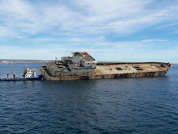
Los arrecifes artificiales son estructuras sumergidas de origen antrópico. En particular, los arrecifes artificiales a partir del hundimiento intencional de buques obsoletos se utilizan a menudo para crear parques y fomentar el turismo subacuático. Una vez hundidos, una diversa comunidad de organismos bentónicos coloniza rápidamente estos pecios artificiales. La industria del buceo recreativo valora esto de forma positiva, y es su principal argumento para promover los hundimientos. Sin embargo, existe una cantidad creciente de evidencias que muestran que los pecios artificiales no sustituyen los arrecifes naturales, y que, en cambio, pueden alterar procesos ecológicos complejos como la estructura de las tramas tróficas o incrementar el riesgo de establecimiento y dispersión de especies marinas invasoras. En este artículo discutimos diversas inquietudes sobre las consecuencias socioecológicas no deseadas de crear arrecifes artificiales mediante el hundimiento intencional de buques obsoletos, y problematizamos el paradigma de que esta práctica favorece la conservación marina. Aunque reconocemos que este tipo de arrecifes artificiales tienen beneficios económicos e, incluso, algunos efectos positivos en el ambiente, argumentamos que estos beneficios suelen alcanzar solo a una porción de la sociedad y que es una práctica que requiere ser discutida en un contexto más participativo. También discutimos aquí las implicancias para la gestión y proponemos ideas para fomentar el buceo recreativo mediante enfoques más sostenibles en términos ambientales. Esperamos aportar puntos de vista que conduzcan a avanzar en una gestión más integral y participativa de las áreas marino-costeras.
Citas
Airoldi, L., X. Turon, Perkol-Finkel, S., and M. Rius. 2015. Corridors for aliens but not for natives: Effects of marine urban sprawl at a regional scale. Divers Distrib 21:755-768. https://doi.org/10.1111/ddi.12301.
Amara, I., W. Miled, Ben Slama, R., and N. Ladhari. 2018. Antifouling processes and toxicity effects of antifouling paints on marine environment. A review. Environ Toxicol Pharmacol 57:115-130. https://doi.org/10.1016/j.etap.2017.12.001.
Bacher, S., B. S. Galil, M. A. Núñez, M. Ansong, P. Cassey, K. Dehnen-Schmutz, G. Fayvush, et al. 2023. Impacts of invasive alien species on nature, nature’s contributions to people, and good quality of life. In H. E. Roy, A. Pauchard, P. Stoett and T. Renard Truong (eds.). Thematic Assessment Report on Invasive Alien Species and their Control of the Intergovernmental Science-Policy Platform on Biodiversity and Ecosystem Services. Chapter 4. IPBES Secretariat, Bonn, Germany. https://doi.org/10.5281/zenodo.7430731.
Bennett, N. J., A. Di Franco, A. Calò, E. Nethery, F. Niccolini, M. Milazzo, and P. Guidetti. 2019. Local support for conservation is associated with perceptions of good governance, social impacts, and ecological effectiveness. Conserv Lett 12:e12640. https://doi.org/10.1111/conl.12640.
Bigatti, G., M. A. Primost, M. Cledón, A. Averbuj, N. Theobald, W. Gerwinski, W. Arntz, E. Morriconi, and P. E. Penchaszadeh. 2009. Biomonitoring of TBT contamination and imposex incidence along 4700 km of Argentinean shoreline (SW Atlantic: From 38S to 54S). Mar Poll Bull 58(5):695-701. https://doi.org/10.1016/j.marpolbul.2009.01.001.
Bravo, G., F. Márquez, E. M. Marzinelli, M. M. Méndez (Pitu), and G. Bigatti. 2015. Effect of recreational diving on Patagonian rocky reefs. Mar Environ Res 104:31-36. https://doi.org/10.1016/j.marenvres.2014.12.002.
Burt, J. A., A. Bartholomew, P. Usseglio, A. Bauman, and P. F. Sale. 2009. Are artificial reefs surrogates of natural habitats for corals and fish in Dubai, United Arab Emirates? Coral Reefs 28:663-675. https://doi.org/10.1007/s00338-009-0500-1.
Carlton, J. T., and E. Schwindt. 2024. The assessment of marine bioinvasion diversity and history. Biol Invasions 26(1):237-298. https://doi.org/10.1007/s10530-023-03172-7.
Carvalho, S., A. Moura, J. Cúrdia, L. Cancela da Fonseca, and M. N. Santos. 2013. How complementary are epibenthic assemblages in artificial and nearby natural rocky reefs? Mar Environ Res 92:170-177. https://doi.org/10.1016/j.marenvres.2013.09.013.
Castro, K. L., N. Battini, C. B. Giachetti, B. Trovant, M. Abelando, N. G. Basso, and E. Schwindt. 2021. Early detection of marine invasive species following the deployment of an artificial reef: Integrating tools to assist the decision-making process. J Environ Manage 297:113333. https://doi.org/10.1016/j.jenvman.2021.113333.
Castro, K. L., N. Battini, and E. Schwindt. 2023. Hundimiento intencional de buques para fomentar el ecoturismo: hacia una gestión participativa del uso de los ambientes marino-costeros. III Congreso Iberoamericano de Gestión Integrada de Áreas Litorales (GIAL). Mar del Plata, Argentina.
Chubut Government. 2017. El ministro de ambiente del Chubut; Ignacio Agulleiro, firmó acuerdo preliminar con los representantes de “Iberconsa” dueña del barco “Urabain” para el parque submarino. URL: ambiente.chubut.gov.ar.
Cullen-Knox, C., M. Haward, J. Jabour, E. Ogier, and S. R. Tracey. 2017. The social licence to operate and its role in marine governance: insights from Australia. Mar Policy 79:70-77. https://doi.org/10.1016/j.marpol.2017.02.013.
da Rocha, R. M., L. P. Kremer, M. S. Baptista, and R. Metri. 2009. Bivalve cultures provide habitat for exotic tunicates in southern Brazil Related papers. Aquat Invasions 4:195-205. https://doi.org/10.3391/ai.2009.4.1.20.
Dafforn, K. A., T. M. Glasby, and E. L. Johnston. 2012. Comparing the invasibility of experimental ‘reefs’ with field observations of natural reefs and artificial structures. PLoS ONE 7:e38124. https://doi.org/10.1371/journal.pone.0038124.
Dance, M. A., III W. F. Patterson, and D. T. Addis. 2011 Fish community and trophic structure at artificial reef sites in the Northeastern Gulf of Mexico. Bull Mar Sci 87:301-324. https://doi.org/10.5343/bms.2010.1040.
Devault, D. A., B. Beilvert, and P. Winterton. 2017. Ship breaking or scuttling? A review of environmental, economic and forensic issues for decision support. Environ Sci Pollut Res 24:25741-25774. https://doi.org/10.1007/s11356-016-6925-5.
dos Santos, L. N., D. S. Brotto, and I. R. Zalmon. 2010. Fish responses to increasing distance from artificial reefs on the Southeastern Brazilian Coast. J Exp Mar Bio Ecol 386:54-60. https://doi.org/10.1016/j.jembe.2010.01.018.
Edney, J. 2017. Human dimensions of wreck diving and management: Case studies from Australia and Micronesia. Tour Mar Environ 12:169-182. https://doi.org/10.3727/154427317X15016348972686.
Edney, J., and D. H. R. Spennemann. 2015. Can artificial reef wrecks reduce diver impacts on shipwrecks? The management dimension. J Mari Arch 10:141-157. https://doi.org/10.1007/s11457-015-9140-5.
Ferrario, F., L. Iveša, A. Jaklin, S. Perkol-Finkel, and L. Airoldi. 2016. The overlooked role of biotic factors in controlling the ecological performance of artificial marine habitats. J Appl Ecol 53:16-24. https://doi.org/10.1111/1365-2664.12533.
Ferrario, J., S. Caronni, A. Occhipinti-Ambrogi, and A. Marchini. 2017. Role of commercial harbours and recreational marinas in the spread of non-indigenous fouling species. Biofouling 33:651-660. https://doi.org/10.1080/08927014.2017.1351958.
Firth, L. B., M. Farnworth, K. P. Fraser, and A. McQuatters-Gollop. 2023. Make a difference: Choose artificial reefs over natural reefs to compensate for the environmental impacts of dive tourism. Sci Total Environ 901:165488. https://doi.org/10.1016/j.scitotenv.2023.165488.
Fowler, A. M., and D. J. Booth. 2012. How well do sunken vessels approximate fish assemblages on coral reefs? Conservation implications of vessel-reef deployments. Mar Biol 159:2787-2796. https://doi.org/10.1007/s00227-012-2039-x.
Genzano, G., D. Giberto, and C. Bremec. 2011. Benthic survey of natural and artificial reefs off Mar del Plata, Argentina, southwestern Atlantic. Lat Am J Aquat Res 39(3):553-566. http://doi.org/10.3856/vol39-issue3-fulltext-15.
Genzano, G. N., P. E. Meretta, and C. Bremec. 2018. Macrobenthic colonization on the derelict fisheries vessel Khronometer, Cristo Rey submarine park, Argentina. Mar Ecol 39(2):e12491. https://doi.org/10.1111/maec.12491.
Giachetti, C. B., N. Battini, A. Bortolus, M. Tatian, and E. Schwindt. 2019. Macropredators as shapers of invaded fouling communities in a cold temperate port. J Exp Mar Bio Ecol 518:151177. https://doi.org/10.1016/j.jembe.2019.151177.
Glasby, T. M., and S. D. Connell. 2001. Orientation and position of substrata have large effects on epibiotic assemblages. Mar Ecol Prog Ser 214:127-135. https://doi.org/10.3354/meps214127.
Glasby, T. M., S. D. Connell, M. G. Holloway, and C. L. Hewitt. 2007. Nonindigenous biota on artificial structures: Could habitat creation facilitate biological invasions? Mar Biol 151:887-895. https://doi.org/10.1007/s00227-006-0552-5.
Grasselli, F., and L. Airoldi. 2021. How and to what degree does physical structure differ between natural and artificial habitats? A multi-scale assessment in marine intertidal systems. Front Mar Sci 8. https://doi.org/10.3389/fmars.2021.766903.
Ha, N. T., L. Cong, and G. Wall. 2020. China’s scuba divers’ marine-based environmental behaviors. J Sustain Tour 29(4):616-638. https://doi.org/10.1080/09669582.2020.1820016.
Hasler, H., and J. A. Ott. 2008. Diving down the reefs? Intensive diving tourism threatens the reefs of the northern Red Sea. Mar Pollut Bull 56:1788-1794. https://doi.org/10.1016/j.marpolbul.2008.06.002.
Heery, E. C., M. J. Bishop, L. P. Critchley, A. B. Bugnot, L. Airoldi, M. Mayer-Pinto, E. V. Sheehan, R. A. Coleman, et al. 2017. Identifying the consequences of ocean sprawl for sedimentary habitats. J Exp Mar Biol Ecol 492:31-48. https://doi.org/10.1016/j.jembe.2017.01.020.
Herbert, R. J. H., J. Humphreys, C. J. Davies, C. Roberts, S. Fletcher, and T. P. Crowe. 2016. Ecological impacts of non-native Pacific oysters (Crassostrea gigas) and management measures for protected areas in Europe. Biodivers Conserv 25:2835-2865. https://doi.org/10.1007/s10531-016-1209-4.
Higgins, E., A. Metaxas, and R. E. Scheibling. 2022. A systematic review of artificial reefs as platforms for coral reef research and conservation. PLoS ONE 17(1):e0261964. https://doi.org/10.1371/journal.pone.0261964.
Hill, C. E. L., M. M. Lymperaki, and B. W. Hoeksema. 2021. A centuries-old manmade reef in the Caribbean does not substitute natural reefs in terms of species assemblages and interspecific competition. Mar Pollut Bull 169:112576. https://doi.org/10.1016/j.marpolbul.2021.112576.
Hynes, M., J. E. Peters, and D. Rushworth. 2004. Artificial Reefs: A disposal option for Navy and MARAD Ships. RAND National Defense Research Institute. United States.
Ilieva, I., L. Jouvet, L. Seidelin, B. D. Best, S. Aldabet, R. da Silva, and D. A. Conde. 2019. A global database of intentionally deployed wrecks to serve as artificial reefs. Data in Brief 23:103584. https://doi.org/10.1016/j.dib.2018.12.023.
Kareiva, P., and E. Fuller. 2016. Beyond resilience: How to better prepare for the profound disruption of the Anthropocene. Glob Policy 7:107-118. https://doi.org/10.1111/1758-5899.12330.
Kelly, L. W., K. L. Barott, E. Dinsdale, A. M. Friedlander, B. Nosrat, D. Obura, E. Sala, S. A. Sandin, J. E. Smith, M. J. A. Vermeij, G. J. Williams, D. Willner, and F. Rohwer. 2012. Black reefs: Iron-induced phase shifts on coral reefs. ISME J 6:638-649. https://doi.org/10.1038/ismej.2011.114.
Kirkbride-Smith, A. E., P. M. Wheeler, and M. L. Johnson. 2016. Artificial reefs and marine protected areas: A study in willingness to pay to access Folkestone Marine Reserve, Barbados, West Indies. PeerJ 2016:1-32. https://doi.org/10.7717/peerj.2175.
Komyakova, V., J. B. Jaffres, E. M. Strain, C. Cullen-Knox, M. Fudge, O. Langhamer, A. Bender, S. M. Yaakub, E. Wilson, B. J. M. Allan, I. Sella, and M. Haward. 2022. Conceptualisation of multiple impacts interacting in the marine environment using marine infrastructure as an example. Sci Tot Env 830:154748. https://doi.org/10.1016/j.scitotenv.2022.154748.
Leitão, F., M. N. Santos, K. Erzini, and C. C. Monteiro. 2009. Diplodus spp. assemblages on artificial reefs: importance for near shore fisheries. Fish Manag Ecol 16(2):88-99. https://doi.org/10.1111/j.1365-2400.2008.00646.x.
Lima, J. S., I. R. Zalmon, and M. Love. 2019. Overview and trends of ecological and socioeconomic research on artificial reefs. Mar Environ Res 145:81-96. https://doi.org/10.1016/j.marenvres.2019.01.010.
Lowry, M. B., T. M. Glasby, C. A. Boys, H. Folpp, I. Suthers, and M. Gregson. 2014. Response of fish communities to the deployment of estuarine artificial reefs for fisheries enhancement. Fish Manag Ecol 21(1):42-56. https://doi.org/10.1111/fme.12048.
McKenzie, L. A., R. C. Brooks, and E. L. Johnston. 2012. A widespread contaminant enhances invasion success of a marine invader. J App Ecol 49(4):767-773. https://doi.org/10.1111/j.1365-2664.2012.02158.x.
Miranda, R. J., I. C. Cruz, and F. Barros. 2016. Effects of the alien coral Tubastraea tagusensis on native coral assemblages in a southwestern Atlantic coral reef. Mar Biol 163:1-12. https://doi.org/10.1007/s00227-016-2819-9.
Miranda, R. J., A. Tagliafico, B. P. Kelaher, E. Mariano-Neto, and F. Barros. 2018. Impact of invasive corals Tubastrea spp. on native coral recruitment. Mar Ecol Prog Ser 605:125-133. https://doi.org/10.3354/meps12731.
Miranda, R. J., J. A. C. C. Nunes, J. C: Creed, F. Barros, R. M. Macieira, R. G. Santos, V. L. Gislaine, A. V. F. Pontes, L. G. F. C. Silva, et al. 2020. Brazil policy invites marine invasive species. Science 80:368:481. https://doi.org/10.1126/science.abb7255.
Morgera, E. 2016. The need for an international legal concept of fair and equitable benefit sharing. Eur J Int Law 27:353-383. https://doi.org/10.1093/ejil/chw014.
Noble, M. M., D. Harasti, J. Pittock, and B. Doran. 2019. Understanding the spatial diversity of social uses, dynamics, and conflicts in marine spatial planning. J Environ Manage 246:929-940. https://doi.org/10.1016/j.jenvman.2019.06.048.
Observatorio Turístico. 2024. Anuario Estadístico de Turismo 2023-2024. Ministerio de Turismo y Áreas Protegidas, Chubut. Argentina.
Oh, C. O., R. Ditton, and J. Stoll. 2008. The economic value of scuba-diving use of natural and artificial reef habitats. Soc Nat Resour 21:455-468. https://doi.org/10.1080/08941920701681953.
Paxton, A. B., K. W. Shertzer, N. M. Bacheler, G. T. Kellison, K. L. Riley, and C. Taylor. 2020. Meta-analysis reveals artificial reefs can be effective tools for fish community enhancement but are not one-size-fits-all. Fron Mar Sci 7:282. https://doi.org/10.3389/fmars.2020.00282.
Perkol-Finkel, S., N. Shashar, and Y. Benayahu. 2006. Can artificial reefs mimic natural reef communities? The roles of structural features and age. Mar Environ Res 61:121-135. https://doi.org/10.1016/j.marenvres.2005.08.001.
Pinto, T. K., F. P. A. Barros, J. A. C. C. Nunes, R. J. Miranda, B. M. Pereira, P. H. Pereira, and C. L. Sampaio. 2021. Shipwrecks fouling community: Similarities with natural rocky reefs at different distances and wave exposure regimes. Ocean Coast Manag 213:105895. https://doi.org/10.1016/j.ocecoaman.2021.105895.
Polak, O., and N. Shashar. 2012. Can a small artificial reef reduce diving pressure from a natural coral reef? Lessons learned from Eilat, Red Sea. Ocean Coast Manag 55:94-100. https://doi.org/10.1016/j.ocecoaman.2011.10.006.
Prefectura Naval Argentina. 2015. Prefectura capturó un buque pesquero chino y decomisó más de 600 toneladas de calamar. URL: youtube.com/watch?v=aKVhdTXXhyY.
Ramm, L. A., J. H. Florisson, S. L. Watts, A. Becker, and J. R. Tweedley. 2021. Artificial reefs in the Anthropocene: a review of geographical and historical trends in their design, purpose, and monitoring. Bull Mar Sci 97(4):699-728. https://doi.org/10.5343/bms.2020.0046.
Reed, M. S., A. Graves, N. Dandy, H. Posthumus, K. Hubacek, J. Morris, C. Prell, C. H. Quinn, and L. C. Stringer. 2009. Who's in and why? A typology of stakeholder analysis methods for natural resource management. J Environ Manage 90(5):1933-1949. https://doi.org/10.1016/j.jenvman.2009.01.001.
Reyna, P. B., G. Alurralde, A. Taverna, E. Calcagno, F. Scarabino, G. M. Vélez-Rubio, and E. Schwindt. 2023. Hotspot areas of marine introduced species in the Southwestern Atlantic. Mar Eco Progress Ser 725:15-28. https://doi.org/10.3354/meps14471.
Rilov, G., and Y. Benayahu. 2000. Fish assemblage on natural versus vertical artificial reefs: The rehabilitation perspective. Mar Biol 136:931-942. https://doi.org/10.1007/s002279900250.
Sala, J. E., and G. Torchio. 2019. Moving towards public policy-ready science: philosophical insights on the social-ecological systems perspective for conservation science. Ecosyst People 15:232-246. https://doi.org/10.1080/26395916.2019.1657502.
Schleyer, M. H., and B. J. Tomalin. 2000. Damage on South African coral reefs and an assessment of their sustainable diving capacity using a fisheries approach. Bull Mar Sci 67:1025-1042.
Schøyen, M., N. W. Green, D. Ø. Hjermann, L. Tveiten, B. Beylich, S. Øxnevad, and J. Beyer. 2019. Levels and trends of tributyltin (TBT) and imposex in dogwhelk (Nucella lapillus) along the Norwegian coastline from 1991 to 2017. Mar Env Res 144:1-8. https://doi.org/10.1016/j.marenvres.2018.11.011.
Schwindt, E., J. L. Gappa, M. P. Raffo, M. Tatián, A. Bortolus, J. M. Orensanz, G. Alonso, M. E. Diez, B. Doti, G. Genzano, et al. 2014. Marine fouling invasions in ports of Patagonia (Argentina) with implications for legislation and monitoring programs. Mar Env Res 99:60-68. https://doi.org/10.1016/j.marenvres.2014.06.006.
Schwindt, E., A. Bortolus, M. Abelando, E. Barbieri, P. Baron, N. Basso, and B. Trovant. 2019. Estudio, plan de detección temprana y acción precoz en especies marinas exóticas: la ostra japonesa Crassostrea gigas como modelo de estudio. COLACMAR. Mar del Plata, Argentina.
Schwindt, E., T. A. August, S. Vanderhoeven, M. A. McGeoch, S. Bacher, B. S. Galil, P. Genovesi, P. E. Hulme, et al. 2023. Overwhelming evidence galvanizes a global consensus on the need for action against invasive alien species. Biol Invasions. https://doi.org/10.1007/s10530-023-03209-x.
Sedano, F., J. M. T de Figueroa, C. Navarro-Barranco, E. Ortega, and J. M. Guerra-García. 2020. Do artificial structures cause shifts in epifaunal communities and trophic guilds across different spatial scales? Mar Environ Res 158. https://doi.org/10.1016/j.marenvres.2020.104998.
Şensurat Genç, T., A. Özgül, and A. Lök. 2017. The use of artificial reefs for recreational diving. Turkish J Marit Mar Sci 3:27-33. https://doi.org/10.1016/j.jenvman.2022.115159.
Shani, A., O. Polak, and N. Shashar. 2012. Artificial reefs and mass marine ecotourism. Tour Geogr 14:361-382 https://doi.org/10.1080/14616688.2011.610350.
Sheehy, D. J., and S. F. Vik. 2010. The role of constructed reefs in non-indigenous species introductions and range expansions. Ecol Eng 36:1-11. https://doi.org/10.1016/j.ecoleng.2009.09.012.
Simkanin, C., I. C. Davidson, J. F. Dower, G. Jamieson, and T. W. Therriault. 2012. Anthropogenic structures and the infiltration of natural benthos by invasive ascidians. Mar Ecol 33:499-511. https://doi.org/10.1111/j.1439-0485.2012.00516.x.
Simon, T., H. T. Pinheiro, and J. C. Joyeux. 2011. Target fishes on artificial reefs: Evidences of impacts over nearby natural environments. Sci Total Environ 409:4579-4584. https://doi.org/10.1016/j.scitotenv.2011.07.057.
Simon, T., J. C. Joyeux, and H. T. Pinheiro. 2013. Fish assemblages on shipwrecks and natural rocky reefs strongly differ in trophic structure. Mar Environ Res 90:55-65. https://doi.org/10.1016/j.marenvres.2013.05.012.
Soares, M. de O., S. Salani, S. V. Paiva, and M. D. A. Braga. 2020. Shipwrecks help invasive coral to expand range in the Atlantic Ocean. Mar Pollut Bull 158:111394. https://doi.org/10.1016/j.marpolbul.2020.111394.
Stolk, P., K. Markwell, and J. M. Jenkins. 2005. Perceptions of artificial reefs as scuba diving resources: A study of Australian recreational scuba divers. Ann Leis Res 8:153-166. https://doi.org/10.1080/11745398.2005.10600968.
Tynyakov, J., M. Rousseau, M. Chen, O. Figus, Y. Belhassen, and N. Shashar. 2017. Artificial reefs as a means of spreading diving pressure in a coral reef environment. Ocean Coast Manag 149:159-164. https://doi.org/10.1016/j.ocecoaman.2017.10.008.
Van Landuyt, J., K. Kundu, S. Van Haelst, M. Neyts, K. Parmentier, M. De Rijcke, and N. Boon. 2022. 80 years later: Marine sediments still influenced by an old war ship. Front Mar Sci 9:1017136. https://doi.org/10.3389/fmars.2022.1017136.
Virto, L. R. 2018. A preliminary assessment of the indicators for Sustainable Development Goal (SDG) 14. Conserve and sustainably use the oceans, seas and marine resources for sustainable development. Mar Policy 98:47-57. https://doi.org/10.1016/j.marpol.2018.08.036.
Waylen, K. A., E. J. Hastings, E. A. Banks, K. L. Holstead, R. J. Irvine, and K. L. Blackstock. 2014. The need to disentangle key concepts from ecosystem‐approach jargon. Conserv Biol 28:1215-1224. https://doi.org/10.1111/cobi.12331.
Work, T. M., G. S. Aeby, B. P. Neal, N. N. Price, E. Conklin, and A. Pollock. 2018. Managing an invasive corallimorph at Palmyra Atoll National Wildlife Refuge, Line Islands, Central Pacific. Biol Invasions 20:2197-2208. https://doi.org/10.1007/s10530-018-1696-1.
Descargas
Publicado
Cómo citar
Número
Sección
Licencia
Derechos de autor 2025 Karen L. Castro, Nicolás Battini, Gonzalo Bravo, Gastón Trobbiani, Evangelina Schwindt

Esta obra está bajo una licencia internacional Creative Commons Atribución 4.0.
Las/os autoras/es conservan sus derechos de autoras/es: 1) cediendo a la revista el derecho a su primera publicación, y 2) registrando el artículo publicado con una Licencia de Atribución de Creative Commons (CC-BY 4.0), lo que permite a autoras/es y terceros verlo y utilizarlo siempre que mencionen claramente su origen (cita o referencia incluyendo autoría y primera publicación en esta revista). Las/os autores/as pueden hacer otros acuerdos de distribución no exclusiva siempre que indiquen con claridad su origen, así como compartir y divulgar ampliamente la versión publicada de su trabajo.