Registros de aves en entornos urbanos y áreas naturales protegidas: Diferencias en la diversidad en los Andes Centrales del Perú
DOI:
https://doi.org/10.25260/EA.26.36.1.0.2619Palabras clave:
conservación, Región Huánuco, avifauna, sistemas de información geogr´´afica, ecosistemas andino-amazónicosResumen
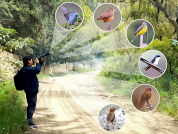
1. Las áreas naturales protegidas (ANP) suelen presentar altos índices de diversidad en comunidades de aves, mientras que los centros urbanos (CU) concentran más registros y una mayor abundancia de aves debido a la accesibilidad y la proximidad de los observadores, lo que podría generar sesgos en la estimación de la diversidad.
2. Este estudio compara los índices de diversidad de aves entre ANP y CU en los Andes Centrales del Perú, evaluando si los registros urbanos sobrestiman y afectan la representatividad de estas poblaciones. Para ello, se utilizaron registros del Sistema Global de Información sobre Biodiversidad (GBIF), la comparación de índices de diversidad mediante la prueba de Wilcoxon y el análisis de componentes principales (ACP).
3. Los resultados indican que las ANP presentan una diversidad (Shannon-Wiener) y una riqueza de especies (Chao1) significativamente mayores. En cambio, la equidad (Pielou J’) fue mayor en los CU, mientras que el índice de dominancia (Simpson) no mostró diferencias.
4. No obstante, ciertos CU (Tingo María, Puerto Inca y Hermilio Valdizán) presentaron valores de diversidad similares o superiores a los de las ANP.
5. Se determinó que los registros en entornos urbanos no sobrestiman la diversidad, sino que complementan la representatividad de la avifauna regional.
6. Implicancias. Estos hallazgos podrían estar condicionados por la compleja orografía andino-amazónica de la región Huánuco, cuya configuración restringe la expansión urbana extensiva y favorece la persistencia de la biodiversidad incluso en entornos transformados. Los registros urbanos de aves, en este contexto, actúan como un complemento, y no como un sesgo, en las estimaciones de la diversidad regional.
Citas
Amano, T., J. D. L. Lamming, and W. J. Sutherland. 2016. Spatial Gaps in Global Biodiversity Information and the Role of Citizen Science. BioScience 66:393-400. https://doi.org/10.1093/biosci/biw022.
Arana, A., C. Arana, M. Watsa, M. W. Tobler, V. Pacheco, J. Esteves, J. L. Mena, L. Salinas, and J. L. Ramírez. 2024. Lack of local genetic representation in one of the regions with the highest bird species richness, the Peruvian Amazonia. PloS ONE 19:e0296305. https://doi.org/10.1371/journal.pone.0296305.
Arévalo, C., J. D. Amaya-Espinel, C. Henríquez, J. T. Ibarra, and C. Bonacic. 2022. Urban noise and surrounding city morphology influence green space occupancy by native birds in a Mediterranean-type South American metropolis. Scientific Reports 12:4471. https://doi.org/10.1038/s41598-022-08654-7.
Aronson, M. F. J., F. A. La Sorte, C. H. Nilon, M. Katti, M. A. Goddard, C. A. Lepczyk, P. S. Warren, et al. 2014. A global analysis of the impacts of urbanization on bird and plant diversity reveals key anthropogenic drivers. Proceedings of the Royal Society B: Biological Sciences 281. https://doi.org/10.1098/rspb.2013.3330.
Beck, J., M. Böller, A. Erhardt, and W. Schwanghart. 2014. Spatial bias in the GBIF database and its effect on modeling species’ geographic distributions. Ecological Informatics 19:10-15. https://doi.org/10.1016/j.ecoinf.2013.11.002.
Beck, J., L. Ballesteros-Mejia, P. Nagel, and I. J. Kitching. 2013. Online solutions and the ‘Wallacean shortfall’: what does GBIF contribute to our knowledge of species’ ranges? Diversity and Distributions 19:1043-1050. https://doi.org/10.1111/ddi.12083.
Berendsohn, W. G., V. Chavan, and J. Macklin. 2010. Summary of Recommendations of the GBIF Task Group on the Global Strategy and Action Plan for the Digitisation of Natural History Collections. Biodiversity Informatics 7. https://doi.org/10.17161/bi.v7i2.3989.
Briceño, N., D. Cano, F. Cámara, B. Campos, H. Sandoval, A. Ricra, and N. Rojas-Briceño. 2025. Potential distribution of the oncilla Leopardus tigrinus (Carnivora: Felidae) based on high-resolution spatial data and camera traps in a national park in Peru. Journal of Animal Behaviour and Biometeorology 13:2025006-2025006. https://doi.org/10.31893/jabb.2025006.
Callaghan, C. T., R. E. Major, J. H. Wilshire, J. M. Martin, R. T. Kingsford, and W. K. Cornwell. 2019. Generalists are the most urban-tolerant of birds: a phylogenetically controlled analysis of ecological and life history traits using a novel continuous measure of bird responses to urbanization. Oikos 128:845-858. https://doi.org/10.1111/oik.06158.
Cervantes, K., E. Arias, A. Aguilar, C. Larico, and V. Pacheco. 2024. Non-volant mammals in the central Andes Yungas: the Pampa Hermosa National Sanctuary. THERYA 15:152. https://doi.org/10.12933/therya-24-4971.
Chao, A. 1984. Nonparametric Estimation of the Number of Classes in a Population. Scandinavian Journal of Statistics 11:265-270.
Chao, A., N. J. Gotelli, T. C. Hsieh, E. L. Sander, K. H. Ma, R. K. Colwell, and A. M. Ellison. 2014. Rarefaction and extrapolation with Hill numbers: a framework for sampling and estimation in species diversity studies. Ecological Monographs 84:45-67. https://doi.org/10.1890/13-0133.1.
Chao, A., K. H. Ma, and T. C. Hsieh. 2016. iNEXT Online: Software for Interpolation and Extrapolation of Species Diversity. URL: tinyurl.com/4t7yftmf.
Cossios, D., and A. Ricra Zevallos. 2019. Diversidad y actividad horaria de mamíferos medianos y grandes registrados con cámaras trampa en el Parque Nacional Tingo María, Huánuco, Perú. Revista Peruana de Biología 26:325-332. https://doi.org/10.15381/rpb.v26i3.16776.
Duckworth, G. D., and R. Altwegg. 2018. Effectiveness of protected areas for bird conservation depends on guild. Diversity and Distributions 24:1083-1091. https://doi.org/10.1111/ddi.12756.
Fattorini, S., G. Lin, and C. Mantoni. 2018. Avian species-area relationships indicate that towns are not different from natural areas. Environmental Conservation 45:419-424. https://doi.org/10.1017/S0376892918000048.
Fontana, S., T. Sattler, F. Bontadina, and M. Moretti. 2011. How to manage the urban green to improve bird diversity and community structure. Landscape and Urban Planning 101:278-285. https://doi.org/10.1016/j.landurbplan.2011.02.033.
Gagné, S. A., P. J. Sherman, K. K. Singh, and R. K. Meentemeyer. 2016. The effect of human population size on the breeding bird diversity of urban regions. Biodiversity and Conservation 25:653-671. https://doi.org/10.1007/s10531-016-1080-3.
Gaiji, S., V. Chavan, A. H. Ariño, J. Otegui, D. Hobern, R. Sood, and E. Robles. 2013. Content assessment of the primary biodiversity data published through GBIF network: Status, challenges and potentials. Biodiversity Informatics 8:94-172. https://doi.org/10.17161/bi.v8i2.4124.
Gao, Y., J. Gao, J. Chen, Y. Xu, and J. Zhao. 2011. Regionalizing Aquatic Ecosystems Based on the River Subbasin Taxonomy Concept and Spatial Clustering Techniques. International Journal of Environmental Research and Public Health 8:4367-4385. https://doi.org/10.3390/ijerph8114367.
García-Roselló, E., C. Guisande, A. Manjarrés-Hernández, J. González-Dacosta, J. Heine, et al. 2015. Can we derive macroecological patterns from primary Global Biodiversity Information Facility data? Global Ecology and Biogeography 24:335-347. https://doi.org/10.1111/geb.12260.
GBIF.Org User. 2024. Occurrence Download. The Global Biodiversity Information Facility. https://doi.org/10.15468/dl.f9cczt.
González, O. 2016. ¿Son las aves indicadores de cambio climático en los andes tropicales de Huánuco, Perú? URL: tinyurl.com/3wbczpj5.
Gormley, A. M., D. M. Forsyth, P. Griffioen, M. Lindeman, D. S. Ramsey, M. P. Scroggie, and L. Woodford. 2011. Using presence-only and presence-absence data to estimate the current and potential distributions of established invasive species. The Journal of Applied Ecology 48:25-34. https://doi.org/10.1111/j.1365-2664.2010.01911.x.
Hooper, D. U., F. S. Chapin, J. J. Ewel, A. Hector, P. Inchausti, S. Lavorel, J. H. Lawton, D. M. Lodge, et al. 2005. Effects of biodiversity on ecosystem functioning: a consensus of current knowledge. https://doi.org/10.1890/04-0922.
Huang, P., D. Zheng, Y. Yan, W. Xu, Y. Zhao, Z. Huang, Y. Ding, Y. Lin, Z. Zhu, Z. Chen, and W. Fu. 2022. Effects of Landscape Features on Bird Community in Winter Urban Parks. Animals 12:3442. https://doi.org/10.3390/ani12233442.
Iñiguez-Armijos, C., S. Rausche, A. Cueva, A. Sánchez-Rodríguez, C. Espinosa, and L. Breuer. 2016. Shifts in leaf litter breakdown along a forest-pasture-urban gradient in Andean streams. Ecology and Evolution 6:4849-4865. https://doi.org/10.1002/ece3.2257.
Irga, P. J., B. Armstrong, W. L. King, M. Burchett, and F. R. Torpy. 2016. Correspondence Between Urban Bird Roosts and the Presence of Aerosolised Fungal Pathogens. Mycopathologia 181:689-699. https://doi.org/10.1007/s11046-016-0013-8.
Kovařík, P., V. Pechanec, I. Machar, J. Harmáček, and T. Grim. 2021. Are birds reliable indicators of most valuable natural areas? Evaluation of special protection areas in the context of habitat protection. Ecological Indicators 132:108298. https://doi.org/10.1016/j.ecolind.2021.108298.
Kurucz, K., J. J. Purger, and P. Batáry. 2021. Urbanization shapes bird communities and nest survival, but not their food quantity. Global Ecology and Conservation 26:e01475. https://doi.org/10.1016/j.gecco.2021.e01475.
Leveau, L. M., C. M. Leveau, M. Villegas, J. A. Cursach, and C. G. Suazo. 2017. Bird communities along urbanization gradients: a comparative analysis among three neotropical cities. Ornitología Neotropical 28:77-87. https://doi.org/10.58843/ornneo.v28i0.125.
Liordos, V., J. Jokimäki, M.-L. Kaisanlahti-Jokimäki, E. Valsamidis, and V. J. Kontsiotis. 2021. Niche Analysis and Conservation of Bird Species Using Urban Core Areas. Sustainability 13:6327. https://doi.org/10.3390/su13116327.
Lopez, C. X. G., and G. Savickyte. 2023. Biodiversity in cities: the impact of biodiversity data across spatial scales on diversity estimates. Folia Oecologica 50:134-146. https://doi.org/10.2478/foecol-2023-0012.
Luque Fernández, C. R., L. G. C. Sanz, and Y. A. P. Domínguez. 2018. Richness and abundance of birds in an urban gradient of Arequipa, southwest of Perú. Arnaldoa 25:1095-1106. https://doi.org/10.22497/arnaldoa.253.25317.
MacGregor-Fors, I., and J. E. Schondube. 2012. Urbanizing the wild: shifts in bird communities associated to small human settlements. Revista Mexicana de Biodiversidad 83. https://doi.org/10.22201/ib.20078706e.2012.2.982.
Maldonado, C., C. I. Molina, A. Zizka, C. Persson, C. M. Taylor, J. Albán, E. Chilquillo, N. Rønsted, and A. Antonelli. 2015. Estimating species diversity and distribution in the era of Big Data: To what extent can we trust public databases? Global Ecology and Biogeography 24:973-984. https://doi.org/10.1111/geb.12326.
Marcacci, G., C. Westphal, A. Wenzel, V. Raj, N. Nölke, T. Tscharntke, and I. Grass. 2021. Taxonomic and functional homogenization of farmland birds along an urbanization gradient in a tropical megacity. Global Change Biology 27:4980-4994. https://doi.org/10.1111/gcb.15755.
Marzluff, J. M. 2017. A decadal review of urban ornithology and a prospectus for the future. Ibis 159:1-13. https://doi.org/10.1111/ibi.12430.
Mayorga, I., P. Bichier, and S. M. Philpott. 2020. Local and landscape drivers of bird abundance, species richness, and trait composition in urban agroecosystems. Urban Ecosystems 23:495-505. https://doi.org/10.1088/1755-1315/1243/1/012009.
Omonte Trujillo, D. L., and O. R. Bonilla Natividad. 2015. El aviturismo en el bosque de Unchog y su incidencia en el desarrollo sostenible del centro poblado de Cochabamba, distrito de Churubamba- Huánuco 2015. Tesis de grado, Universidad Nacional Hermilio Valdizán, Huánuco. URL: tinyurl.com/4v7f67m2.
Ordóñez-Delgado, L., C. Iñiguez-Armijos, M. Díaz, A. Escudero, E. Gosselin, L. P. Waits, and C. I. Espinosa. 2022. The Good, the Bad, and the Ugly of Urbanization: Response of a Bird Community in the Neotropical Andes. Frontiers in Ecology and Evolution 10. https://doi.org/10.3389/fevo.2022.844944.
Ortega-Álvarez, R., and I. MacGregor-Fors. 2009. Living in the big city: Effects of urban land-use on bird community structure, diversity, and composition. Landscape and Urban Planning 90:189-195. https://doi.org/10.1016/j.landurbplan.2008.11.003.
Patankar, S., R. Jambhekar, K. R. Suryawanshi, and H. Nagendra. 2021. Which Traits Influence Bird Survival in the City? A Review. Land 10:92. https://doi.org/10.3390/land10020092.
Patterson, B. D., D. F. Stotz, S. Solari, J. W. Fitzpatrick, and V. Pacheco. 1998. Contrasting patterns of elevational zonation for birds and mammals in the Andes of southeastern Peru. Journal of Biogeography 25:593-607. https://doi.org/10.1046/j.1365-2699.1998.2530593.x.
Perillo, A., L. G. Mazzoni, L. F. Passos, V. D. L. R. Goulart, C. Duca, and R. J. Young. 2017. Anthropogenic noise reduces bird species richness and diversity in urban parks. Ibis 159:638-646. https://doi.org/10.1111/ibi.12481.
Perkins, G. C., A. E. Martin, A. C. Smith, and L. Fahrig. 2021. Weak Effects of Owned Outdoor Cat Density on Urban Bird Richness and Abundance. Land 10:507. https://doi.org/10.3390/land10050507.
Pielou, E. C. 1966. The measurement of diversity in different types of biological collections. Journal of Theoretical Biology 13:131-144. https://doi.org/10.3390/land10050507.
Qian, H., T. Deng, J. Beck, H. Sun, C. Xiao, Y. Jin, and K. Ma. 2018. Incomplete species lists derived from global and regional specimen-record databases affect macroecological analyses: A case study on the vascular plants of China. Journal of Biogeography 45:2718-2729. https://doi.org/10.1111/jbi.13462.
Quijandría, G., A. Kohler, A. Kohler, K. Toepfer, F. Kohler, R. Zimmermann, V. Horna, A. Neyra, et al. 2014. Transecto Altitudinal Yuyapichis: Monitoreo de la Biodiversidad y del Cambio Climático-Resultados preliminares. URL: z-lib.io/book/14170063.
Shannon, C. E. 1948. A mathematical theory of communication. The Bell System Technical Journal 27:379-423. https://doi.org/10.1002/j.1538-7305.1948.tb01338.x.
Simpson, E. H. 1949. Measurement of Diversity. Nature 163:688. https://doi.org/10.1038/163688a0.
Sun, B., Y. Lu, Y. Yang, M. Yu, J. Yuan, R. Yu, J. M. Bullock, N. C. Stenseth, X. Li, Z. Cao, H. Lei, and J. Li. 2022. Urbanization affects spatial variation and species similarity of bird diversity distribution. Science Advances 8. https://doi.org/10.1126/sciadv.ade3061.
Tryjanowski, P., T. H. Sparks, S. Kuźniak, P. Czechowski, and L. Jerzak. 2013. Bird Migration Advances More Strongly in Urban Environments. PloS ONE 8:e63482. https://doi.org/10.1371/journal.pone.0063482.
Valdez, J. W., C. T. Callaghan, J. Junker, A. Purvis, S. L. L. Hill, and H. M. Pereira. 2023. The undetectability of global biodiversity trends using local species richness. Ecography 2023:e06604.
Descargas
Publicado
Cómo citar
Número
Sección
Licencia
Derechos de autor 2026 Deyvis Cano, Frank Cámara, Juliane Coelho Lenhard, Jack Pastrana, Homer Sandoval , José G. Beraún-Barrantes, Fernán Chanamé

Esta obra está bajo una licencia internacional Creative Commons Atribución 4.0.
Las/os autoras/es conservan sus derechos de autoras/es: 1) cediendo a la revista el derecho a su primera publicación, y 2) registrando el artículo publicado con una Licencia de Atribución de Creative Commons (CC-BY 4.0), lo que permite a autoras/es y terceros verlo y utilizarlo siempre que mencionen claramente su origen (cita o referencia incluyendo autoría y primera publicación en esta revista). Las/os autores/as pueden hacer otros acuerdos de distribución no exclusiva siempre que indiquen con claridad su origen, así como compartir y divulgar ampliamente la versión publicada de su trabajo.