Estudio sobre el conocimiento y la concienciación comunitaria de especies invasoras
DOI:
https://doi.org/10.25260/EA.26.36.1.0.2629Palabras clave:
biodiversidad, invasion biológica, educación ambiental, impacto ambiental, percepciónResumen
1. En un mundo globalizado, las especies invasoras (EI) tienen importantes repercusiones ecológicas y socioeconómicas, lo que resalta la necesidad de sensibilizar a la población y de aplicar una gestión eficaz. Su expansión continua intensifica las presiones en sectores clave como la agricultura, la silvicultura y la salud. Por lo tanto, comprender la percepción pública de las EI es esencial para mejorar las estrategias de prevención y gestión.
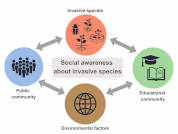
2. El objetivo de este estudio es analizar la percepción y el conocimiento de las EI entre las comunidades docentes y no docentes, y, dentro de la comunidad docente, entre los profesores de ciencias naturales y los profesores de otras materias en la Argentina, mediante un cuestionario en línea semiestructurado. Se obtuvieron datos sobre perfiles demográficos, percepciones del impacto ambiental y conocimiento de las invasiones biológicas.
3. Los resultados mostraron que los profesores percibían un mayor impacto ambiental y de invasión biológica que los no profesores. Si bien la mayoría de los encuestados reconoció el alto impacto de las EI, los profesores mostraron mayores niveles de concienciación y preocupación.
4. La mayoría de los encuestados consideró que el transporte involuntario de EI era la principal amenaza, y las preocupaciones por la salud humana fueron la razón principal para la eliminación de especies.
5. Este estudio destaca la importancia de mejorar la educación ambiental tanto en entornos formales como no formales para abordar los impactos de las EI.
6. Implicancias. Se recomienda un enfoque multidisciplinario para sensibilizar al público y garantizar una gestión sostenible de las especies invasoras en diversos sectores de la comunidad.
Citas
Anderson, L. G., P. C. White, P. D. Stebbing, G. D. Stentiford, and A. M. Dunn. 2014. Biosecurity and vector behaviour: evaluating the potential threat posed by anglers and canoeists as pathways for the spread of invasive non-native species and pathogens. PloS ONE 9(4):e92788. https://doi.org/10.1371/journal.pone.0092788.
Anderson, L. G., S. Rocliffe, N. R. Haddaway, and A. M. Dunn. 2015. The role of tourism and recreation in the spread of non-native species: a systematic review and meta-analysis. PloS ONE 10(10):e0140833. https://doi.org/10.1371/journal.pone.0140833.
Bacher, S., T. M. Blackburn, F. Essl, P. Genovesi, J. Heikkilä, et al. 2018. Socio‐economic impact classification of alien taxa (SEICAT). Methods in Ecology and Evolution 9(1):159-168. https://doi.org/10.1111/2041-210X.12844.
Ballouard, J. M., F. Brischoux, and X. Bonnet. 2011. Children prioritize virtual exotic biodiversity over local biodiversity. PloS ONE 6(8):e23152. https://doi.org/10.1371/journal.pone.0023152.
Bermudez, G., and P. Lindemann-Matthies. 2020. What matters is species richness—high school students’ understanding of the components of biodiversity. Research in Science Education 50(6):2159-2187. https://doi.org/10.1007/s11165-018-9767-y.
Borg, C., N. Gericke, H. O. Höglund, and E. Bergman. 2012. The barriers encountered by teachers implementing education for sustainable development: Discipline bound differences and teaching traditions. Research in Science and Technological Education 30(2):185-207. https://doi.org/10.1080/02635143.2012.699891.
Busso, C. A., D. J. Bentivegna, and O. A. Fernández. 2013. A review on invasive plants in rangelands of Argentina. Interciencia 38:95-103.
Büssing, A. G., M. Schleper, and S. Menzel. 2018. Do pre-service teachers dance with wolves? Subject-specific teacher professional development in a recent biodiversity conservation issue. Sustainability 11(1):47. https://doi.org/10.3390/su11010047.
Capinha, C., F. Essl, H. Seebens, D. Moser, and H. Pereira. 2015. The dispersal of alien species redefines biogeography in the Anthropocene. Science 348(6240):1248-1251. https://doi.org/10.1126/science.aaa8913.
Chawla, L. 1999. Life paths into effective environmental action. The Journal of Environmental Education 31(1):15-26. https://doi.org/10.1080/00958969909598628.
de Melo, E., J. Simião-Ferreira, H. de Melo, B. Godoy, R. Daud, et al. 2021. Biological invasions in Brazilian environmental science courses: Do we need new approaches? Neotropical Biology and Conservation 16(1): 221-238. https://doi.org/10.3897/neotropical.16.e60200.
Courchamp, F., I. Jaric, C. Albert, Y. Meinard, W. J. Ripple, and G. Chapron. 2018. The paradoxical extinction of the most charismatic animals. PLoS Biology 16(4):e2003997. https://doi.org/10.1371/journal.pbio.2003997.
Diagne, C., B. Leroy, A. C. Vaissière, R. E. Gozlan, D. Roiz, I. Jarić, J. Salles, C. J. A. Bradshaw, and F. Courchamp. 2021. High and rising economic costs of biological invasions worldwide. Nature 592(7855):571-576. https://doi.org/10.1038/s41586-021-03405-6.
de los Santos, F., F. Villamarín, and C. Clavijo. 2022. El rol de la educación ambiental en la conservación de la biodiversidad. Rev Educ Ambient Sostenibilidad 4(2):2302. https://doi.org/10.25267/Rev_educ_ambient_sostenibilidad.2022.v4.i2.2302.
Díez, J., A. Meñika, I. Sanz-Azkue, and A. Ortuzar. 2018. Urban and rural children’s knowledge on biodiversity in Bizkaia: Tree identification skills and animal and plant listing. International Journal of Humanities and Social Sciences 12(3):396-400. https://doi.org/10.5281/zenodo.1316197.
Dunn, M., M. Marzano, J. Forster, and R. M. Gill. 2018. Public attitudes towards pest management: Perceptions on squirrel management strategies in the UK. Biological Conservation 222:52-63. https://doi.org/10.1016/j.biocon.2018.03.020.
Ekanayake, E. M., Y. Xie, A. S. Ibrahim, N. T. Karunaratne, and S. Ahmad. 2020. Effective governance for management of invasive alien plants: Evidence from the perspective of forest and wildlife officers in Sri Lanka. PeerJ 8:e8343. https://doi.org/10.7717/peerj.8343.
Estévez, R. A., C. B. Anderson, J. C. Pizarro, and M. A. Burgman. 2015. Clarifying values, risk perceptions, and attitudes to resolve or avoid social conflicts in invasive species management. Conservation Biology 29(1):19-30. https://doi.org/10.1111/cobi.12359.
Expósito López, Ó. 2023. Captivitat i educació ambiental per a la gestió de fauna sintent invasora. Revista Catalana de Dret Ambiental 14(2). https://doi.org/10.17345/rcda3707.
Ford-Thompson, A. E., C. Snell, G. Saunders, and P. C. White. 2015. Dimensions of local public attitudes towards invasive species management in protected areas. Wildlife Research 42(1):60-74. https://doi.org/10.1071/WR14122.
Gallardo, B., S. Bacher, B. Bradley, F. A. Comín, L. Gallien, J. M. Jeschke, C. J. B. Sorte, and M. Vila. 2019. InvasiBES: Understanding and managing the impacts of invasive alien species on biodiversity and ecosystem services. NeoBiota 50:109-122. https://doi.org/10.3897/neobiota.50.35466.
Gayford, C. 2000. EBiodiversity Education: A teacher’s perspective. Environmental Education Research 6(4):347-361. https://doi.org/10.1080/713664696.
Genovart, M., G. Tavecchia, J. J. Enseñat, and P. Laiolo. 2013. Holding up a mirror to the society: Children recognize exotic species much more than local ones. Biological Conservation 159:484-489. https://doi.org/10.1016/j.biocon.2012.10.028.
Gill, N., S. McKiernan, A. Lewis, H. Cherry, and D. Annunciato. 2020. Biosecurity hygiene in the Australian high country: footwear cleaning practices, motivations, and barriers among visitors to Kosciuszko National Park. Australasian Journal of Environmental Management 27(4):378-395. https://doi.org/10.1080/14486563.2020.1838352.
Green, C., W. Medina-Jerez, and C. Bryant. 2016. Cultivating environmental citizenship in teacher education. Teaching Education 27(2):117-135. https://doi.org/10.1080/10476210.2015.1043121.
Haley, A. L., T. A. Lemieux, M. L. Piczak, S. Karau, A. D’Addario, R. L. Irvine, C. Beaudoin, J. R. Bennett, and S. J. Cooke. 2023. On the effectiveness of public awareness campaigns for the management of invasive species. Environmental Conservation 50(4):202-211. https://doi.org/10.1017/S037689292300019X.
Hulbert, J. M., R. A. Hallett, H. E. Roy, and M. Cleary. 2023. Citizen science can enhance strategies to detect and manage invasive forest pests and pathogens. Frontiers in Ecology and Evolution 11:1113978. https://doi.org/10.3389/fevo.2023.1113978.
Hulme, P. E., D. A. Ahmed, P. J. Haubrock, B. A. Kaiser, M. Kourantidou, B. Leroy, and S. M. McDermott. 2024. Widespread imprecision in estimates of the economic costs of invasive alien species worldwide. Science of the Total Environment 909:167997. https://doi.org/10.1016/j.scitotenv.2023.167997.
Intergovernmental Science-Policy Platform on Biodiversity and Ecosystem Services (IPBES). 2023. Summary for policymakers of the thematic assessment report on invasive alien species and their control of the Intergovernmental Science-Policy Platform on Biodiversity and Ecosystem Services. H. E. Roy, A. Pauchard, P. Stoett, T. Renard Truong et al. (eds.). IPBES secretariat, Bonn, Germany. https://doi.org/10.5281/zenodo.7430692.
Jubase, N., R. T. Shackleton, and J. Measey. 2021. Public awareness and perceptions of invasive alien species in small towns. Biology 10(12):1322. https://doi.org/10.3390/biology10121322.
Kannan, R., C. M. Shackleton, and R. U. Shaanker. 2014. Invasive alien species as drivers in socio-ecological systems: Local adaptations towards use of Lantana in southern India. Environment, Development and Sustainability 16(3):649-669. https://doi.org/10.1007/s10668-013-9500-y.
Kapitza, K., H. Zimmermann, B. Martín-López, and H. von Wehrden. 2019. Research on the social perception of invasive species: A systematic literature review. NeoBiota 43:47-68. https://doi.org/10.3897/neobiota.43.31619.
Kelsch, A., Y. Takahashi, R. Dasgupta, A. D. Mader, B. A. Johnson, and P. Kumar. 2020. Invasive alien species and local communities in socio-ecological production landscapes and seascapes: A systematic review and analysis. Environmental Science and Policy 112:275-281. https://doi.org/10.1016/j.envsci.2020.06.014.
Ladrera, R., B. Robredo, U. Ortega-Lasuen, J. R. Díez, and A. Ruiz-González. 2020. Unprepared to deal with invasion: Pre-service teachers’ perception, knowledge and attitudes toward invasive species. Sustainability 12(24):10543. https://doi.org/10.3390/su122410543.
Latombe, G., H. Seebens, B. Lenzner, F. Courchamp, S. Dullinger, et al. 2023. Capacity of countries to reduce biological invasions. Sustainability Science 18(2):771-789. https://doi.org/10.1007/s11625-022-01166-3.
Leandro, C., and P. Jay-Robert. 2019. Perceptions and representations of animal diversity: Where did the insects go? Biological Conservation 237:400-408. https://doi.org/10.1016/j.biocon.2019.07.031.
Liedtke, R., A. Barros, F. Essl, J. J. Lembrechts, R. E. Wedegärtner, A. Pauchard, and S. Dullinger. 2020. Hiking trails as conduits for the spread of non-native species in mountain areas. Biological Invasions 22(3):1121-1134. https://doi.org/10.1007/s10530-019-02165-9.
Lipták, B., A. Kouba, J. Patoka, M. Paunović, and P. Prokop. 2024. Biological invasions and invasive species in freshwaters: Perception of the general public. Human Dimensions of Wildlife 29(1):48-63. https://doi.org/10.1080/10871209.2023.2177779.
Olsen, S. K., B. G. Miller, K. B. Eitel, and T. C. Cohn. 2020. Assessing teachers’ environmental citizenship based on an adventure learning workshop: A case study from a social-ecological systems perspective. Journal of Science Teacher Education 31(8):869-893. https://doi.org/10.1080/1046560X.2020.1771039.
Parra, G., R. Hansmann, A. C. Hadjichambis, D. Goldman, D. Paraskeva-Hadjichambi, Per Sund, et al. 2020. Education for environmental citizenship and education for sustainability. Pp. 149-160 in Conceptualizing environmental citizenship for 21st century education. Cham: Springer International Publishing. https://doi.org/10.1007/978-3-030-20249-1_10.
Pickering, C., and A. Mount. 2010. Do tourists disperse weed seed? A global review of unintentional human-mediated terrestrial seed dispersal on clothing, vehicles and horses. Journal of Sustainable Tourism 18(2):239-256. https://doi.org/10.1080/09669580903406613.
Pyšek, P., P. E. Hulme, D. Simberloff, S. Bacher, T. Blackburn, et al. 2020. Scientists’ warning on invasive alien species. Biological Reviews 95(6):1511-1534. https://doi.org/10.1111/brv.12627.
R Core Team. 2022. R: A language and environment for statistical computing. R Foundation for Statistical Computing, Vienna, Austria. URL: R-project.org.
Reed, M. S., A. C. Evely, G. Cundill, I. Fazey, J. Glass, et al. 2010. What is social learning? Ecology and Society 15(4). https://doi.org/10.5751/ES-03564-1504r01.
Remmele, M., and P. Lindemann-Matthies. 2020. Dead or alive? Teacher students’ perception of invasive alien animal species and attitudes towards their management. Eurasia Journal of Mathematics, Science and Technology Education 16(5):em1840. https://doi.org/10.29333/ejmste/115105.
Novoa, A., K. Dehnen-Schmutz, J. Fried, and G. Vimercati. 2017. Does public awareness increase support for invasive species management? Promising evidence across taxa and landscape types. Biological Invasions 19(12):3691-3705. https://doi.org/10.1007/s10530-017-1592-0.
Seebens, H., S. Bacher, T. M. Blackburn, C. Capinha, W. Dawson, et al. 2021. Projecting the continental accumulation of alien species through to 2050. Global Change Biology 27(5):970-982. https://doi.org/10.1111/gcb.15333.
Shackleton, R. T., D. M. Richardson, C. M. Shackleton, B. Bennett, S. L. Crowley, K. Dehnen-Schmutz, et al. 2019. Explaining people's perceptions of invasive alien species: A conceptual framework. Journal of Environmental Management 229:10-26. https://doi.org/10.1016/j.jenvman.2018.04.045.
Shine, R., and J. S. Doody. 2011. Invasive species control: Understanding conflicts between researchers and the general community. Frontiers in Ecology and the Environment 9(7):400-406. https://doi.org/10.1890/100090.
Simberloff, D., J. L. Martin, P. Genovesi, V. Maris, D. A. Wardle, J. Aronson, et al. 2013. Impacts of biological invasions: what’s what and the way forward. Trends in Ecology and Evolution 28(1):58-66. https://doi.org/10.1016/j.tree.2012.07.013.
Sosa, A. J., N. L. Jiménez, A. C. Faltlhauser, T. Righetti, F. Mc Kay, Octavio A. Bruzzone, I. Stiers, and A. F. Souto. 2021. The educational community and its knowledge and perceptions of native and invasive alien species. Scientific Reports 11(1):21474. https://doi.org/10.1038/s41598-021-00683-y.
Sutcliffe, C., C. H. Quinn, C. Shannon, A. Glover, and A. M. Dunn. 2018. Exploring the attitudes to and uptake of biosecurity practices for invasive non-native species: Views amongst stakeholder organisations working in UK natural environments. Biological Invasions 20(2):399-411. https://doi.org/10.1007/s10530-017-1541-y.
Valkó, O., K. Lukács, B. Deák, R. Kiss, T. Miglécz, K. Tóth, L. Godó, S. Radócz, J. Sonkoly, A. Kelemen, and B. Tóthmérész. 2020. Laundry washing increases dispersal efficiency of cloth-dispersed propagules. NeoBiota 61:1 16. https://doi.org/10.3897/neobiota.61.53730.
Verbrugge, L., M. Dawson, L. Gettys, R. Leuven, H. Marchante, E. Marchante, P. Nummi, et al. 2021. Novel tools and best practices for education about invasive alien species. Manag Biol Invasions 12:8-24. https://doi.org/10.3391/mbi.2021.12.1.02.
Vilches, A. M., T. I. Legarralde, S. Ramírez, and G. Darrigran. 2015. Conocimiento y valoración de la biodiversidad en estudiantes del último año de profesorados de biología y geografía de Argentina. Knowledge and assessment of biodiversity of future biology and geography teachers in Argentina. Rev Educ Biol 18:46-58. https://doi.org/10.59524/2344-9225.v18.n2.22470.
Waliczek, T. M., P. S. Williamson, and F. M. Oxley. 2017. College student knowledge and perceptions of invasive species. HortTechnology 27(4):550-556. https://doi.org/10.21273/HORTTECH03709-17.
Wells, N. M., and K. S. Lekies. 2006. Nature and the life course: Pathways from childhood nature experiences to adult environmentalism. Children, Youth and Environments 16(1):1-24. https://doi.org/10.1353/cye.2006.0031.
Wichmann, M. C., M. J. Alexander, M. B. Soons, S. Galsworthy, L. Dunne, R. Gould, C. Fairfax, et al. 2009. Human-mediated dispersal of seeds over long distances. Proceedings of the Royal Society B: Biological Sciences 276(1656):523-532. https://doi.org/10.1098/rspb.2008.1131.
Young, A. M., and B. M. Larson. 2011. Clarifying debates in invasion biology: a survey of invasion biologists. Environmental Research 111(7):893-898. https://doi.org/10.1016/j.envres.2011.06.006.
Descargas
Archivos adicionales
Publicado
Cómo citar
Número
Sección
Licencia
Derechos de autor 2026 Leonel Stazione

Esta obra está bajo una licencia internacional Creative Commons Atribución 4.0.
Las/os autoras/es conservan sus derechos de autoras/es: 1) cediendo a la revista el derecho a su primera publicación, y 2) registrando el artículo publicado con una Licencia de Atribución de Creative Commons (CC-BY 4.0), lo que permite a autoras/es y terceros verlo y utilizarlo siempre que mencionen claramente su origen (cita o referencia incluyendo autoría y primera publicación en esta revista). Las/os autores/as pueden hacer otros acuerdos de distribución no exclusiva siempre que indiquen con claridad su origen, así como compartir y divulgar ampliamente la versión publicada de su trabajo.