Risk-taking behavior in three Fulica species inhabiting an urban coastal lagoon in Mar del Plata city, Buenos Aires province, Argentina
DOI:
https://doi.org/10.25260/EA.26.36.2.0.2607Keywords:
coot, disturbance, flight initiation distance, Buenos Aires province, ArgentinaAbstract
1. Urbanisation is taking place globally at a rapid pace and is generally linked to negative impacts on biodiversity at local, regional, and global scales. Evaluating the behavioural response profiles to urbanisation helps identify which species show adaptive responses to changing landscapes and are thus more or less likely to persist in such environments.
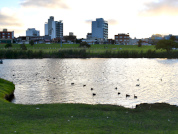
2. For this, we experimentally approached and measured associated flight initiation distance (FID) in three taxonomically related aquatic bird species (Fulica leucoptera, F. rufifrons and F. armillata) inhabiting an urban wetland located in the large coastal city of Mar del Plata, Buenos Aires province. We also assessed how environmental, ethological and anthropic variables affected this behaviour for the overall studied coots.
3. Pooled together, coots’ FID ranged from 3.0 to 18.7 m and showed no statistical differences between species.
4. The mean FID estimated for all coot species combined was only affected by wind direction, with wind blowing from the south being the most important environmental stressor affecting coots’ FID.
5. When considering each coot species separately, the abundance of conspecifics also affected FID in F. rufifrons, decreasing it by half.
6. Implications. Overall, the studied coot species exhibit a passivity to the disturbance exerted by a pedestrian approach, given their relatively short flight initiation distances. This finding is in line with available research on other aquatic bird species dwelling in urban ecosystems, suggesting that certain waterbird taxa may be pre-adapted to persist in urbanised environments.
References
Ardila-Villamizar, M., G. Alarcón-Nieto, and A. A. Maldonado-Chaparro. 2022. Fear in Urban Landscapes: Conspecific Flock Size Drives Escape Decisions in Tropical Birds. Royal Society Open Science 9:221344. https://doi.org/10.1098/rsos.221344.
Barton, J., and J. Pretty. 2010. Urban ecology and human health and wellbeing. Pp. 202-229 in K. J. Gaston (ed.). Urban Ecology. Cambridge University Press, New York, USA. https://doi.org/10.1017/CBO9780511778483.010.
Bennet, N. J. 2016. Using perceptions as evidence to improve conservation and environmental management. Conservation Biology 30:582-592. https://doi.org/10.1111/cobi.12681.
Berkowitz, A. R., C. H. Nilson, and K. S. Hollweg. 2003. Understanding Urban Ecosystems: A New Frontier for Science and Education. Springer New York, New York, USA. https://doi.org/10.1007/b97613.
Bernard, G. E., W. F. van Dongen, P. J. Guay, M. R. Symonds, R. W. Robinson, and M. A. Weston. 2018. Bicycles evoke longer flight-initiation distances and higher intensity escape behaviour of some birds in parks compared with pedestrians. Landscape and Urban Planning 178:276-280. https://doi.org/10.1016/j.landurbplan.2018.06.006.
Blumstein, D. T. 2003. Flight-initiation distance in birds is dependent on intruder starting
distance. The Journal of Wildlife Management 67(4):852-857. https://doi.org/10.2307/3802692.
Blumstein, D. T. 2006. Developing an evolutionary ecology of fear: how life history and natural history traits affect disturbance tolerance in birds. Animal Behaviour 71(2):389-399. https://doi.org/10.1016/j.anbehav.2005.05.010.
Blumstein, D. T., E. Fernández-Juricic, P. A. Zollner, and S. C. Garity. 2005. Inter‐specific variation in avian responses to human disturbance. Journal of applied ecology 42(5):943-953. https://doi.org/10.1111/j.1365-2664.2005.01071.x.
Bolund, P., and S. Hunhammar. 1999. Ecosystem services in urban areas. Ecological Economics 29(2):293-301. https://doi.org/10.1016/S0921-8009(99)00013-0.
Bonier, F., P. R. Martin, and J. C. Wingfield. 2007. Urban birds have broader environmental tolerance. Biology Letters 3(6):670-673. https://doi.org/10.1098/rsbl.2007.0349.
Braimoh, B., S. Iwajomo, M. Wilson, A. Chaskda, A. Ajang, and W. Cresswell. 2018. Managing human disturbance: factors influencing flight-initiation distance of birds in a West African nature reserve. Ostrich 89(1):59-69. https://doi.org/10.2989/00306525.2017.1388300.
Brawn, J. D., S. K. Robinson, and F. R. Thompson III. 2001. The role of disturbance in the ecology and conservation of birds. Annual review of Ecology and Systematics 32(1):251-276. https://doi.org/10.1146/annurev.ecolsys.32.081501.114031.
Burger, J. 1981.The effect of human activity on birds at a coastal bay. Biological Conservation 21:231-241. https://doi.org/10.1016/0006-3207(81)90092-6.
Burger, J., and M. Gochfeld. 1991. Human distance and birds: tolerance and response distances of resident and migrant species in India. Environmental Conservation 18(2):158-165. https://doi.org/10.1017/S0376892900021743.
Burger, J., M. Gochfeld, C. D. Jenkins, and F. Lesser. 2010. Effect of approaching boats on nesting Black Skimmers: using response distances to establish protective buffer zones. Journal of Wildlife Management 74:102-108. https://doi.org/10.2193/2008-576.
Chamberlain, D. E., A. R. Cannon, M. P. Toms, D. I. Leech, B. J. Hatchwell, et al. 2009. Avian productivity in urban landscapes: a review and meta‐analysis. Ibis 151(1):1-18. https://doi.org/10.1111/j.1474-919X.2008.00899.x.
Collop, C., R. A. Stillman, A. Garbutt, M. G. Yates, E. Rispin, et al. 2016. Variability in the area, energy and time costs of wintering waders responding to disturbance. Ibis 158(4):711-725. https://doi.org/10.1111/ibi.12399.
Cossa, N. A., L. Fasola, I. Roesler, and J. C. Reboreda. 2016. Incubating Upland Goose (Chloephaga picta) differential response to livestock, human, and predator nest disturbance. Wilson Journal of Ornithology 130:739-745. https://doi.org/10.1676/17-105.1.
Crawley, M. J. (ed.). 2007. The R book. John Wiley and Sons, Chichester, U.K.
Davidson, N. C., and P. I. Rothwell. 1993. Human disturbance to waterfowl on estuaries: conservation and coastal management implications of current knowledge. Wader Study Group Bulletin 68(1):16.
De Marco, S. G., J. C. Mallo, A. López de Armentia, and J. L. del Río. 2005. Estado, conflictos y pronóstico del complejo de lagunas costeras de Punta Mogotes, Mar del Plata, Buenos Aires, Argentina. Biología Acuática 22:77-88.
Del Hoyo, J., A. Elliot, and J. Sargatal (eds.). 1992. Handbook of the birds of the world. Vol. 1, Lynx Editions. Barcelona, Spain.
Dias, M. P., J. P. Granadeiro, M. Lecoq, C. D. Santos, and J. M. Palmeirim. 2006. Distance to high-tide roosts constrains the use of foraging areas by dunlins: implications for the management of estuarine wetlands. Biological Conservation 131:446-452. https://doi.org/10.1016/j.biocon.2006.02.020.
Douglas, I. 2012. Urban ecology and urban ecosystems: Understanding the links to human health and well-being. Current Opinion in Environmental Sustainability 4(4):385-392. https://doi.org/10.1016/j.cosust.2012.07.005.
Echevarria, A. L., M. V. Martínez, A. Benavídez, and M. E. Fanjul. 2022. Biología reproductiva de cuatro especies de Fulica, en el embalse La Angostura, Tafí del Valle, Tucumán. https://doi.org/10.30550/j.azl/2022.66.2/2022-08-26.
Fernández-Juricic, E. 2002. Can human disturbance promote nestedness? A case study with breeding birds in urban habitat fragments. Oecologia 131(2):269-278. https://doi.org/10.1007/s00442-002-0883-y.
Fernández-Juricic, E., R. Vaca, and N. Schroeder. 2004. Spatial and temporal responses of forest birds to human approaches in a protected area and implications for two management strategies. Biological Conservation 117:407-416. https://doi.org/10.1016/j.biocon.2003.02.001.
Fernández-Juricic, E., M. D. Jimenez, and E. Lucas. 2001a. Alert distance as an alternative measure of bird tolerance to human disturbance: implications for park design. Environmental Conservation 28:263-269. https://doi.org/10.1017/s0376892901000273.
Fernández-Juricic, E., M. D. Jimenez, and E. Lucas. 2001b. Bird tolerance to human disturbance in urban parks of Madrid (Spain): Management implications. Pp. 259-273 in J. M. Marzluff, R. Bowman and R. Donnelly (eds.). Avian Ecology and Conservation in an Urbanizing World. First edition. Springer New York, New York, USA. https://doi.org/10.1007/978-1-4615-1531-9_12.
Fernández-Juricic, E., M. P. Venier, D. Renison, and D. T. Blumstein. 2005. Sensitivity of wildlife to spatial patterns of recreationist behavior: a critical assessment of minimum approaching distances and buffer areas for grassland birds. Biological Conservation 125(2):225-235. https://doi.org/10.1016/j.biocon.2005.03.020.
Fox, A. D., and J. Madsen. 1997. Behavioural and distributional effects of hunting disturbance on waterbirds in Europe: implications for refuge design. Journal of Applied Ecology 34:1-13. https://doi.org/10.2307/2404842.
Fox, A. D., P. L. Flint, W. L. Hohman, and J-P. L. Savar. 2014. Waterfowl habitat use and selection during the remigial moult period in the northern hemisphere. Wildfowl Special Issue 4:131-168.
Frid, A., and L. Dill. 2002. Human-caused disturbance stimuli as a form of predation risk. Conservation Ecology 6(1). https://www.jstor.org/stable/26271862.
Gamundi, P. A. 2025. Ecología urbana en acción: Corredores biológicos como estrategia de integración ambiental en Argentina. Anuario de la División de Geografía 19:1-9.
García, M. C. 2013. Clima urbano costero de Mar del Plata y Necochea-Quequén. 1ª. Edición. Serie Especial nº 12. Sociedad Argentina de Estudios Geográficos. BM Press, CABA, Argentina.
Garcia, C. M., M. Suárez-Rodríguez, and I. López-Rull. 2017. Becoming Citizens: Avian Adaptations to Urban Life. Pp. 91-112 in E. Murguia and M. Hedblom (eds.). Ecology and Conservation of Birds in Urban Environments. Springer, Cham, Switzerland. https://doi.org/10.1007/978-3-319-43314-1_6.
Garcia, G. O., M. Favero, and R. Mariano‐Jelicich. 2008. Red‐gartered Coot Fulica armillata feeding on the grapsid crab Cyrtograpsus angulatus: advantages and disadvantages of an unusual food resource. Ibis 150(1):110-114. https://doi.org/10.1111/j.1474-919X.2007.00753.x.
Gill, J. A. 2007. Approaches to measuring the effects of human disturbance on birds. Ibis 149:9-14. https://doi.org/10.1111/j.1474-919X.2007.00642.x.
Glover, H. K., M. A. Weston, G. S. Maguire, K. K. Miller, and B. A. Christie. 2011. Towards ecologically meaningful and socially acceptable buffers: Response distances of shorebirds in Victoria, Australia, to human disturbance. Landscape and Urban Planning 103:326-334. https://doi.org/10.1016/j.landurbplan.2011.08.006
Gompper, M.E. (ed.). 2014. Free-ranging Dogs and Wildlife Conservation. Oxford University Press, Oxford, U.K. https://doi.org/10.1093/acprof:osobl/9780199663217.001.0001.
Goss-Custard, J. D., P. Triplet, F. Sueur, and A. D. West. 2006. Critical thresholds of disturbance by people and raptors in foraging wading birds. Biological Conservation 127:88-97. https://doi.org/10.1016/j.biocon.2005.07.015.
Guay, P. J., W. F. D. Van Dongen, R. W. Robinson, D. T. Blumstein, and M. A. Weston. 2016. Avian buffer: An interactive tool for characterising and managing wildlife fear responses. Ambio 45:841-851. https://doi.org/10.1007/s13280-016-0779-4.
Guay, P. J., E. M. McLeod, R. Cross, A. J. Formby, S. P. Maldonado, et al. 2013. Observer effects occur when estimating alert but not flight initiation distances. Wildlife Research 40:289-293. https://doi.org/10.1071/WR13013.
Hammer, T. L., P. Bize, C. Saraux, B. Gineste, J. P. Robin, et al. 2022. Repeatability of alert and flight initiation distances in king penguins: Effects of colony, approach speed, and weather. Ethology 128(4):303-316. https://doi.org/10.1111/eth.13264.
Hartig, F. 2022. DHARMa: residual diagnostics for hierarchical (multilevel/mixed) regression models. R package version 0.4.6. URL: tinyurl.com/27mx97mm.
Hernandez, M. M., J. P. Seco Pon, and M. P. Berón. 2026. Presupuestos de actividades diarias por tres especies de gallaretas en un relicto de humedales costeros antropizados del sudeste bonaerense. El Hornero 41(1). https://doi.org/10.56178/eh.v41i1.1534.
Isaksson, C. 2018. Impact of Urbanization on Birds. Pp. 253-257 in D. T. Tietze (ed.). Bird Species: How they Arise, Modify and Vanish. Fascinating Life Sciences. Springer, Cham, Switzerland. https://doi.org/10.1007/978-3-319-91689-7_13.
Kerbiriou, C., I. Le Viol, A. Robert, E. Porcher, F. Gourmelon, et al. 2009. Tourism in protected areas can threaten wild populations: from individual response to population viability of the chough Pyrrhocorax pyrrhocorax. Journal of Applied Ecology 46(3):657-665. https://doi.org/10.1111/j.1365-2664.2009.01646.x.
Jones, J. C. 1940. Food habits of the American Coot with notes on distribution. Wildlife Research Bulletin 2:1-52.
Lethlean, H., W. F. Van Dongen, K. Kostoglou, P. J. Guay, and M. A. Weston. 2017. Joggers cause greater avian disturbance than walkers. Landscape and Urban Planning 159:42-47. https://doi.org/10.1016/j.landurbplan.2016.08.020.
Lima, S. L., and L. M. Dill. 1990. Behavioral decisions made under the risk of predation: a review and prospectus. Canadian Journal of Zoology 68:619-640. https://doi.org/10.1139/z90-092.
Lin, T., T. Coppack, Q-X. Lin, C. Kulemeyer, A. Schimdt, H. Behm, and T. Luo. 2012. Does avian flight initiation distance indicate tolerance towards urban disturbance? Ecological Indicators 15(1):30-35. https://doi.org/10.1016/j.ecolind.2011.09.018.
Lowry, H., A. Lill, and B. B. Wong. 2013. Behavioural responses of wildlife to urban environments. Biological reviews 88(3):537-549. https://doi.org/10.1111/brv.12012.
Kang, W., E. S. Minor, C. R. Park, and D. Lee. 2015. Effects of habitat structure, human disturbance, and habitat connectivity on urban forest bird communities. Urban ecosystems 18(3):857-870. https://doi.org/10.1007/s11252-014-0433-5.
Kettel, E. F., L. K. Gentle, J. L. Quinn, and R. W. Yarnell. 2018. The breeding performance of raptors in urban landscapes: a review and meta-analysis. Journal of Ornithology 159:1-18. https://doi.org/10.1007/s10336-017-1497-9.
Kong, D., A. P. Møller, and Y. Zhang. 2021. Disturbance and predation risk influence vigilance synchrony of black‐necked cranes Grus nigricollis, but not as strongly as expected. Ecology and Evolution 11(5):2289-2298. https://doi.org/10.1002/ece3.7196.
Kowarik, I. 2011. Novel urban ecosystems, biodiversity, and conservation. Environmental Pollution 159(8-9):1974-1983. https://doi.org/10.1016/j.envpol.2011.02.022.
Livezey K. B., E. Fernández-Juricic, and D. T. Blumstein. 2016. Database of bird flight initiation distances to assist in estimating effects from human disturbance and delineating buffer areas. Journal of Fish and Wildlife Management 7(1):181-191. https://doi.org/10.3996/082015-JFWM-078.
Madsen, J. 1995. Impacts of disturbance on migratory waterfowl. Ibis 137:S67-S74. https://doi.org/10.1111/j.1474-919X.1995.tb08459.x.
Madsen, J., S. Pihl, and P. Clausen. 1998. Establishing a reserve network for waterfowl in Denmark: a biological evaluation of needs and consequences. Biological Conservation 85:241-255. https://doi.org/10.1016/S0006-3207(97)00172-9.
Madsen, J., I. Tombre, and N. E. 2009. Effects of disturbance on geese in Svalbard: male teal Anas crecca. Journal of Ornithology 148:251-254. https://doi.org/10.1111/j.1751-8369.2009.00120.x
Mangiafico, S. 2020. rcompanion: functions to support extension education program evaluation. R package version 2.3. 25. R Foundation for Statistical Computing, Vienna, Austria. https://doi.org/10.32614/CRAN.package.rcompanion.
Markovchick‐Nicholls, L., H. M. Regan, D. H. Deutschman, A. Widyanata, B. Martin, et al. 2008. Relationships between human disturbance and wildlife land use in urban habitat fragments. Conservation Biology 22(1):99-109. https://doi.org/10.1111/j.1523-1739.2007.00846.x.
Ministerio de Ambiente y Desarrollo Sustentable de la Nación/Aves Argentinas (MADyS/AA). 2017. Categorización de las Aves de la Argentina según su estado de conservación. URL: tinyurl.com/yt9yf94y.
Møller, A. P. 2015. Birds. Pp. 88-112 in W. E. Cooper and D.T. Blumstein (eds.). Escaping from predators: An integrative view of escape decisions. Cambridge University Press, Cambridge, UK. https://doi.org/10.1017/CBO9781107447189.005.
Møller, A. P. 2008. Flight distance of urban birds, predation and selection for urban life. Behavioral Ecology Sociobiology 63:63-75. https://doi.org/10.1007/s00265-008-0636-y.
Møller, A. P., W. Liang, and D. S. M. Samia. 2019. Flight initiation distance, color and camouflage. Current Zoology 65(5):535-540. https://doi.org/10.1093/cz/zoz005.
Møller, A. P., and L. Z. Garamszegi. 2012. Between individual variation in risk taking behavior and its life history consequences. Behavioral Ecology 23:843-853. https://doi.org/10.1093/beheco/ars040.
Morelli, F., Y. Benedetti, and D. T. Blumstein. 2022a. Resident birds are more behaviorally plastic than migrants. Scientific Reports 12:5743. https://doi.org/10.1038/s41598-022-09834-1.
Morelli, F., Y. Benedetti, M. Díaz, T. Grim, J. D. Ibáñez‐Álamo, et al. 2019. Contagious fear: Escape behavior increases with flock size in European gregarious birds. Ecology and Evolution 9(10):6096-6104. https://doi.org/10.1002/ece3.5193.
Morelli, F., P. Mikula, D. T. Blumstein, M. Díaz, G. Markó, J. Jokimäki, M-L. Kaisanlahti-Jokimäki, K. Floigl, et al. 2022b. Flight initiation distance and refuge in urban birds. Science of the Total Environment 842:156939. https://doi.org/10.1016/j.scitotenv.2022.156939.
Navedo, J. G., C. Verdugo, I. A. Rodríguez Jorquera, J. M. Abad-Gómez, C. G. Suazo, et al. 2019. Assessing the effects of human activities on the foraging opportunities of migratory shorebirds in Austral high-latitude bays. PLoS ONE 14(3):e0212441. https://doi.org/10.1371/journal.pone.0212441.
Nisbet, I. C. 2000. Disturbance, habituation, and management of waterbird colonies. Waterbirds 23(2):312-332. https://www.jstor.org/stable/4641163.
Olguín, P. F., A. H. Beltzer, and A. M. Attademo. 2013. Biología alimentaria de algunas especies de rállidos (rallidae) del valle de inundación del río Paraná Medio. Ornitologia Neotropical 24:15-26. http://hdl.handle.net/11336/6397.
Pease, M. L., R. K. Rose, and M. J. Butler. 2005. Effects of human disturbances on the behavior of wintering ducks. Wildlife Society Bulletin 33:103-112. https://doi.org/10.2193/0091-7648(2005)33[103:EOHDOT]2.0.CO;2.
QGIS. 2022. QGIS Geographic Information System. QGIS Association. URL: qgis.org.
R Development Core Team. 2023. R: a Language and Environment for Statistical Computing. R Foundation for Statistical Computing, Vienna, Austria. URL: r-project.org.
Radkovic, A. Z., W. F. Van Dongen, L. Kirao, P. J. Guay, and M. A. Weston. 2019. Birdwatchers evoke longer escape distances than pedestrians in some African birds. Journal of Ecotourism 18(1):100-106. https://doi.org/10.1080/14724049.2017.1372765.
Remme, R. P., H. Frumkin, A. D. Guerry, A. C. King, L. Mandle, et al. 2021. An ecosystem service perspective on urban nature, physical activity, and health. Proceedings of the National Academy of Sciences 118(22):e2018472118. https://doi.org/10.1073/pnas.2018472118.
Richeri, P. E. 2011. Lagunas urbano-costeras de punta mogotes, síntesis diacrónica y sincrónica de sus transiciones: Párrafos Geográficos N°16. Párrafos Geográficos 10(2):38-52. URL: tinyurl.com/yhncjtc7.
Riddington, R., M. Hassall, S. J. Lane, P. A. Turner, and R. Walters. 1996. The impact of disturbance on the behaviour and energy budgets of Brent Geese Branta b. bernicla. Bird study 43(3):269-279. https://doi.org/10.1080/00063659609461019.
Rodgers, J. A., and H. T. Smith. 1997. Buffer zone distances to protect foraging and loafing waterbirds from human disturbance in Florida. Wildlife Society Bulletin 25(1):139-145. URL: jstor.org/stable/3783296.
Rodríguez-Prieto, I., E. Fernández-Juricic, J. Martín, and Y. Regis. 2009. Antipredator behavior in blackbirds: habituation complements risk allocation. Behavioral Ecology 20(2):371-377. https://doi.org/10.1093/beheco/arn151
Romero L. I., and M. I. Fernández. 2024. El Complejo Balneario Punta Mogotes (1970-1980): Ideas, proyectos y obra pública para el turismo masivo en Mar del Plata. Registros. Revista De Investigación Histórica 20(2):31-55. URL: tinyurl.com/bderspy5.
Salvador, S. A. 2012. Reproducción del género Fulica (aves, rallidae) en el departamento Gral. San
Martín, Córdoba, Argentina. Biológica: Revista de Naturaleza, Conservación y Sociedad 15:37-41.
Samia, D. S., S. Nakagawa, F. Nomura, T. F. Rangel, and D. T. Blumstein. 2015. Increased tolerance to humans among disturbed wildlife. Nature communications 6(1):8877. https://doi.org/10.1038/ncomms9877.
Schloerke, B., D. Cook, J. Larmarange, F. Briatte, M. Marbach, E. Thoen, E. Amos, O. Toomet, J. Crowley, H. Hofman, and H. Wickham. 2021. GGally: Extension to ‘ggplot2’. R package version 2.1. 2. GitHub Inc.
Sitters, H. P., P. M. González, T. Piersma, A. J. Baker, and D. J. Price. 2001. Day and night feeding habitat of Red Knots in Patagonia: Profitability versus safety? Journal of Field Ornithology 72(1):86-95. https://doi.org/10.1648/0273-8570-72.1.86.
Song, Y., and Q. Wei. 2024. Impact of apparent temperatures on park visitation behavior: A comprehensive analysis using large-scale mobility data. Science of the Total Environment 940:173388. https://doi.org/10.1016/j.scitotenv.2024.173388.
Stankowich, T., and D. T. Blumstein. 2005. Fear in animals: a meta-analysis and review of risk assessment. Proceedings of the Royal Society B: Biological Sciences 272(1581):2627-2634. https://doi.org/10.1098/rspb.2005.3251.
Stanley, M. C., J. R. Beggs, I. E. Bassett, B. R. Burns, K. N. Dirks, et al. 2015. Emerging threats in urban ecosystems: a horizon scanning exercise. Frontiers in Ecology and the Environment 13(10):553-560. https://doi.org/10.1890/150229.
Steven, R., C. Pickering, and J. G. Castley. 2011. A review of the impacts of nature based recreation on birds. Journal of environmental management 92(10):2287-2294. https://doi.org/10.1016/j.jenvman.2011.05.005.
Stillman, R. A., and J. D. Goss-Custard. 2002. Seasonal changes in the response of oystercatchers Haematopus ostralegus to human disturbance. Journal of Avian Biology 33:358-365. https://doi.org/10.1034/j.1600-048X.2002.02925.x.
Sukopp, H., and U. Starfinger. 1999. Disturbance in urban ecosystems. Pp. 397-412 in L. R. Walker (ed.). Ecosystems of the Disturbed Ground. Elsevier, Amsterdam, The Netherlands.
Velásquez, C., E. Jaramillo, P. A. Camus, and C. San Martín. 2019. Consumption of aquatic macrophytes by the Red-gartered Coot Fulica armillata (Birds: Rallidae) in a coastal wetland of north central Chile. Gayana 83(1):68-72. https://doi.org/10.4067/S0717-65382019000100068.
Villanueva, C., B. G. Walker, and M. Bertellotti. 2014. Seasonal variation in the physiological and behavioral responses to tourist visitation in Magellanic penguins. The Journal of Wildlife Management 78:1466-1476. https://doi.org/10.1002/JWMG.791.
Walker, B. G., P. D. Boersma, and J. C. Wingfield. 2006. Habituation of adult Magellanic Penguins to human visitation as expressed through behavior and corticosterone secretion. Conservation Biology 20:146-154. https://doi.org/10.1111/j.1523-1739.2005.00271.x.
Weston, M. A., E. M. McLeod, D. T. Blumstein, and P. J. Guay. 2012. A review of flight-initiation distances and their application to managing disturbance to Australian birds. Emu 112:269-286. https://doi.org/10.1071/MU12026.
Wickler, W. 1985. Coordination of vigilance in bird groups: The “watchman’s song” hypothesis. Zeitschrift Für Tierpsychologi 69:250-253. https://doi.org/10.1111/j.1439-0310.1985.tb00150.x.
Yasué, M. 2006. Environmental factors and spatial scale influence shorebirds' responses to human disturbance. Biological Conservation 128:47-54. https://doi.org/10.1016/j.biocon.2005.09.015.
Yasué, M. 2005. The effects of human presence, flock size and prey density on shorebird foraging rates. Journal of Ethology 23(2):199-204. https://doi.org/10.1007/s10164-005-0152-8.
Yorio, P., and F. Quintana. 1996. Efectos del disturbio humano sobre una colonia mixta de aves marinas en Patagonia. El Hornero 14(3):60-66. https://doi.org/10.56178/eh.v14i3.1000.
Downloads
Additional Files
Published
How to Cite
Issue
Section
License
Copyright (c) 2026 Juan P. Seco Pon, Maximiliano M. Hernandez, Ángeles Castillo Ilabaca, María P. Berón

This work is licensed under a Creative Commons Attribution 4.0 International License.
Authors retain their rights as follows: 1) by granting the journal the right to its first publication, and 2) by registering the published article with a Creative Commons Attribution License (CC-BY 4.0), which allows authors and third parties to view and use it as long as they clearly mention its origin (citation or reference, including authorship and first publication in this journal). Authors can make other non-exclusive distribution agreements as long as they clearly indicate their origin and are encouraged to widely share and disseminate the published version of their work.