Evaluation of spider richness, abundance and reproduction under different agricultural management systems in wheat crops (Triticum aestivum L.)
DOI:
https://doi.org/10.25260/EA.26.36.2.0.2742Keywords:
agroecology, Predator abundance, Reproductive success of spiders, ecosystem servicesAbstract
1. Agricultural intensification triggers deep changes in the biodiversity of agroecosystems. It affects natural predators that support key ecosystem services such as biological control.
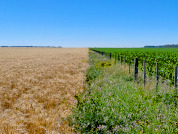
2. This study evaluates how different agricultural management practices influence the spider community present in wheat crops (Triticum aestivum L.) in the southeastern region of Buenos Aires province. Two productive management types (conventional and agroecological) and seminatural sites used as controls were compared. Three response variables were analyzed: spider richness, abundance and reproductive success. Sampling was carried out using pitfall traps, entomological net and spider nest traps.
3. Agroecological sites showed a higher abundance of spiders in the foliage (93.48% higher) compared to conventional sites, while no significant differences were found in the ground stratum among sites. In contrast, family-level spider richness did not differ significantly among treatments. Reproductive success was higher in agroecological sites, with a greater proportion of occupied traps (131.25% higher) and a slight tendency toward greater reproductive performance, indicated by the number of eggsacs found across management systems.
4. Implications. These results suggest that agroecological practices, characterized by lower disturbance and greater structural complexity, favor spider abundance and reproduction, potentially strengthening their role in biological control within wheat agroecosystems of the Pampean Region.
References
Argañaraz, C. I., y R. M. Gleiser, R. M. 2017. Does urbanization have positive or negative effects on Crab spider (Araneae: Thomisidae) diversity? Zoologia (Curitiba) 34:e19987. https://doi.org/10.3897/zoologia.34.e19987.
Armendano, A., and A. González. 2011. Spider fauna associated with wheat crops and adjacent habitats in Buenos Aires, Argentina. Revista Mexicana de Biodiversidad 82(4):1176-1182. https://doi.org/10.22201/ib.20078706e.2011.4.734.
Baldi, G., and J. M. Paruelo. 2014. Rolling Pampas agroecosystem: Which landscape attributes are relevant for determining bird distributions? Revista Chilena de Historia Natural 87:1-11. https://doi.org/10.1186/0717-6317-87-1.
Baloriani, G., M. F. Paleologos, M. E. Marasas, and S. J. Sarandón. 2009. Abundancia y riqueza de la macrofauna edáfica (Coleoptera y Araneae), en invernáculos convencionales y en transición agroecológica. Arana, Argentina. Revista Brasileira de Agroecologia 4(2):1733-1737.
Belderok, B., J. Mesdag, and D. A. Donner. 2000. Bread-making quality of wheat: a century of breeding in Europe. First Edition. Springer Science and Business Media. https://doi.org/10.1007/978-94-017-0950-7-
Benamú, M. A., M. I. Schneider, and N. E. Sánchez. 2010. Effects of the herbicide glyphosate on biological attributes of Alpaida veniliae (Araneae, Araneidae), in laboratory. Chemosphere 78(7):871-876. https://doi.org/10.1016/j.chemosphere.2009.11.027.
Benamú, M. A., M. I. Schneider, A. González, and N. E. Sánchez. 2013. Short and long-term effects of three neurotoxic insecticides on biological and behavioural attributes of the orb-web spider Alpaida veniliae (Araneae, Araneidae): implications for IPM programs. Ecotoxicology 22(7):1155-1164. https://doi.org/10.1007/s10646-013-1102-9.
Bilenca, D., and F. Miñarro. 2004. Identificación de áreas valiosas de pastizal en las pampas y campos de Argentina. Uruguay y sur de Brasil (AVPs,. the “Río de la Plata” temperate grasslands ecoregion, one of the most impacted and least protected biomes in the world, Buenos Aires, Argentina.
Brooks, M. E., K. Kristensen, K. J. van Benthem, A. Magnusson, C. W. Berg, et al. 2017. glmmTMB balances speed and flexibility among pack- ages for zero-inflated generalized linear mixed modeling. The R Journal 9(2):378-400. https://doi.org/10.32614/RJ-2017-066.
Brown, G. R., and I. M. Matthews. 2016. A review of extensive variation in the design of pitfall traps and a proposal for a standard pitfall trap design for monitoring ground-active arthropod biodiversity. Ecology and Evolution 6(12):3953-3964. https://doi.org/10.1002/ece3.2176.
Cajade, M., D. Hagopián, A. Laborda, G. Pompozzi, and M. Simó. 2025. Spider diversity and ecological drivers in hill range environments of Pampa biome. Journal of Natural History 59(9-12):587-607. https://doi.org/10.1080/00222933.2025.2456601.
Cárdenas, M., J. Castro, and M. Campos. 2012. Short-term response of soil spiders to cover-crop removal in an organic olive orchard in a Mediterranean setting. Journal of Insect Science 12(1):61. https://doi.org/10.1673/031.012.6101.
Cardoso, P., I. Silva, N. G. De Oliveira, and A. R. Serrano. 2004. Indicator taxa of spider (Araneae) diversity and their efficiency in conservation. Biological Conservation 120(4):517-524. https://doi.org/10.1016/j.biocon.2004.03.024.
Contreras, F., A. P. Goijman, J. A. Coda, V. N. Serafini, and J. W. Priotto. 2022. Bird occupancy in intensively managed agroecosystems under large-scale organic and conventional farming in Argentina: A multi-species approach. Science of the Total Environment 805:150301. https://doi.org/10.1016/j.scitotenv.2021.150301.
Crowther, L. I., K. Wilson, and A. Wilby. 2023. The impact of field margins on biological pest control: a meta-analysis. BioControl 68:387-396. https://doi.org/10.1007/s10526-023-10205-6.
Dagatti, C. V., M. F. Fernández Campón, M. F. González, M. E. Mazzitelli Ranaldi, B. Marcucci, et al. 2024. Diversidad de insectos, colémbolos y arañas en viñedos bajo diferentes sistemas de producción, convencional y agroecológico, en Mendoza, Argentina. Ecología Austral 34(1):141-158. https://doi.org/10.25260/EA.24.34.1.0.2272.
Díaz Porres, M., M. Rionda, A. Duhour, and F. R. Momo. 2014. Artrópodos del suelo: Relaciones entre la composición faunística y la intensificación agropecuaria. Ecología Austral 24(1):25-35. https://doi.org/10.25260/EA.14.24.3.0.10.
Domínguez, A., H. J. Escudero, M. P. Rodríguez, C. E. Ortiz, R. V. Arolfo, et al. 2024. Agroecology and organic farming foster soil health by promoting soil fauna. Environment, Development and Sustainability 26:22061-22084. https://doi.org/10.1007/s10668-022-02885-4.
European Commission. 2020. Farm to fork strategy: for a fair, healthy and environmentally-friendly food system. Communication from the Commission to the European Parliament, the Council, the European Economic and Social Committee and the Committee of the Regions 381:1-9.
FAO. 2024. FAOSTAT: Agricultural Production Statistics 2010-2023. Food and Agriculture Organization of the United Nations. URL: tinyurl.com/3dev87m2.
Gallé, R., N. Gallé-Szpisjak, and A. Torma. 2017. Habitat structure influences the spider fauna of short-rotation poplar plantations more than forest age. European Journal of Forest Research 136(1):51-58. https://doi.org/10.1007/s10342-016-1008-1.
Google Earth™ soft Windows 5.2 Computer Program 2010. Distributor: Google Inc. Mountain View, CA 94043, United States.
Hartig, F. 2022. DHARMa: Residual diagnostics for hierarchical (multi-level/mixed) regression models (R package version 0.4.7). Paquetes disponibles en el repositorio CRAN (Comprehensive R Archive Network). https://doi.org/10.32614/CRAN.package.DHARMa.
Jacobsen, S. K., L. Sigsgaard, A. B. Johansen, K. Thorup-Kristensen, and P. M. Jensen. 2022. The impact of reduced tillage and distance to field margin on predator functional diversity. Journal of Insect Conservation 26:491-501. https://doi.org/10.1007/s10841-022-00370-x.
Lassalas, M., S. Duvaleix, and L. Latruffe. 2024. The technical and economic effects of biodiversity standards on wheat production. European Review of Agricultural Economics 51(2):275-308. https://doi.org/10.1093/erae/jbad044.
Lenth, R. V. 2023. emmeans: Estimated marginal means, aka least-squares means (R package version 2.0.3). Paquetes disponibles en el repositorio CRAN (Comprehensive R Archive Network).
Lichtenberg, E. M., C. M. Kennedy, C. Kremen, P. Batáry, F. Berendse, R. Bommarco, et al. 2017. A global synthesis of the effects of diversified farming systems on arthropod diversity within fields and across agricultural landscapes. Global Change Biology 23(11):4946- 4957. https://doi.org/10.1111/gcb.13714.
Michalko, R., S. Pekár, and M. H. Entling. 2019. An updated perspective on spiders as generalist predators in biological control. Oecologia 189:21-36. https://doi.org/10.1007/s00442-018-4313-1.
Molfese, E. R., M. L. Seghezzo, and V. Astiz, V. 2014. TRIGO 2013/2014: altos rendimientos y calidades variables según zona y variedad.
Moonen, A. C., and P. Bàrberi. 2008. Functional biodiversity: An agroecosystem approach. Agriculture, Ecosystems and Environment 127(1-2):7-21. https://doi.org/10.1016/j.agee.2008.02.013.
Nogués, J., A. Porto (coords.), C. Ciappa, L. Di Gresia, and A. Onofri. 2007. Evaluación de impactos económicos y sociales de políticas públicas en la Cadena Agroindustrial. Convenio Foro Agroindustrial y Facultad de Ciencias Económicas, Universidad Nacional de La Plata.
Nyffeler, M., and K. Birkhofer. 2017. An estimated 400-800 million tons of prey are annually killed by the global spider community. The Science of Nature 104(3):30. https://doi.org/10.1007/s00114-017-1440-1.
Opatovsky, I., and Y. Lubin. 2012. Coping with abrupt decline in habitat quality: effects of harvest on spider abundance and movement. Acta Oecologica 41:14-19. https://doi.org/10.1016/j.actao.2012.03.001.
Opatovsky, I., P. G. Weintraub, I. Musli, and Y. Lubin. 2017. Use of alternative habitats by spiders in a desert agroecosystem. The Journal of Arachnology 45(1):129-138. https://doi.org/10.1636/JoA-S-16-008.1.
Paolilli, M. C., S. M. Cabrini, F. A. Fillat, and L. O. Pagliaricci. 2021. La cadena de trigo en Argentina (Informe Técnico N.º 2). INTA EEA Pergamino. Repositorio Institucional INTA. URL: tinyurl.com/3tvdacbx.
Pekár, S. 2005. Horizontal and vertical distribution of spiders (Araneae) in sunflowers. Journal of Arachnology 33(1):197-204. https://doi.org/10.1636/04-54.1.
Pekár, S., V. Šoltysová, R. Booysen, and M. Arnedo. 2024. Evolution of spider- and ant-eating habits in crab spiders (Araneae: Thomisidae). Zoological Journal of the Linnean Society. https://doi.org/10.1093/zoolinnean/zlae068.
Pérez‐Méndez, N., G. Pompozzi, M. Martínez‐Eixarch, R. Llevat, M. Catala‐Forner, et al. 2025. Water‐saving strategies in rice farming entail cascading effects in prey-predator interactions across ecosystem boundaries. Journal of Applied Ecology 62(9):2273-2282. https://doi.org/10.1111/1365-2664.70142.
Pompozzi, G. 2015. Estudio de la diversidad de arañas (Araneae) en cultivos invernales de la provincia de Buenos Aires y su importancia como enemigos naturales de insectos plaga. Departamento de Biología, Bioquímica y Farmacia, Universidad Nacional del Sur, Bahía blanca. Buenos Aires. Argentina. Pp. 1490. URL: tinyurl.com/384nf5ez.
Pompozzi, G., F. de Santiago, O. Blumetto, and M. Simó. 2022. Livestock systems preserving natural grasslands are biodiversity reservoirs that promote spiders’ conservation. Journal of Insect Conservation 26(3):453-462. https://doi.org/10.1007/s10841-022-00399-y.
Pompozzi, G., H. J. Marrero, J. Haedo, L. Fritz, and J. P. Torretta. 2019. Non‐cropped fragments as important spider reservoirs in a Pampean agroecosystem. Annals of Applied Biology 175(3):326-335. https://doi.org/10.1111/aab.12537.
Pompozzi, G., H. J. Marrero, J. Panchuk, S. Graffigna, J. P. Haedo, et al. 2021. Differential responses in spider oviposition on crop-edge gradients in agroecosystems with different management. Agriculture, Ecosystems and Environment 322:107654. https://doi.org/10.1016/j.agee.2021.107654.
Purtauf, T., I. Roschewitz, J. Dauber, C. Thies, T. Tscharntke, and V. Wolters. 2005. Landscape context of organic and conventional farms: Influences on carabid beetle diversity. Agriculture, Ecosystems and Environment 108(2):165-174. https://doi.org/10.1016/j.agee.2005.01.005.
Rao, K., and A. Kanaujia. 2023. Spiders’ impact on controlling insect pests in the agricultural ecosystem. International Journal of Research Publication and Reviews 4(7):2389-2392.
Rischen, T., K. Geisbüsch, D. Ruppert, and K. Fischer. 2021. Farmland biodiversity: wildflower sown islands within arable fields and grassy field margins both promote spider diversity. Journal of Insect Conservation 26:415-424. https://doi.org/10.1007/s10841-021-00363-2.
Samu, F., and C. Szinetár. 2002. On the nature of agrobiont spiders. The Journal of Arachnology 30(2):389-402. https://doi.org/10.1636/0161-8202(2002)030[0389:OTNOAS]2.0.CO;2.
Saqib, H. S. A., M. You, and G. M. Gurr. 2017. Multivariate ordination identifies vegetation types associated with spider conservation in brassica crops. PeerJ 5:e3795. https://doi.org/10.7717/peerj.3795.
Schmidt, J. M., G. P. Dively, T. P. Kuhar, and S. E. Naranjo. 2023. A review of sampling and monitoring methods for beneficial arthropods in agroecosystems. Insects 14(4):352. https://doi.org/10.3390/insects9040170.
Schmidt, M. H., I. Roschewitz, C. Thies, and T. Tscharntke. 2005. Differential effects of landscape and management on diversity and density of ground‐dwelling farmland spiders. Journal of Applied Ecology 42(2):281-287. https://doi.org/10.1111/j.1365-2664.2005.01014.x.
Sunderland, K., and F. Samu. 2000. Effects of agricultural diversification on the abundance, distribution, and pest control potential of spiders: a review. Entomologia Experimentalis et Applicata 95(1):1-13. https://doi.org/10.1046/j.1570-7458.2000.00648.x.
Tamburini, G., R. Bommarco, T. C. Wanger, C. Kremen, M. G. van der Heijden, et al. 2020. Agricultural diversification promotes multiple ecosystem services without compromising yield. Science Advances 6(45):eaba1715. https://doi.org/10.1126/sciadv.aba1715.
Terlizzi, A., S. Bevilacqua, S. Fraschetti, and F. Boero. 2003. Taxonomic sufficiency and the increasing insufficiency of taxonomic expertise. Marine Pollution Bulletin 46(5):556-561. https://doi.org/10.1016/S0025-326X(03)00066-3.
Thorbek, P., K. D: Sunderland, and C. J. Topping. 2004. Reproductive biology of agrobiont linyphiid spiders in relation to habitat, season and biocontrol potential. Biological Control 30(2):193-202. https://doi.org/10.1016/j.biocontrol.2003.10.004.
Tscharntke, T., and R. Brandl. 2004. Plant-insect interactions in fragmented landscapes. Annual Reviews in Entomology 49(1):405-430. https://doi.org/10.1146/annurev.ento.49.061802.123339.
Wanger, T. C., F. DeClerck, L. A. Garibaldi, J. Ghazoul, D. Kleijn, et al. 2020. Integrating agroecological production in a robust post-2020 Global Biodiversity Framework. Nature Ecology and Evolution 4(9):1150-1152. https://doi.org/10.1038/s41559-020-1262-y.
Welti, E. A. R., S. Putnam, and A. Joern. 2016. Crab spiders (Thomisidae) attract insect flower- visitors without UV signalling. Ecological Entomology 41(2):229-236. https://doi.org/10.1111/een.12334.
Wezel, A., M. Casagrande, F. Celette, J. F. Vian, A. Ferrer, et al. 2014. Agroecological practices for sustainable agriculture. A review. Agronomy for Sustainable Development 34(1):1-20. https://doi.org/10.1007/s13593-013-0180-7.
Wickham, H. 2016. ggplot2: Elegant graphics for data analysis. Second Edition. Springer-Verlag, New York, USA. https://doi.org/10.1007/978-3-319-24277-4.
Yu, N., J. Li, Y. Chen, Y. Wang, Z. Guo, and Z. Liu. 2024. Glyphosate-based herbicides reduced overwintering population and reproduction of agrobiont spiders. Journal of Hazardous Materials 479:135782. https://doi.org/10.1016/j.jhazmat.2024.135782.
Downloads
Additional Files
Published
How to Cite
Issue
Section
License
Copyright (c) 2026 Amaury Hevia-Goicoechea, Gabriel Pompozzi, Franco Elichiry, Marina B. Gómez, Hugo J. Marrero

This work is licensed under a Creative Commons Attribution 4.0 International License.
Authors retain their rights as follows: 1) by granting the journal the right to its first publication, and 2) by registering the published article with a Creative Commons Attribution License (CC-BY 4.0), which allows authors and third parties to view and use it as long as they clearly mention its origin (citation or reference, including authorship and first publication in this journal). Authors can make other non-exclusive distribution agreements as long as they clearly indicate their origin and are encouraged to widely share and disseminate the published version of their work.